What Is Grounding in Natural Language Understanding?
TL;DR
Grounding in natural language understanding refers to the connection between language and the physical or social environment needed for effective communication. Examples like the SHRDLU system and Winograd sentences illustrate how systems need grounding to interpret language effectively. Successful language models leverage contextual cues and physical representations to enhance comprehension and user interaction.
Transcript
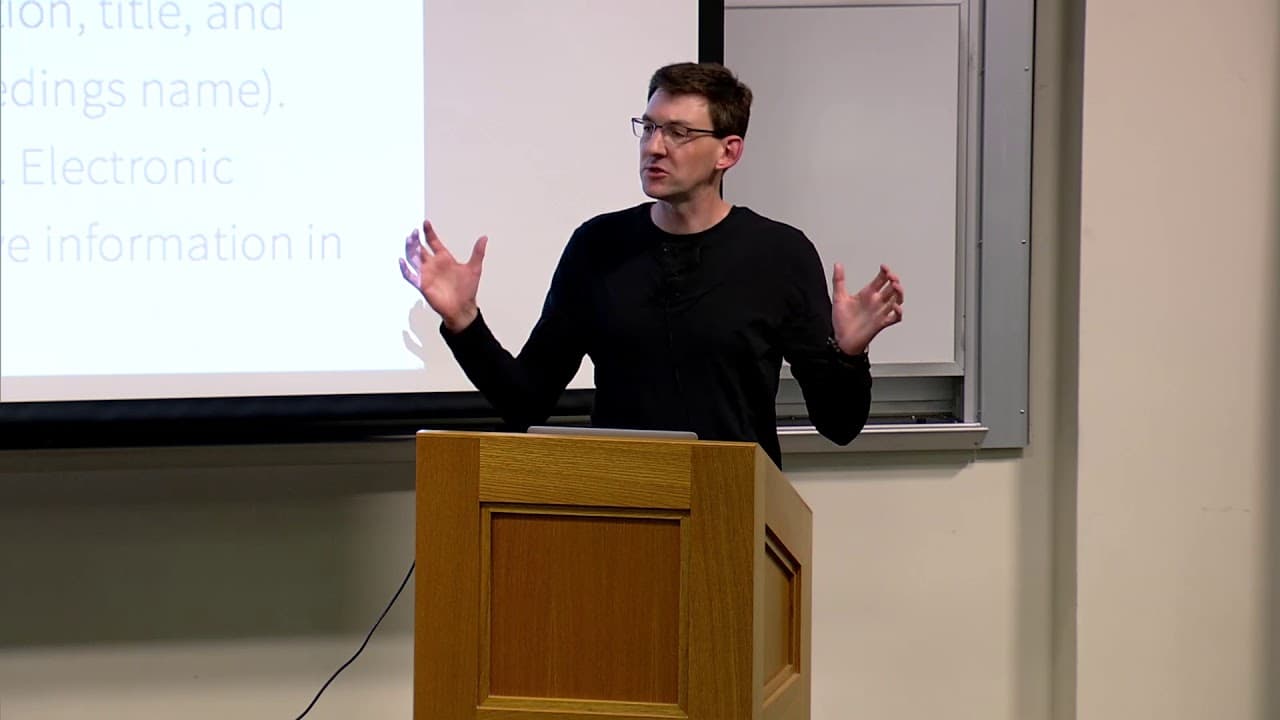
Welcome to the brave souls who are here in person. Get to see this thrilling report, first-hand. We are here to talk about, uh, Bake-off 3. Um, if you've already forgotten, uh, what we were doing was, developing the best relation extraction systems we possibly could. Um, uh, highly multi-class problem and we are looking at F1 for- to determine the ... Read More
Key Insights
- 🤑 Grounding in language understanding is crucial for effective communication, as demonstrated by examples like the SHRDLU system and the rich language descriptions of color patches.
- 🎮 Color descriptions provide a useful and controlled domain for studying grounding in language understanding, with datasets like the XKCD color survey and the Colors in Context corpus.
- ⚾ Speaker models can generate accurate color descriptions based on input color representations, while listener models can infer target colors from context and language descriptions.
Install to Summarize YouTube Videos and Get Transcripts
Explore YouTube Video Summarizer or Get YouTube Transcript Extractor
Questions & Answers
Q: How does grounding in color descriptions relate to other language understanding tasks?
Grounding in color descriptions is a specific case of grounding in language understanding. Similar grounding approaches can be applied to other tasks like image captioning and visual question answering, where neural models can relate language to visual representations.
Q: Are there any models that generate images from captions?
Yes, image generation from captions is an active area of research. Approaches range from generating attribute value descriptions of images to more complex structured representations of visual scenes. The goal is to map language to a structured space that is used to generate the desired images.
Q: Is there research on end-to-end systems where speakers generate messages for listeners to interpret?
Yes, end-to-end systems where speakers generate messages and listeners interpret them do exist. However, for effective communication, these systems should be grounded, meaning they should incorporate contextual information and consider the knowledge and beliefs of both speakers and listeners.
Summary & Key Takeaways
-
The importance of grounding language understanding is highlighted through examples like the SHRDLU system, Winograd sentences, and child language development.
-
Color descriptions provide a useful and controlled domain for studying grounding in language understanding, with the XKCD color survey dataset and the Colors in Context corpus.
-
Speaker models can generate accurate color descriptions based on input color representations, while listener models can infer target colors from context and language descriptions.
Read in Other Languages (beta)
Share This Summary 📚
Summarize YouTube Videos and Get Video Transcripts with 1-Click
Try YouTube Summary with ChatGPT & Claude or YouTube Transcript Generator
Explore More Summaries from Stanford Online 📚

Summarize YouTube Videos and Get Video Transcripts with 1-Click
Try YouTube Summary with ChatGPT & Claude or YouTube Transcript Generator