Detecting Life on Europa From Earth
TL;DR
Lab experiments on Earth could help scientists determine if Enceladus and Europa contain life by analyzing water samples from Earth's oceans for biomarkers.
Transcript
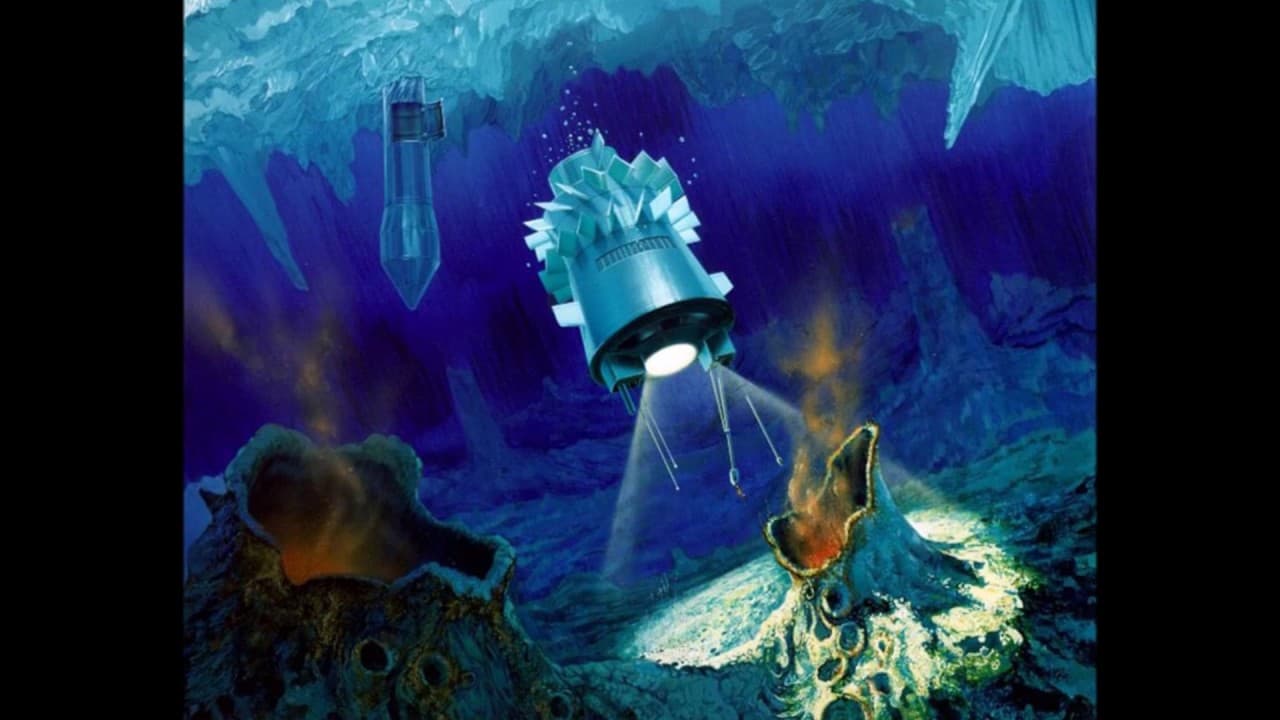
Perhaps the two best candidates for finding non-earth life in the solar system are Enceladus and Europa, both of which have mounting evidence for not only having liquid water oceans locked under shells of ice, but also the right chemistry for life to arise in those oceans along with the growing possibility of the presence of geothermal vents. In Eu... Read More
Key Insights
- 🛟 Enceladus and Europa are two promising candidates for finding life in our solar system due to their liquid water oceans and favorable conditions for life.
- 🎑 Lab experiments on Earth can help scientists understand the cracking of ice and plumes of water on these moons.
- 🌊 Spectroscopy and polarimetry could be used to detect biomarkers in water samples from Earth's oceans, guiding the search for signs of life on Enceladus and Europa.
- 🕵️ Telescopes, such as the James Webb Space Telescope, can be used to observe the plumes of these moons during their transits to detect potential biomarkers.
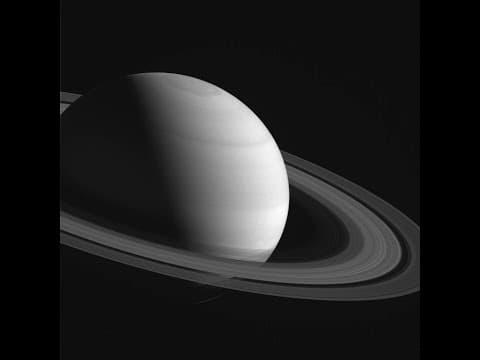
- 😋 Enceladus also provides an opportunity to study material through the analysis of Saturn's E ring.
- 💨 This research offers a faster and more accessible way to investigate the possibility of life on Europa and Enceladus without relying solely on exploratory probes.
- 🛟 Discovering life on these moons could have significant implications for our understanding of the potential for extraterrestrial life in the universe.
Install to Summarize YouTube Videos and Get Transcripts
Explore YouTube Video Summarizer or Get YouTube Transcript Extractor
Questions & Answers
Q: Why are Enceladus and Europa considered potential candidates for finding life in the solar system?
Both moons have evidence of liquid water oceans under icy shells and the necessary chemistry for life to arise. Enceladus and Europa also potentially have geothermal vents, which could support life.
Q: How can lab experiments on Earth help in the search for life on Enceladus and Europa?
By recreating the cracking of ice and plumes of water observed on Enceladus and Europa, scientists can analyze water samples from Earth's oceans using spectroscopy and polarimetry to determine if biomarkers can be detected.
Q: What role can telescopes play in detecting biomarkers in the plumes of Enceladus and Europa?
Large telescopes, including the James Webb Space Telescope, could be used to observe the plumes of Enceladus and Europa as these moons transit across the faces of Jupiter and Saturn. This method, although noisy, could potentially detect biomarkers.
Q: How else can material from Enceladus be studied?
Enceladus supplies Saturn's E ring with material, so scientists can also study the ring itself to gain insights into the composition and potential signs of life on Enceladus.
Summary & Key Takeaways
-
Enceladus and Europa are potential candidates in the search for extraterrestrial life due to the presence of liquid water oceans beneath icy shells and the right chemistry for life.
-
Philip Judge proposes using lab experiments on Earth to recreate the cracking of ice and plumes of water that occur on Enceladus and Europa.
-
Spectroscopy and polarimetry could be used to analyze water samples from Earth's oceans for biomarkers, helping scientists determine what to look for in potential plumes from Enceladus and Europa.
Read in Other Languages (beta)
Share This Summary 📚
Summarize YouTube Videos and Get Video Transcripts with 1-Click
Try YouTube Summary with ChatGPT & Claude or YouTube Transcript Generator
Explore More Summaries from John Michael Godier 📚


Summarize YouTube Videos and Get Video Transcripts with 1-Click
Try YouTube Summary with ChatGPT & Claude or YouTube Transcript Generator