What Are the Latest Discoveries of Warm Planets Around Cool Stars?
TL;DR
Recent research shows that there are more Earth-sized planets than gas giants around stars in our galaxy, indicating a rich diversity of planetary systems. Through missions like Kepler, scientists have identified various exoplanets, emphasizing the significance of studying cooler stars where Earth-like conditions may exist, leading to potential discoveries of extraterrestrial life.
Transcript
well welcome to tonight's science center research lecture my name is jim moran i'm a professor in the astronomy department i've always had this fantasy of standing up behind in front of a large audience and saying with a commanding voice shut off your cell phones and anything else that beeps i'm delighted to introduce tonight's speaker john johnson... Read More
Key Insights
- 🧑🎓 The speaker's background and journey into astronomy highlighted the importance of mentoring in guiding students towards innovative paths.
- 🪡 False positive detections and the need for careful validation and characterization of exoplanets were discussed.
- 🪐 The increase in discoveries of small planets and the prevalence of rocky, Earth-sized planets were significant findings.
Install to Summarize YouTube Videos and Get Transcripts
Explore YouTube Video Summarizer or Get YouTube Transcript Extractor
Questions & Answers
Q: How did the speaker get into the field of astronomy?
The speaker started with a passion for engineering but discovered his love for physics and astronomy during his undergraduate years. He was mentored by Professor Ronald Bienick and eventually pursued a Ph.D. in astronomy at UC Berkeley.
Q: What is the significance of studying exoplanets?
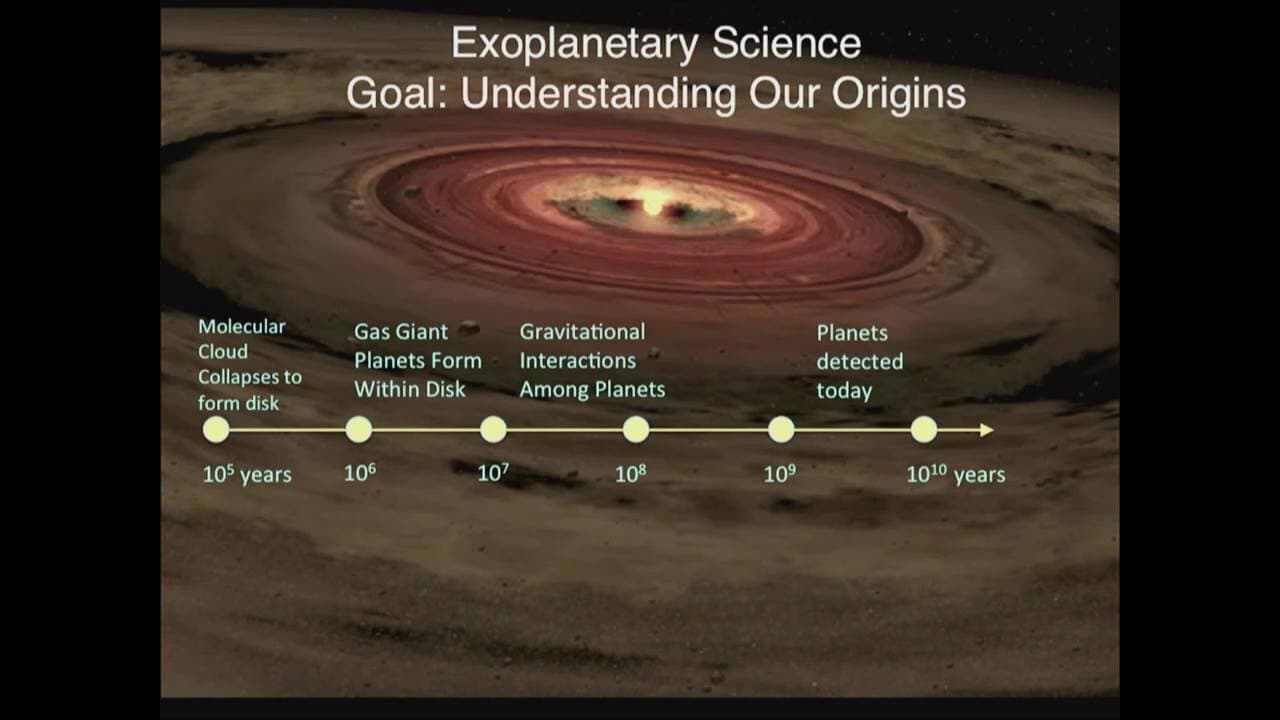
Studying exoplanets allows scientists to understand our origins, place our solar system in a broader context, and search for potential signs of life in the universe. It provides information about the prevalence of different types of planets and the formation mechanisms involved.
Q: What are the challenges in detecting and characterizing exoplanets?
Challenges include false positive detections, uncertainties in star properties, and limited information about distant planets. Efforts are made to validate signals, accurately measure properties of stars, and gather additional data for further characterization.
Q: Can you explain the concept of "hot Jupiters" and their discovery?
Hot Jupiters are gas giant planets that orbit very close to their host stars. The discovery of the first hot Jupiter in 1995 was a surprise to astronomers, as it challenged previous assumptions about typical planetary architectures. These planets have provided valuable insights into planetary formation and migration processes.
Summary & Key Takeaways
-
The speaker introduces himself and discusses his journey into astronomy, starting with engineering and transitioning to astrophysics.
-
He explains the rapid increase in the discovery of exoplanets and the excitement surrounding the search for life on other planets.
-
The speaker dives into various topics, including false positive detections, the study of small planets, and the exploration of compact systems with multiple planets.
Read in Other Languages (beta)
Share This Summary 📚
Summarize YouTube Videos and Get Video Transcripts with 1-Click
Try YouTube Summary with ChatGPT & Claude or YouTube Transcript Generator
Explore More Summaries from Harvard University 📚






Summarize YouTube Videos and Get Video Transcripts with 1-Click
Try YouTube Summary with ChatGPT & Claude or YouTube Transcript Generator