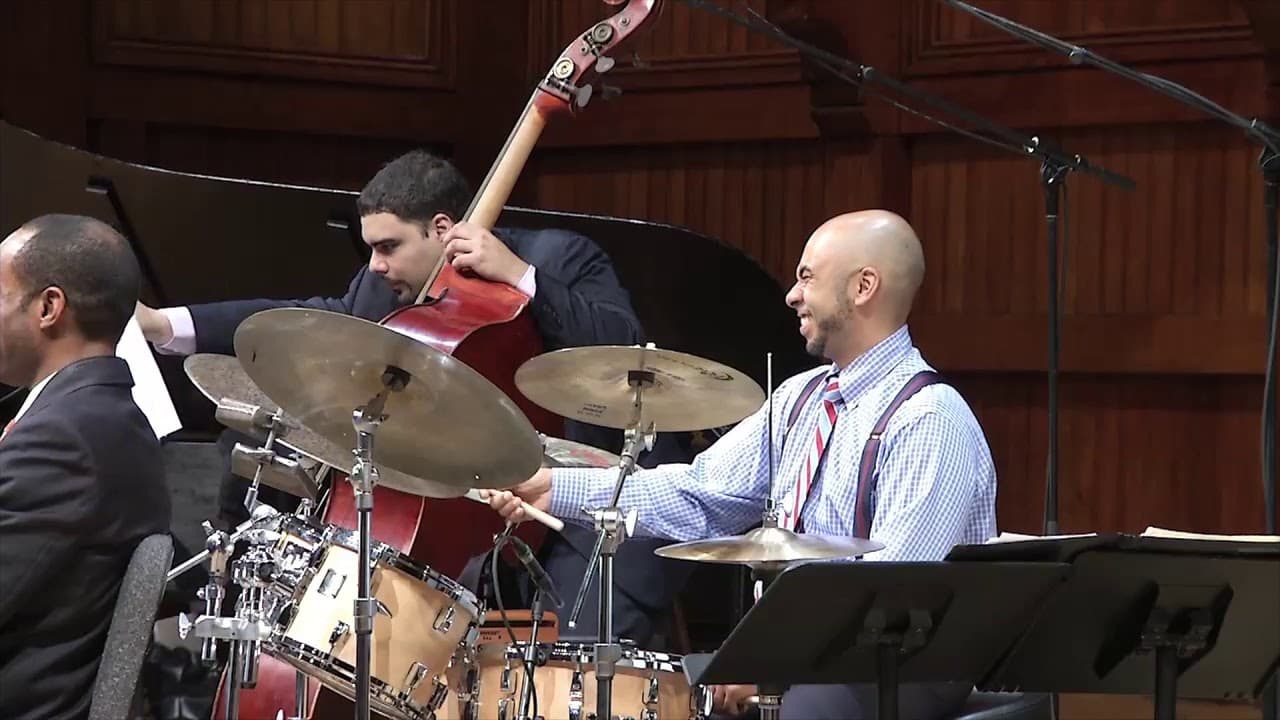
From the African 6:8 rhythm to the American shuffle
Transcript
Read and summarize the transcript of this video on Glasp Reader (beta).
Install to Summarize YouTube Videos and Get Transcripts
Explore YouTube Video Summarizer or Get YouTube Transcript Extractor
Summary
This video explores the harmonious tension created by combining odd and even rhythms in West African music. It demonstrates a basic African rhythm in 6/8 on the cymbal and a constant 2/4 beat on the bass drum. The video then showcases the American shuffle, a simplified version of the African six, which became a significant influence on American music. The connection between the African rhythm and the Irish jig is also discussed, highlighting how liberated slaves played a pivotal role in shaping the music of freedom.
Questions & Answers
Q: What is the significance of combining odd and even rhythms in West African music?
Much of West African music is characterized by the harmonious tension created when odd and even rhythms are played together. This combination of yin and yang, male and female, adds depth and complexity to the music. By blending these contrasting elements, West African musicians are able to create a unique and captivating sound that sets their music apart.
Q: Can you provide an example of a basic African rhythm in 6/8?
Certainly! A basic African rhythm in 6/8 can be heard by playing the cymbal in a continuous pattern of "1 2 1 2 1 2" while keeping a steady 2/4 beat on the bass drum. This rhythmic pattern creates a sense of forward movement and groove that is characteristic of West African music.
Q: How does the American shuffle simplify the African six?
The American shuffle is a rhythmic pattern derived from the African six. In the shuffle rhythm, the African six is simplified by emphasizing the downbeats and adding syncopation. This results in a groove that is instantly recognizable and has become a fundamental element of many genres in American music.
Q: Where did the shuffle rhythm derive from?
The shuffle rhythm, also known as the American shuffle, is derived from the African six. This rhythmic derivation is a product of cultural exchange and the fusion of African musical traditions with those of the Americas. The shuffle rhythm has since become an integral part of American music and continues to influence various genres to this day.
Q: What is the connection between the African rhythm and the Irish jig?
The connection between the African rhythm and the Irish jig lies in their shared influence on American music. When African slaves were brought to the Americas, they encountered the music of the Irish immigrants, which included traditional Irish jigs. The liberated slaves, who were deeply captivated by the Irish jig's lively rhythm and infectious melodies, blended elements of it with their own musical traditions, resulting in a fusion of African and Irish influences.
Q: How did liberated slaves contribute to the music of freedom?
Liberated slaves played a crucial role in shaping the music of freedom. Having experienced the oppression of slavery and yearning for freedom, they imbued their music with powerful emotions and messages of hope and liberation. Through their musical expressions, they created a sense of unity and resilience, inspiring generations to come. Their contributions laid the foundation for many genres that emerged in America, such as blues, jazz, and gospel, which continue to be celebrated for their profound impact on music and culture.
Takeaways
This video highlights the harmonious tension created by combining odd and even rhythms in West African music. It demonstrates the basic African rhythm in 6/8 and the simplified American shuffle, which became an integral part of American music. The connection between the African rhythm and the Irish jig showcases the influence of cultural exchange on musical developments. Additionally, the video emphasizes the significant contributions of liberated slaves to the music of freedom, underlining their enduring influence on American musical traditions.
Read in Other Languages (beta)
Share This Summary 📚
Summarize YouTube Videos and Get Video Transcripts with 1-Click
Try YouTube Summary with ChatGPT & Claude or YouTube Transcript Generator
Explore More Summaries from Harvard University 📚




Summarize YouTube Videos and Get Video Transcripts with 1-Click
Try YouTube Summary with ChatGPT & Claude or YouTube Transcript Generator