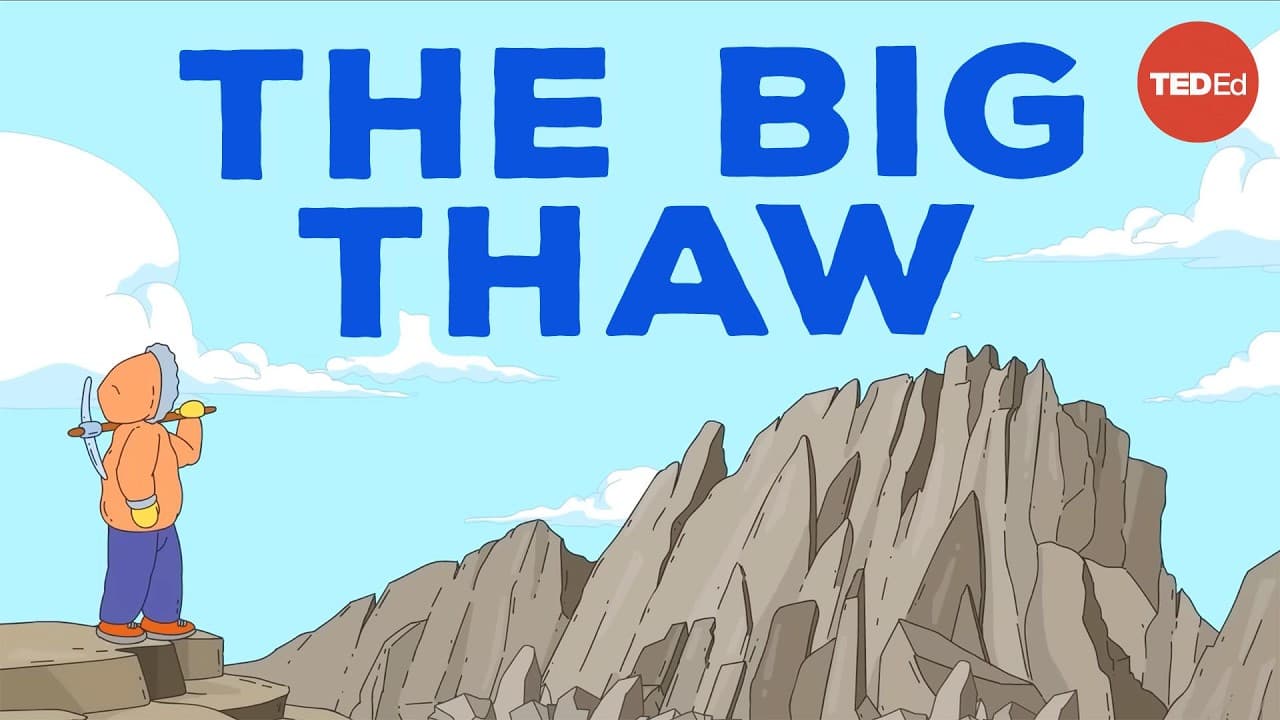
What happens when the Arctic permafrost melts? - Brendan Rogers and Jessica Howard
TL;DR
When Arctic permafrost melts, the ground can collapse, landscapes and infrastructure face damage, preserved biological remains deteriorate, and carbon dioxide and methane enter the atmosphere, intensifying further warming. Permafrost stores an estimated 1.6 trillion tons of carbon, more than humans have released by burning fossil fuels. Read on to understand what is preserved underground, why thaw is accelerating, and how its consequences extend beyond the Arctic.
Transcript
In June 2022, a gold miner in the Canadian Yukon made a remarkable discovery. While working on the traditional lands of the Tr’ondëk Hwëch’in First Nation, he uncovered the exceptionally well-preserved frozen remains of a woolly mammoth calf that died 30,000 years ago. But this find isn’t the only of its kind because the Arctic holds many burie... Read More
Key Insights
- Permafrost has a precise meaning: It is ground that does not thaw seasonally and has remained frozen for at least two years, although much of it has stayed frozen far longer. About 15% of the Northern Hemisphere contains this ground. Its persistence and broad distribution explain why it holds such a substantial record of ancient Arctic life.
- Frozen ground varies dramatically: Permafrost is not a uniform layer beneath the Arctic. Its thickness ranges from only 1 meter in some locations to more than a kilometer elsewhere. The oldest permafrost yet discovered is in the Yukon, where the ground has remained frozen for 740,000 years, demonstrating the immense timescales represented by these deposits.
- Preservation depends on two mechanisms: Nearby ice crystals help draw moisture away from buried remains, while freezing temperatures reduce the metabolic rates of decomposing microorganisms. Together, these conditions slow the destruction of plant and animal tissues. Scientists can therefore examine preserved biological material rather than depending exclusively on fossilized skeletons to infer an ancient organism’s appearance.
- The mammoth calf has context: The woolly mammoth calf found in June 2022 was not merely an isolated frozen specimen. A gold miner uncovered it on the traditional lands of the Tr’ondëk Hwëch’in First Nation in the Canadian Yukon. Its exceptional preservation after 30,000 years demonstrates both the scientific value of permafrost and the significance of where such discoveries occur.
- One wolf revealed her life: A gold miner discovered a 7-week-old grey wolf pup in 2016 after she had remained preserved for 57,000 years. Researchers determined that she had been eating salmon. They believe she died rapidly, possibly because the den in which she rested collapsed, allowing the discovery to illuminate both her diet and probable death.
- The cave bear retained form: Reindeer herders found unmistakably bear-like remains in 2020, but researchers determined that the animal could be as much as 39,500 years old. It was a cave bear, a species that became extinct about 24,000 years ago. Before this discovery, scientists had encountered only the skeletal remains of cave bears, making the preserved body especially revealing.
- Fragments can transform knowledge: A complete body is not required for permafrost to produce an extraordinary scientific result. In 2021, researchers reconstructed DNA sequences from mammoth teeth that were 1.6 million years old. The sequences revealed a new mammoth species and constituted the oldest sequenced DNA on record, showing how incomplete remains can preserve decisive genetic evidence.
- Dormant seeds remained viable: Permafrost discoveries extend beyond extinct animals and ancient DNA. In 2012, scientists regenerated a flowering tundra plant using seeds found inside 32,000-year-old squirrel burrows. The result shows that frozen ground can preserve biological material capable of renewed growth, not simply recognizable structures that researchers can observe and describe.
- Protective vegetation is disappearing: Arctic warming is compounded by more frequent extreme weather events such as lightning and wildfires. Fires remove plants and soil that ordinarily help keep permafrost cool. The loss of these protective surface layers exposes frozen ground to further warming, adding another pathway through which climate change accelerates thaw across the region.
- Thaw physically reshapes landscapes: When frozen ground loses its stability, it can fracture and collapse into itself. Flooding and erosion can follow, while formerly stable trees tilt into formations known as drunken forests. Thaw can also initiate massive landslides and threaten critical infrastructure, so the consequences are visible in both natural terrain and places where people live.
- Arctic communities face hard choices: By 2050, thawing permafrost may endanger 3.6 million people. This includes many Indigenous and First Nations people who have lived throughout the Arctic since time immemorial. They are already making difficult decisions about how to protect their communities and traditional ways of life as the ground and climate around them change.
- Stored carbon creates feedback: Permafrost contains an estimated 1.6 trillion tons of carbon, more than twice the amount in Earth’s atmosphere as of 2022 and more than humans have released through fossil fuel burning. Thaw makes microbial decomposition more efficient, releasing carbon dioxide and methane. Those gases drive warming, which causes additional thaw and still more emissions.
Install to Summarize YouTube Videos and Get Transcripts
Explore YouTube Video Summarizer or Get YouTube Transcript Extractor
Questions & Answers
Q: What happens when the Arctic permafrost melts?
Melting permafrost can fracture and collapse the ground, causing flooding, erosion, tilting trees, and massive landslides. These changes can damage critical infrastructure and may endanger 3.6 million people by 2050. Thaw also lets microorganisms decompose stored organic material more efficiently, releasing carbon dioxide and methane. Those greenhouse gases increase warming, which causes more permafrost to thaw and continues the feedback loop.
Q: How does Arctic permafrost preserve ancient remains?
Ice crystals close to remains buried in permafrost draw moisture away from them. At the same time, microorganisms that normally decompose plant and animal tissues operate at slower metabolic rates under subfreezing conditions. This slows decay enough to preserve tissues, recognizable bodies, seeds, and DNA for immense periods. Scientists consequently receive direct snapshots of ancient life instead of relying only on fossilized skeletons.
Q: What ancient animals have been found in permafrost?
Documented finds include a woolly mammoth calf that died 30,000 years ago and a 57,000-year-old grey wolf pup. Reindeer herders also encountered a cave bear up to 39,500 years old in 2020. Before that bear was found, scientists had seen only cave bear skeletons. Mammoth teeth dating back 1.6 million years also preserved DNA that enabled researchers to identify a new species.
Q: What did researchers learn from the frozen wolf pup?
The pup was a 7-week-old female grey wolf preserved in permafrost for 57,000 years. A gold miner encountered her in 2016. Researchers determined from the preserved remains that she had been eating salmon. They also think she died quickly, possibly after the den where she was nestled collapsed, giving them evidence about both her life and death.
Q: Why is Arctic permafrost thawing so rapidly?
Climate change is warming the Arctic at 3 to 4 times the rate experienced by the rest of the world. Extreme weather events, including lightning and wildfires, are also occurring more frequently. These fires burn the vegetation and soil that otherwise help keep permafrost cool. With those protective layers damaged and regional temperatures rising quickly, the frozen ground becomes increasingly vulnerable to thaw.
Q: How does permafrost thaw affect global warming?
Permafrost stores an estimated 1.6 trillion tons of carbon within intact remains, partially decomposed soils, and sediments. When the ground thaws, microorganisms break down that organic material more efficiently and emit carbon dioxide and methane. These gases warm the climate, which leads to additional thaw and further emissions. The process forms a feedback loop whose effects extend far beyond the Arctic.
Q: How does thawing permafrost affect Arctic communities?
Permafrost thaw destabilizes the land through collapse, flooding, erosion, and landslides, while also threatening critical infrastructure. By 2050, it may endanger 3.6 million people. Many of those affected are Indigenous and First Nations people who have lived across the Arctic since time immemorial. They face difficult decisions about protecting their communities and maintaining traditional ways of life amid climate-driven changes.
Q: Why are undiscovered permafrost remains scientifically valuable?
Permafrost can preserve tissues, recognizable bodies, genetic material, and seeds rather than only fossilized bones. These remains reveal details such as the salmon eaten by a wolf pup, an extinct cave bear’s physical form, and a previously unknown mammoth species identified through DNA. Scientists even regenerated a flowering tundra plant from 32,000-year-old seeds. Rapid thaw threatens these still-buried records before researchers can discover and study them.
Summary & Key Takeaways
-
A remarkable Yukon discovery: In June 2022, a gold miner working on the traditional lands of the Tr’ondëk Hwëch’in First Nation uncovered a remarkably preserved woolly mammoth calf that had died 30,000 years earlier. The find illustrates how many biological secrets remain beneath the Arctic. About 15% of the Northern Hemisphere contains permafrost, defined as ground frozen for at least two years. The oldest known permafrost, in the Yukon, has remained frozen for 740,000 years.
-
Nature’s long-term freezer: Permafrost ranges from about 1 meter thick in some places to more than a kilometer in others. Ice crystals near buried remains draw away moisture, while subfreezing conditions slow the metabolic activity of microorganisms that decompose tissues. This combination can preserve more than fossilized skeletons. Scientists may encounter recognizable bodies, tissues, and other biological material that provide unusually direct snapshots of ancient animals and plants rather than requiring researchers to reconstruct their appearance only from bones.
-
Ancient life emerges intact: Discoveries include a 57,000-year-old grey wolf pup, a cave bear up to 39,500 years old, and DNA reconstructed from 1.6-million-year-old mammoth teeth. The mammoth DNA enabled researchers to identify a new species and became the oldest sequenced DNA on record. Permafrost has preserved plant life too. In 2012, scientists regenerated a flowering tundra plant from seeds enclosed within 32,000-year-old squirrel burrows, showing the remarkable biological information held in frozen ground.
-
Rapid Arctic warming begins: The undiscovered remains preserved in permafrost are now threatened because the Arctic is warming at 3 to 4 times the rate of the rest of the world. More frequent extreme events, including lightning and wildfires, burn vegetation and soil that otherwise help keep permafrost cool. As frozen ground thaws, it can fracture and collapse. The resulting landscape changes include flooding, erosion, tilting trees called drunken forests, massive landslides, and damage to critical infrastructure.
-
Consequences reach beyond the Arctic: Permafrost thaw may endanger 3.6 million people by 2050, including Indigenous and First Nations communities confronting difficult choices about protecting their homes and traditional ways of life. The global danger comes from an estimated 1.6 trillion tons of stored carbon. Thaw allows microorganisms to decompose organic material more efficiently and release carbon dioxide and methane. Those gases increase warming, which thaws more permafrost and creates a self-reinforcing feedback loop.
Read in Other Languages (beta)
Share This Summary 📚
Summarize YouTube Videos and Get Video Transcripts with 1-Click
Try YouTube Summary with ChatGPT & Claude or YouTube Transcript Generator
Explore More Summaries from TED-Ed 📚





Summarize YouTube Videos and Get Video Transcripts with 1-Click
Try YouTube Summary with ChatGPT & Claude or YouTube Transcript Generator