What Will We Never See?
TL;DR
Despite the benefits of physics, there are certain aspects of the universe that we will never be able to see due to the laws of physics.
Transcript
we're really lucky to live in our universe with our particular laws of physics at least that's what we keep telling ourselves the laws of physics can be cruel and unforgiving and should you try and cross them they will crush you like a bug well here at Universe today we embrace our physics overlords and prefer to focus on the positive the fact that... Read More
Key Insights
- 🙂 Light traveling at the speed of light allows us to observe the past and see what the universe looked like billions of years ago.
- 💨 However, there are limitations to what we can see due to the expanding universe and the acceleration of galaxies moving away from us.
- 😌 Beyond the observable universe lies a hidden, censored universe that is yet to be seen.
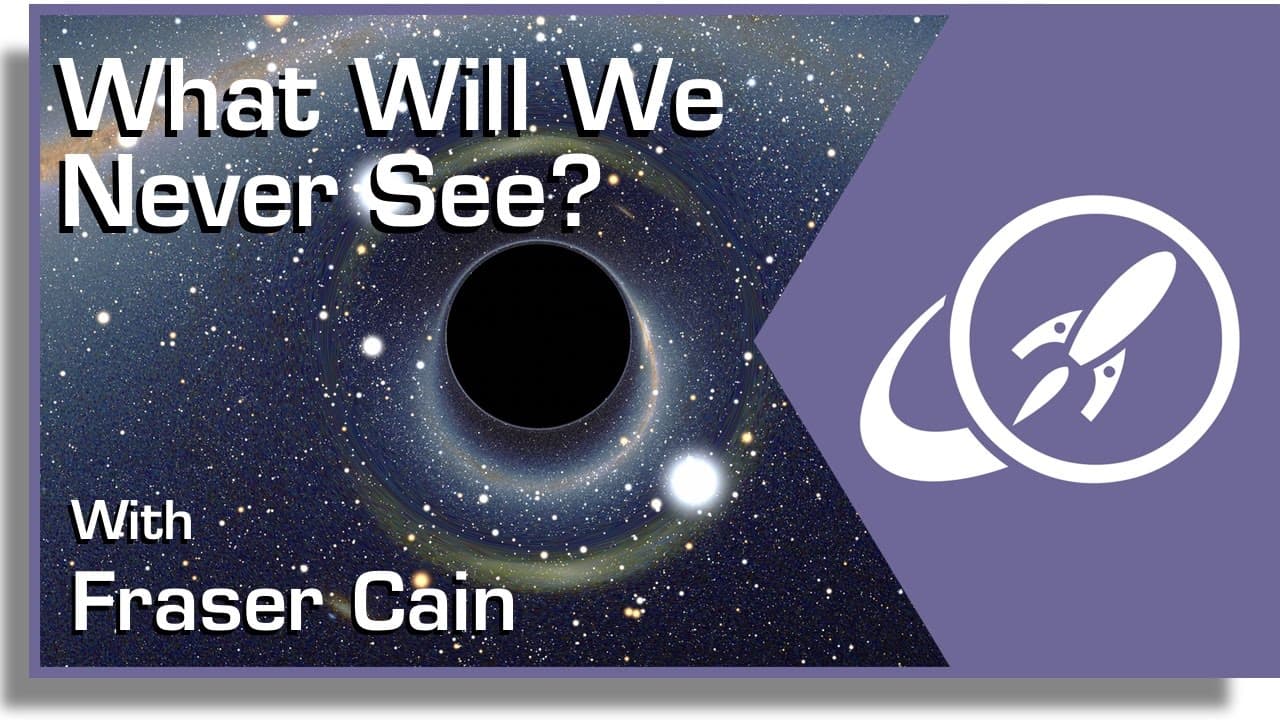
- 🚥 The event horizon of a black hole is an example of a place where light cannot escape, making it impossible to see what happens inside.
- 💨 Gravitational waves may provide a way to see beyond these limitations, but their detection is still a technological challenge.
Install to Summarize YouTube Videos and Get Transcripts
Explore YouTube Video Summarizer or Get YouTube Transcript Extractor
Questions & Answers
Q: Why is light traveling at the speed of light beneficial for our observations of the universe?
Light traveling at the speed of light allows us to observe the universe as it appeared billions of years ago, providing valuable insights into its history.
Q: What is the cosmic microwave background radiation, and why can't we see what happened before it?
The cosmic microwave background radiation is the point after the big bang when the universe cooled down enough for light to escape. We cannot see what happened before it because the universe was still opaque.
Q: Why will we see fewer galaxies in the distant future?
The expansion of the universe is accelerating, causing galaxies to move away from each other faster and faster. Eventually, galaxies will be moving away from us faster than the speed of light, making their light unable to reach us.
Q: How can gravitational waves potentially help us see hidden places in the universe?
Gravitational waves are distortions in SpaceTime caused by massive objects or events like black holes or Big Bangs. By detecting and analyzing gravitational waves, we may be able to see beyond the event horizon of a black hole or past the cosmic microwave background radiation.
Summary & Key Takeaways
-
Light traveling at the speed of light allows us to look back in time and see what the universe looked like billions of years ago.
-
However, there are parts of the universe that will always remain out of reach, and we will never be able to see them.
-
The expansion of the universe and the acceleration of galaxies moving away from us will eventually prevent us from seeing any galaxies at all.
Read in Other Languages (beta)
Share This Summary 📚
Summarize YouTube Videos and Get Video Transcripts with 1-Click
Try YouTube Summary with ChatGPT & Claude or YouTube Transcript Generator
Explore More Summaries from Fraser Cain 📚



Summarize YouTube Videos and Get Video Transcripts with 1-Click
Try YouTube Summary with ChatGPT & Claude or YouTube Transcript Generator