How to become a machine learning engineer in 12–20 months
TL;DR
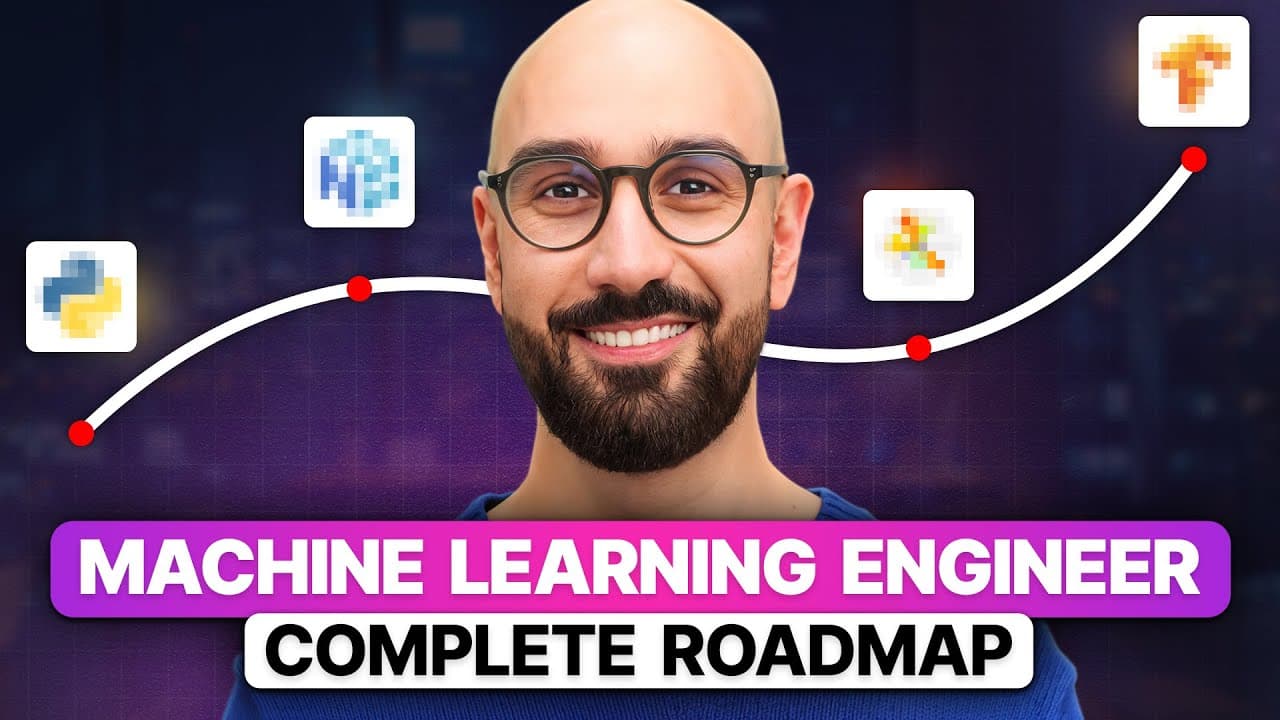
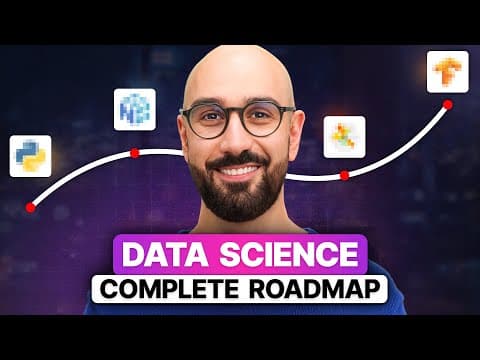
The video presents a step by step roadmap to become a machine learning engineer within 12 to 20 months. It emphasizes mastering Python, Git, data structures and algorithms, SQL, mathematics, data handling, ML fundamentals, advanced topics, and deployment using Flask or Docker. Daily dedication of 3 to 5 hours is advised along with a free PDF and several tutorials.
Transcript
if you want to become a machine learning engineer there are nine essential skills you need to master let's go over them one by one now machine learning involves creating models that learn from data to make predictions or decisions as a machine learning engineer you'll need to master various skills from programming and math to deploying models first... Read More
Key Insights
- Python is the primary language for machine learning and is approachable for beginners.
- Git is a version control tool to track changes and collaborate, with the 80/20 rule guiding its learning.
- Data structures and algorithms are essential for problem solving and technical interviews.
- SQL is a simple language for accessing and organizing data for models.
- A solid foundation in mathematics and statistics supports understanding and optimizing ML algorithms.
- Data handling and visualization with pandas, numpy, matplotlib, and seaborn aid model preparation and results communication.
- ML fundamentals cover supervised and unsupervised learning and core libraries like TensorFlow and PyTorch.
- Advanced topics include ensemble learning, deep learning, NLP, and computer vision, followed by deployment using Flask or Docker.
Install to Summarize YouTube Videos and Get Transcripts
Explore YouTube Video Summarizer or Get YouTube Transcript Extractor
Questions & Answers
Q: What is the first set of skills to learn to start a career in ML, and why is it important?
The first set of skills includes Python programming, version control with Git, data structures and algorithms, and SQL. These are foundational because Python is the primary language used in ML, Git enables collaboration and project management, data structures and algorithms boost problem solving and interview performance, and SQL is essential for accessing and organizing data needed for models.
Q: How long should a beginner spend learning Python and what should they focus on?
A beginner should aim to grasp Python in about one to two months. Focus areas include core syntax, data structures, functions, and basic libraries used in data handling and ML. Mastery at this stage enables smoother learning of later stages like data processing and model building.
Q: Why is data handling and visualization a distinct step in this roadmap, and what tools are recommended?
Data handling and visualization are distinct because clean, well organized data is critical for model performance and interpretation. The recommended tools are pandas and numpy for manipulation, and matplotlib and seaborn for visualization, which help identify trends, patterns, and anomalies and communicate results effectively.
Q: What are the two main categories of machine learning mentioned, and how do they differ?
The two main categories are supervised and unsupervised learning. Supervised learning uses labeled data where inputs have known outputs, guiding the model to learn mappings. Unsupervised learning uses unlabeled data to discover patterns and relationships. Understanding both is essential for selecting appropriate algorithms and evaluating performance.
Q: Which advanced topics are highlighted, and why are they important for building sophisticated models?
The advanced topics highlighted include ensemble learning, deep learning, NLP, and computer vision. They are important because ensemble methods combine multiple models to improve performance, neural networks handle complex patterns in data, NLP processes text data, and computer vision analyzes images, enabling tackling more challenging problems.
Q: What deployment skills are recommended, and what tools support model deployment?
Deployment skills recommended include creating simple web services with Python frameworks like Flask or Django and using Docker to package models and dependencies. These tools help ensure the model runs smoothly on any machine and is accessible through applications, bridging the gap between development and production.
Q: How does the roadmap suggest you manage study time to reach the goal, and what is the overall timeframe?
The roadmap suggests dedicating about 3 to 5 hours per day to study and practice. By following the phased plan and utilizing the PDF resource and tutorials, a learner can reach entry level ML job readiness in approximately 12 to 20 months, depending on pace and prior knowledge.
Q: What external resources are offered to support learning, and how should learners use them?
External resources include a free supplementary PDF detailing concepts by skill, plus tutorials and complete courses on the creator's website. Learners should use these resources to review progress, identify gaps, and reinforce understanding through structured practice and guided materials.
Summary & Key Takeaways
-
The video outlines a phased skill plan that starts with programming and tooling, then moves to data handling and math, followed by ML fundamentals, advanced topics, and deployment, all with time estimates.
-
A strong emphasis is placed on practice time, practical projects, and using recommended tools like TensorFlow, PyTorch, and PyLab while highlighting interview readiness for big tech.
-
The overall goal is to enable a learner to land entry level ML roles by following the structured roadmap and utilizing the described resources.
Read in Other Languages (beta)
Share This Summary 📚
Summarize YouTube Videos and Get Video Transcripts with 1-Click
Try YouTube Summary with ChatGPT & Claude or YouTube Transcript Generator
Explore More Summaries from Programming with Mosh 📚

Summarize YouTube Videos and Get Video Transcripts with 1-Click
Try YouTube Summary with ChatGPT & Claude or YouTube Transcript Generator