How Does Chronic Stress Cause Weight Gain?
TL;DR
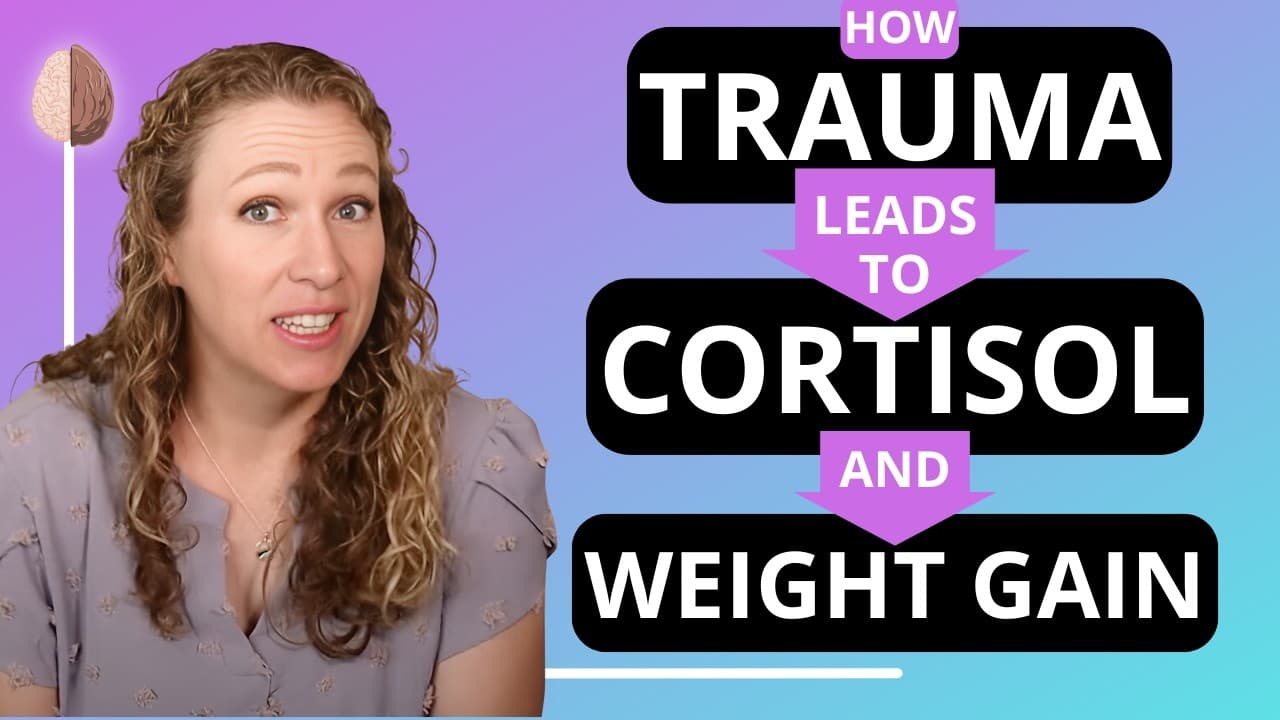
Chronic stress can keep the fight, flight, or freeze response active, causing repeated cortisol release that raises blood sugar, stimulates appetite, and promotes abdominal fat storage. Over time, constantly producing blood sugar can contribute to insulin resistance, higher insulin levels, weight gain, and increased risk of type 2 diabetes, especially when childhood trauma has dysregulated stress regulation.
Transcript
in 1997 researchers made a groundbreaking discovery they found that people who had experienced childhood trauma were 46% more likely to develop obesity and those who experienced four or more types of abuse were up to twice as likely to develop Diabetes Type 2 diabetes and that got me super curious like what is the connection between trauma weight g... Read More
Key Insights
- Adverse childhood experiences are associated with later metabolic risks. The research described found that people who experienced childhood trauma were 46% more likely to develop obesity, while those who experienced four or more types of abuse were up to twice as likely to develop type 2 diabetes.
- A healthy stress cycle includes both activation and recovery. Cortisol and adrenaline prepare the body to fight, flee, or freeze when danger appears, while recognition of safety activates the parasympathetic response, allowing stress to subside and the body to relax.
- Chronic stress can leave the fight, flight, or freeze response stuck in an active state. Work emails, distressing news, and memories connected to past trauma may be perceived as immediate threats, prompting continued release of cortisol and adrenaline without adequate resolution.
- Cortisol raises blood sugar by promoting glucose production in the liver. This response supplies immediate energy for handling a perceived threat, but repeated activation can maintain high blood sugar over time when stress becomes chronic and the recovery response is not engaged.
- Cortisol stimulates appetite and cravings for high-calorie, sugary, and fatty foods. This effect supports the body's demand for energy during a threat, but frequent activation may contribute to overeating and weight gain when the perceived stress does not require physical action.
- Insulin resistance can develop when the body repeatedly produces elevated blood sugar. Cells become less responsive to insulin, forcing the pancreas to produce more insulin to manage blood sugar and potentially increasing overall insulin levels and the risk of type 2 diabetes.
- Elevated cortisol can promote visceral fat storage around the abdomen and internal organs. The transcript connects this pattern with weight gain as well as cardiovascular disease and metabolic syndrome, showing how unresolved chronic stress may affect several aspects of physical health.
- Nervous system regulation starts with recognizing stress in the body. Checking for shallow breathing, jaw clenching, and shoulder tension creates an opportunity to use breathing, yawning, stretching, laughter, play, boundaries, therapy, and acceptance to activate the parasympathetic response.
Install to Summarize YouTube Videos and Get Transcripts
Explore YouTube Video Summarizer or Get YouTube Transcript Extractor
Questions & Answers
Q: How does chronic stress cause weight gain?
Chronic stress can keep the body's fight, flight, or freeze response active and cause the adrenal glands to continue releasing cortisol and adrenaline. Cortisol stimulates appetite and cravings for sugary, fatty, and high-calorie foods. It also promotes fat storage around the abdomen and internal organs. When this pattern continues without sufficient recovery, it can contribute to overeating, visceral fat accumulation, and weight gain.
Q: How does cortisol increase the risk of type 2 diabetes?
Cortisol increases blood sugar by promoting glucose production in the liver, providing quick energy for responding to a perceived threat. If stress remains chronic, the body may repeatedly produce elevated blood sugar. Cells can then become less responsive to insulin, forcing the pancreas to produce more insulin to manage blood sugar. This process can produce higher overall insulin levels and increase the risk of type 2 diabetes.
Q: Why can childhood trauma affect weight and blood sugar later in life?
Childhood trauma can dysregulate the brain's stress centers and impair the body's ability to turn off its stress response. A child exposed to repeated adverse experiences may remain on constant high alert, as though danger could return at any moment. Continued cortisol release can raise blood sugar, stimulate appetite, encourage abdominal fat storage, and contribute over time to insulin resistance, weight gain, and type 2 diabetes risk.
Q: What are adverse childhood experiences, or ACEs?
Adverse childhood experiences, commonly called ACEs, include experiencing or witnessing abuse, neglect, or family dysfunction. The research discussed connected these experiences with increased risks of numerous physical and mental health conditions, including obesity and type 2 diabetes. People who experienced childhood trauma were reported as 46% more likely to develop obesity, while four or more types of abuse were associated with up to twice the likelihood of developing type 2 diabetes.
Q: What happens during a healthy stress cycle?
A healthy stress cycle begins when a perceived danger activates the fight, flight, or freeze response. The body releases adrenaline and cortisol to prepare for substantial physical action. Once the person recognizes that the danger has passed and safety has returned, the parasympathetic response activates. Relief, laughter, movement, or shaking may follow, the stress hormones subside, and the body returns to a relaxed state.
Q: How can someone recognize stress in the body?
Recognizing stress requires pausing to notice physical sensations that may otherwise go unnoticed during a busy day. Useful signs include shallow breathing, a clenched jaw, and tense shoulders. A reminder from an app can prompt regular check-ins. Becoming aware of these bodily signals creates an opportunity to respond intentionally and begin activating the parasympathetic system before stress continues unchecked for an extended period.
Q: How can the parasympathetic response be activated?
The parasympathetic response can be encouraged through simple practices such as breathing, fake or natural yawning, stretching, laughing, relaxation, and play. These actions can help the body move out of persistent fight, flight, or freeze activation. Habitual recovery practices are especially important because stress itself is not inherently harmful. The problem arises when the body lacks reliable ways to resolve activation and return to relaxation.
Q: How can boundaries help reduce chronic stress?
Healthy boundaries can prevent occasional stressors from becoming constant sources of nervous system activation. One example is telling coworkers that emails will not be checked after work or on weekends. Another is limiting email checks to specific time windows during the day. These boundaries reduce repeated exposure to perceived threats, create space for relaxation, and support the body's ability to complete the stress cycle.
Summary & Key Takeaways
-
Trauma and chronic stress can interfere with the nervous system's ability to complete the normal stress cycle. Instead of returning to a relaxed parasympathetic state after danger passes, the body may remain on high alert and continue releasing cortisol and adrenaline in response to work, news, traumatic memories, or other perceived threats.
-
Cortisol prepares the body for action by increasing blood sugar through glucose production in the liver and stimulating appetite for calorie-dense foods. When this pattern becomes chronic, cells can become less responsive to insulin, the pancreas may produce more insulin, and fat may accumulate around the abdomen and internal organs.
-
Stress regulation begins with noticing physical signs such as shallow breathing, a clenched jaw, or tense shoulders. Breathing, yawning, stretching, laughing, relaxation, play, healthy boundaries, compassionate engagement with past pain, therapy, and accepting what cannot be changed can help activate the parasympathetic response and close the stress cycle.
Read in Other Languages (beta)
Share This Summary 📚
Summarize YouTube Videos and Get Video Transcripts with 1-Click
Try YouTube Summary with ChatGPT & Claude or YouTube Transcript Generator
Explore More Summaries from Therapy in a Nutshell 📚





Summarize YouTube Videos and Get Video Transcripts with 1-Click
Try YouTube Summary with ChatGPT & Claude or YouTube Transcript Generator