Derek Sivers Reveals the Secret to Singular Focus
TL;DR
Derek Sivers discusses singular focus, conflicting philosophies, and creative balance.
Transcript
I discovered this week's guest about seven years ago on the Tim Ferris show his name is Derek cers and he's the author of four excellent short books that I would almost classify as Philosophy for creatives but before Derek was an author he was a musician a circus performer and the founder of CD Baby the largest seller of independent music online wi... Read More
Key Insights
- Derek Sivers emphasizes the importance of focusing on one project at a time, which he calls being a monomaniac. This approach allowed him to build and sell CD Baby for $22 million.
- He suggests journaling as a tool to manage multiple interests and ideas, allowing them to be recorded and revisited without losing focus on the current priority.
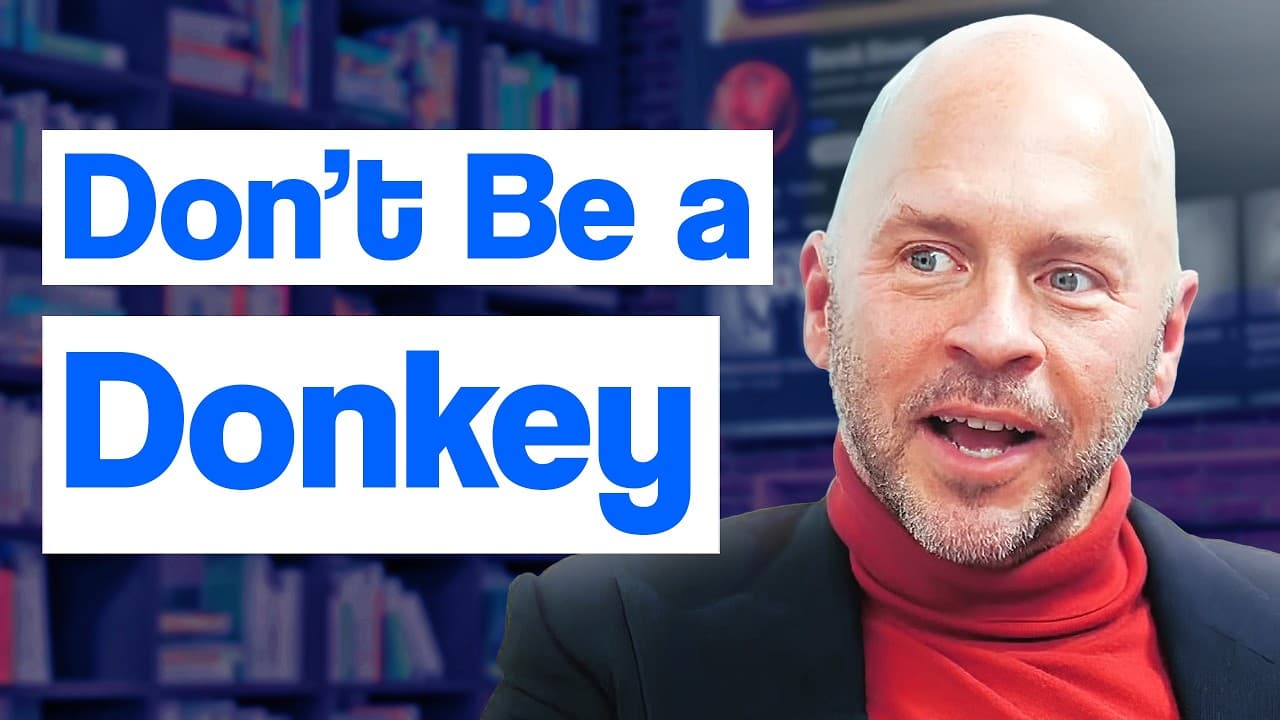
- Sivers highlights the concept of Buridan's Donkey, advising against being paralyzed by indecision and instead using time wisely to sequence priorities.
- His book 'How to Live' explores the idea that life is a paradox to be experienced, not a problem to be solved, presenting 27 conflicting philosophies on living.
- Sivers believes that values and priorities change over time, and it's important to allow for those changes without being tied to a single philosophy or approach.
- He discusses the balance between stability and novelty, suggesting that creators find a way to pursue their passions without relying solely on them for income.
- Sivers notes that successful musicians often stand out by doing something vastly different from the mainstream, a lesson applicable to all creators.
- He warns against the loss of autonomy when creators rely too heavily on external platforms for success, likening it to rock stars having a boss in the music industry.
Install to Summarize YouTube Videos and Get Transcripts
Explore YouTube Video Summarizer or Get YouTube Transcript Extractor
Questions & Answers
Q: What is Derek Sivers' approach to managing multiple interests?
Derek Sivers manages his multiple interests through extensive journaling. He records his ideas and plans in detail, creating a 'possible futures' folder where he can store these concepts. This method allows him to focus on one project at a time while ensuring that other ideas are not lost and can be revisited later.
Q: How does Derek Sivers prioritize his projects?
Derek Sivers prioritizes his projects by focusing on one at a time, which he refers to as being a monomaniac. He believes in completing one task before moving on to the next, using time to sequence priorities effectively. Sivers uses the metaphor of Buridan's Donkey to illustrate the dangers of indecision and the importance of prioritization.
Q: What is the main idea behind Derek Sivers' book 'How to Live'?
The main idea behind Derek Sivers' book 'How to Live' is that life is a paradox to be experienced rather than a problem to be solved. The book presents 27 conflicting philosophies on living, emphasizing that there is no single correct answer to how one should live. Sivers encourages embracing the contradictions and changes in values over time.
Q: How can creators balance stability and novelty according to Derek Sivers?
According to Derek Sivers, creators can balance stability and novelty by not relying solely on their creative pursuits for income. He suggests maintaining a job for financial stability while taking creative projects seriously, allowing for artistic expression without the pressure of financial dependence. This approach helps maintain both stability and creative freedom.
Q: What lesson does Derek Sivers draw from the success of musicians?
Derek Sivers observes that successful musicians often achieve success by doing something vastly different from the mainstream. He advises creators to learn from this by not following current trends but instead finding a unique voice or approach. Standing out by being different can lead to greater success and recognition in creative fields.
Q: What is the risk of creators relying on external platforms, according to Sivers?
Derek Sivers warns that creators who rely heavily on external platforms risk losing autonomy, similar to how rock stars have a boss in the music industry. When creators depend on platforms like Google or Amazon for success, they may have to conform to those platforms' rules and limitations, potentially compromising their creative freedom.
Q: How does Derek Sivers view changes in personal values over time?
Derek Sivers believes that personal values and priorities naturally change over time and that it's important to allow for these changes. He emphasizes that different philosophies may be more relevant at different stages in life, and creators should embrace these shifts rather than feeling tied to a single approach or belief system.
Q: What does Derek Sivers mean by 'life is a paradox to be experienced'?
When Derek Sivers says 'life is a paradox to be experienced,' he means that life is full of contradictions and complexities that cannot be resolved with a single solution. Instead of trying to solve life's problems, he suggests embracing the paradoxes and experiencing life as it is, recognizing that multiple conflicting truths can coexist.
Summary & Key Takeaways
-
Derek Sivers is known for his monomaniac focus, dedicating himself to one project at a time. This approach led to the success of CD Baby and his ventures into writing. His book 'How to Live' explores conflicting philosophies of life, emphasizing the value of embracing paradoxes.
-
Sivers encourages creators to manage their multiple interests through journaling, allowing ideas to be captured without disrupting their current focus. He also advises against indecision, using the metaphor of Buridan's Donkey to illustrate the importance of prioritization.
-
He discusses the balance between stability and novelty, suggesting that creators should pursue their passions without relying solely on them for income. Sivers also highlights the importance of standing out in creative fields by doing something unique, rather than following the crowd.
Read in Other Languages (beta)
Share This Summary 📚
Summarize YouTube Videos and Get Video Transcripts with 1-Click
Try YouTube Summary with ChatGPT & Claude or YouTube Transcript Generator
Explore More Summaries from Jay Clouse 📚






Summarize YouTube Videos and Get Video Transcripts with 1-Click
Try YouTube Summary with ChatGPT & Claude or YouTube Transcript Generator