How to Build Lasting Habits with Tiny Actions
TL;DR
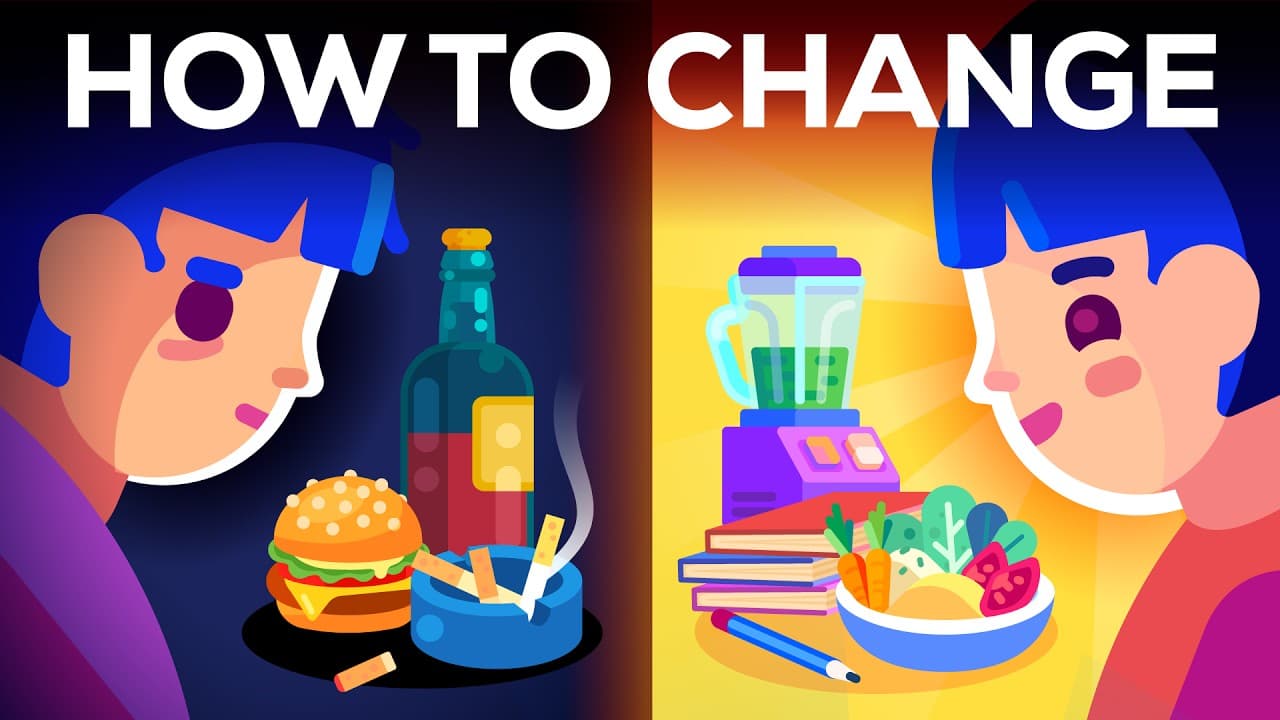
Make change easier by turning a tiny, specific action into a routine tied to consistent triggers, then repeat it until starting feels automatic. Choose a manageable behavior, perform it in the same context, and make the activity itself enjoyable. Habit formation can take 15 to 250 days, so steady continuation matters more than dramatic effort.
Transcript
If you are like most people, there is a gap between the person you are and the person you wish to be. There are little things you think you should do and big things you ought to achieve. From working out regularly, eating healthily, learning a language, working on your novel, reading more or simply actually doing your hobby instead of browsing ... Read More
Key Insights
- Change is difficult because established behaviors resemble well-traveled mental highways. Repeated actions become familiar, comfortable, and easier to perform, so people naturally return to old patterns even after temporarily succeeding with a new behavior.
- A routine is a sequence of actions deliberately performed in a consistent way because it produces a desired outcome. It depends on planning, awareness of future goals, and a willingness to complete actions that may initially feel uncomfortable.
- A habit is a behavior sequence performed with little conscious deliberation after sufficient repetition. Although the behavior still requires effort, its initiation becomes easier because the brain treats it as a familiar response to a recurring situation.
- Triggers are contextual cues that signal the start of habitual behavior. A trigger can be an object, time, place, or complete situation, and combining several consistent cues can create a clearer start signal for a desired action.
- The key to beginning a habit is converting a vague goal into a tiny, specific, controllable action. Doing ten squats each morning creates a lower and clearer threshold than pursuing the broad intention of becoming fitter.
- Repetition is what transforms a deliberate routine into a more automatic habit. Performing the same action regularly in the same context strengthens the association between the trigger and behavior, making the decision to begin feel progressively less burdensome.
- Enjoyment makes a new behavior easier to repeat when the action lacks immediate gratification. Pairing exercise with a favorite podcast, for example, can make the activity itself more pleasant instead of relying only on a reward afterward.
- Habit formation takes between 15 and 250 days according to the transcript, depending on the behavior, person, stress level, and other factors. Because the timeline is unpredictable, continued practice and acceptance of gradual progress are essential.
Install to Summarize YouTube Videos and Get Transcripts
Explore YouTube Video Summarizer or Get YouTube Transcript Extractor
Questions & Answers
Q: How can I build a lasting habit from a small action?
Choose one action that is tiny, specific, and under your control, such as doing ten squats every morning. Connect it to consistent triggers, including a particular time, place, outfit, or visible object. Repeat the same behavior regularly, ideally every day. Over time, the deliberate routine can become a habit whose trigger makes starting feel increasingly automatic.
Q: What is the difference between a routine and a habit?
A routine is a deliberately chosen sequence of actions performed consistently because it produces a useful result. It requires planning and attention to future outcomes. A habit develops after enough repetition and is activated by contextual triggers with much less conscious deliberation. The action may still require energy, but deciding to begin becomes easier and more automatic.
Q: Why is changing established behavior so difficult?
Established behaviors become easy mental routes through years of repetition, much like trails developing into streets and highways. The brain prefers these familiar paths because they reduce the energy needed for decisions and actions. A new behavior initially requires creating a rough alternative path, so returning to an old, comfortable pattern can feel much easier than continuing the change.
Q: What triggers can help start a new habit automatically?
Useful triggers include visual objects, a particular time of day, a designated place, or a complete recurring situation. Someone building a morning exercise habit might wear exercise clothes and perform ten squats in the living room at 8 a.m. Combining several stable cues makes the context distinctive and gives the brain a consistent signal to start the behavior.
Q: Why should a new habit begin with a tiny action?
A tiny action lowers the threshold for starting and removes much of the thinking required by a vague goal. Becoming fitter is broad and unclear, while doing ten squats is specific, manageable, and controllable. The purpose is to establish a repeatable routine first, allowing consistent practice to build an association between the chosen trigger and the desired behavior.
Q: How can I make a difficult habit more enjoyable?
Make the activity itself more pleasurable by pairing it with something you already enjoy. For example, listen to a favorite podcast only while exercising, or work on taxes while waiting for a game to load. This approach gives the behavior a more immediate positive feeling, which can make regular repetition easier when the long-term benefit alone is not motivating enough.
Q: How long does it take for a new habit to become automatic?
The transcript states that automatic habit formation can take anywhere from 15 to 250 days. The timing varies with the behavior, the individual, stress levels, and other circumstances, so there is no reliable personal deadline. Starting may feel easy during the first week or two, but consistent continuation is the difficult part and gradually becomes easier with repetition.
Q: Is willpower necessary for changing behavior successfully?
Willpower can help create the initial routine, but lasting change does not need to depend on repeatedly forcing yourself through every decision. A more sustainable approach is to make the action small, attach it to stable triggers, repeat it regularly, and make it enjoyable. These steps use the brain's energy-saving habit system so initiation eventually requires less conscious persuasion.
Summary & Key Takeaways
-
Change is difficult because repeated behaviors create familiar mental pathways that become increasingly easy to follow. Rather than interpreting setbacks as personal failure, the video presents behavior change as a process of gradually constructing new paths through repetition, eventually making desired actions feel familiar, comfortable, and less demanding to initiate.
-
Routines are deliberate sequences managed by a thoughtful planner, while habits are automatic behaviors activated by contextual triggers. Both systems are useful: deliberate thought handles planning and complex challenges, while habits conserve energy by managing repetitive tasks. Lasting change develops when a consciously designed routine becomes an automatically initiated habit.
-
A practical habit begins with a tiny, specific action, such as ten squats each morning. Consistent cues involving time, place, clothing, or visible objects provide a reliable start signal. Repetition and enjoyment help sustain the behavior, but the time required for automaticity varies widely, making patient continuation essential.
Read in Other Languages (beta)
Share This Summary 📚
Summarize YouTube Videos and Get Video Transcripts with 1-Click
Try YouTube Summary with ChatGPT & Claude or YouTube Transcript Generator
Explore More Summaries from Kurzgesagt – In a Nutshell 📚



Summarize YouTube Videos and Get Video Transcripts with 1-Click
Try YouTube Summary with ChatGPT & Claude or YouTube Transcript Generator