What 10 Things Are No Longer Worth Your Money?
TL;DR
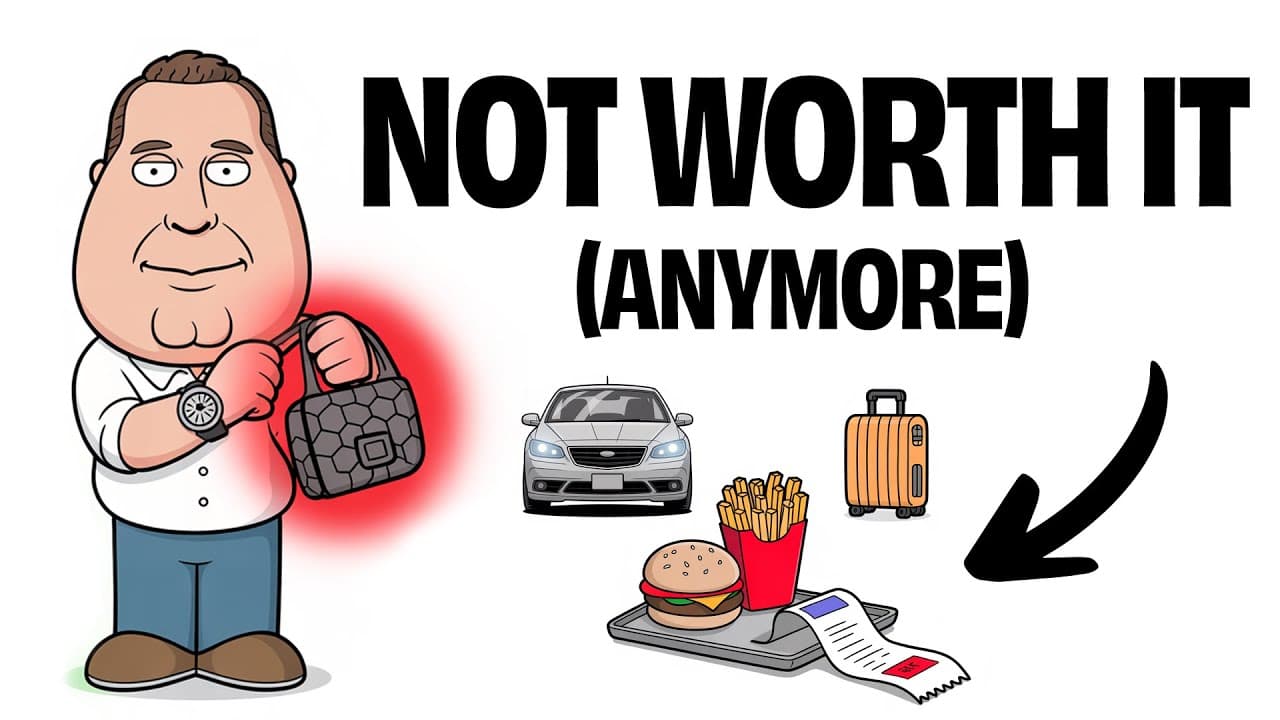
Fast food, frequent restaurant meals, new cars, luxury clothing, debt-funded vacations, neglected subscriptions, unused memberships, and unnecessary electronics upgrades are often no longer worth the money. Fast-food meals can cost $12, $15, or even $20, while a new car can lose about 20% of its value after leaving the dealership. Read on to identify recurring expenses you can reduce and redirect toward savings, investments, or debt repayment.
Transcript
Have you ever looked at your bank account after a completely normal month and wondered where all your money went? You didn't buy anything crazy, no major purchases, just regular stuff, groceries a few meals out, maybe a new phone because your old one was getting slow. Uh, normal expenses. And yet somehow you're sitting there thinking you should hav... Read More
Key Insights
- Fast food is no longer presented as a reliably inexpensive option because its prices can approach what consumers once associated with casual dining. Its convenience remains attractive, but the underlying food quality and disposable experience may not justify paying a premium on a regular basis.
- Frequent restaurant dining is a major optional expense because each meal ends immediately and leaves no asset with continuing value. Small transactions can feel harmless in isolation, yet repeated meals, drinks, appetizers, and tips can absorb money that could otherwise support saving or investing.
- A new car is a depreciating purchase that can lose substantial value soon after leaving the dealership. Financing adds interest while the vehicle continues becoming less valuable, making a dependable used car a potentially better fit for someone whose priority is building wealth.
- Luxury clothing often sells brand recognition more than proportionally better utility. Durable boots, coats, and similar long-lasting items may justify higher prices, but designer shirts, jeans, handbags, and sneakers can carry large markups primarily because consumers value logos and perceived status.
- Debt-funded travel can turn a short experience into a prolonged financial burden. Travel has genuine experiential value, but smaller trips close to home and inexpensive local activities may be more responsible when major travel would interfere with saving, investing, or financial stability.
- Streaming subscriptions become wasteful when consumers retain several services they rarely watch. Each recurring charge may appear manageable, but the combined expense can become significant, so keeping only regularly used services can release money for more important financial priorities.
- Unused cable and gym memberships persist partly because cancellation requires effort or feels like admitting failure. Continuing to pay for channels or facilities that receive little use does not recover the original intention, and cancellation can immediately stop an unnecessary recurring expense.
- Electronics should be replaced according to function rather than product-release cycles. A new phone, laptop, tablet, or smartwatch offers poor value when the current device still works adequately and the purchase is driven mainly by wanting the latest model.
Install to Summarize YouTube Videos and Get Transcripts
Explore YouTube Video Summarizer or Get YouTube Transcript Extractor
Questions & Answers
Q: What purchases are no longer worth your money?
The main examples are fast food, frequent restaurant meals, new cars, luxury clothing, unaffordable vacations, rarely used streaming or cable services, unused gym memberships, and unnecessary electronics upgrades. These purchases become poor values when their convenience, status, or limited use does not justify their cost.
Q: Why is fast food no longer considered cheap?
A fast-food meal at McDonald's or Burger King can cost $12, $15, or sometimes $20. The convenience remains, but the food is still served from a counter or eaten from a paper bag, weakening its value compared with what a casual restaurant meal cost a few years ago.
Q: How does frequent restaurant dining affect your finances?
A regular restaurant meal for two can reach $60, $70, or $80 before the tip and approach $100 afterward. Repeating that expense multiple times a week can consume money that could otherwise go toward saving, investing, or building wealth.
Q: Why can buying a new car make building wealth harder?
A new car can lose about 20% of its value as soon as it leaves the dealer's lot, then continue depreciating every year. Financing also adds interest, so the buyer pays extra for an asset that is becoming less valuable.
Q: Is a used car a better financial choice than a new car?
A dependable car that is 3 or 4 years old can be just as reliable and cost half as much, or possibly less than half. Much of the initial depreciation has already occurred, making it a better fit for someone focused on building wealth.
Q: When is expensive clothing worth the money?
Higher-priced clothing may be worthwhile when quality creates lasting utility, such as a good pair of boots or a well-made coat that lasts for years. Designer shirts, jeans, handbags, and sneakers are harder to justify when much of the price reflects logos, brand names, or status.
Q: Which subscriptions and memberships should you cancel?
Consider canceling streaming services you rarely watch, cable channels you do not use, and gym memberships that no longer fit your habits. Keeping only services you regularly use can free money for savings, investments, or debt repayment.
Q: When should you replace a phone or another electronic device?
Replace a phone, laptop, tablet, or smartwatch when its condition or performance no longer meets your practical needs. If the current device still works adequately, buying the latest model mainly for novelty offers little practical value.
Summary & Key Takeaways
-
Many ordinary purchases no longer deliver the value consumers once expected. Fast food and restaurant meals have become particularly expensive relative to their temporary benefit. The suggested response is not to eliminate every enjoyable purchase, but to question habitual spending and prepare acceptable meals at home more frequently.
-
Large discretionary purchases can undermine wealth when they are motivated by status or social expectations. New cars lose value while buyers may also pay financing costs, and luxury clothing often charges heavily for brand recognition. Dependable used vehicles and durable, reasonably priced clothing can provide similar practical benefits.
-
Vacations, streaming platforms, cable packages, gym memberships, and electronics can quietly consume money when purchased without regard to affordability or actual use. Smaller local trips, fewer active subscriptions, canceled memberships, and longer replacement cycles can redirect income toward savings, investments, or paying down debt.
-
Key Insights
-
Fast food is no longer presented as a reliably inexpensive option because its prices can approach what consumers once associated with casual dining. Its convenience remains attractive, but the underlying food quality and disposable experience may not justify paying a premium on a regular basis.
-
Frequent restaurant dining is a major optional expense because each meal ends immediately and leaves no asset with continuing value. Small transactions can feel harmless in isolation, yet repeated meals, drinks, appetizers, and tips can absorb money that could otherwise support saving or investing.
-
A new car is a depreciating purchase that can lose substantial value soon after leaving the dealership. Financing adds interest while the vehicle continues becoming less valuable, making a dependable used car a potentially better fit for someone whose priority is building wealth.
-
Luxury clothing often sells brand recognition more than proportionally better utility. Durable boots, coats, and similar long-lasting items may justify higher prices, but designer shirts, jeans, handbags, and sneakers can carry large markups primarily because consumers value logos and perceived status.
-
Debt-funded travel can turn a short experience into a prolonged financial burden. Travel has genuine experiential value, but smaller trips close to home and inexpensive local activities may be more responsible when major travel would interfere with saving, investing, or financial stability.
-
Streaming subscriptions become wasteful when consumers retain several services they rarely watch. Each recurring charge may appear manageable, but the combined expense can become significant, so keeping only regularly used services can release money for more important financial priorities.
-
Unused cable and gym memberships persist partly because cancellation requires effort or feels like admitting failure. Continuing to pay for channels or facilities that receive little use does not recover the original intention, and cancellation can immediately stop an unnecessary recurring expense.
-
Electronics should be replaced according to function rather than product-release cycles. A new phone, laptop, tablet, or smartwatch offers poor value when the current device still works adequately and the purchase is driven mainly by wanting the latest model.
-
Q_and_A
-
How can I identify purchases that are no longer worth the money?
-
Compare the price of each purchase with the practical value you actually receive. Ask whether you are paying for usefulness, durability, convenience, status, or access you rarely use. A purchase is a strong candidate for reduction when a cheaper option provides similar utility, the benefit ends quickly, or the expense interferes with saving, investing, or debt repayment.
-
Why is fast food described as poor value now?
-
Fast food was traditionally attractive because it combined speed with affordability. The transcript argues that its prices have risen enough to weaken that bargain while the food quality and service format remain largely unchanged. Consumers still order it for convenience, but regular use becomes harder to justify when preparing food at home costs a fraction of the amount.
-
How does frequent restaurant dining affect a budget?
-
Restaurant spending can accumulate unnoticed because it appears as a series of ordinary transactions rather than one major purchase. Entrées, appetizers, drinks, and tips increase the total, while the meal provides no lasting financial value after it is consumed. Cooking at home more often can therefore create meaningful room for savings, investments, or debt payments.
-
Why can buying a new car make building wealth harder?
-
A new car begins losing value quickly, and buyers who finance it also pay interest while the asset continues depreciating. The transcript recommends considering a dependable used vehicle because it can provide the same basic transportation after someone else has absorbed much of the early value loss. Status and novelty do not improve the car's essential function.
-
When is expensive clothing worth buying?
-
Expensive clothing can be worthwhile when higher quality produces genuine durability, as with well-made boots or a coat that lasts for years. It becomes harder to justify when most of the price reflects a logo or luxury brand rather than better materials and performance. The practical test is long-term usefulness, not perceived status.
-
How can I travel without damaging my finances?
-
Travel should fit within available funds rather than depend on credit card debt or prevent progress toward financial goals. The transcript suggests smaller trips near home, exploring one's own region, and choosing free or inexpensive activities. More elaborate travel can wait until it is affordable without creating prolonged repayment obligations or additional financial stress.
-
Which subscriptions should I cancel first?
-
Start with streaming services you barely watch, cable channels you do not use, and gym memberships that no longer match your habits. Keeping a subscription because you might use it later does not make the current charge valuable. Review actual use, retain the services that consistently benefit you, and redirect canceled payments toward savings, investments, or debt.
-
When should I replace a phone or other electronic device?
-
Replace an electronic device when its condition or performance no longer meets your practical needs, not simply because a newer model has been released. The transcript criticizes buying new phones, laptops, tablets, and smartwatches while existing devices still work well. Extending the useful life of functional electronics avoids paying repeatedly for minor novelty.
Read in Other Languages (beta)
Share This Summary 📚
Summarize YouTube Videos and Get Video Transcripts with 1-Click
Try YouTube Summary with ChatGPT & Claude or YouTube Transcript Generator
Explore More Summaries from Nick Invests 📚



Summarize YouTube Videos and Get Video Transcripts with 1-Click
Try YouTube Summary with ChatGPT & Claude or YouTube Transcript Generator