How Do Air Conditioners and Heat Pumps Work?
TL;DR
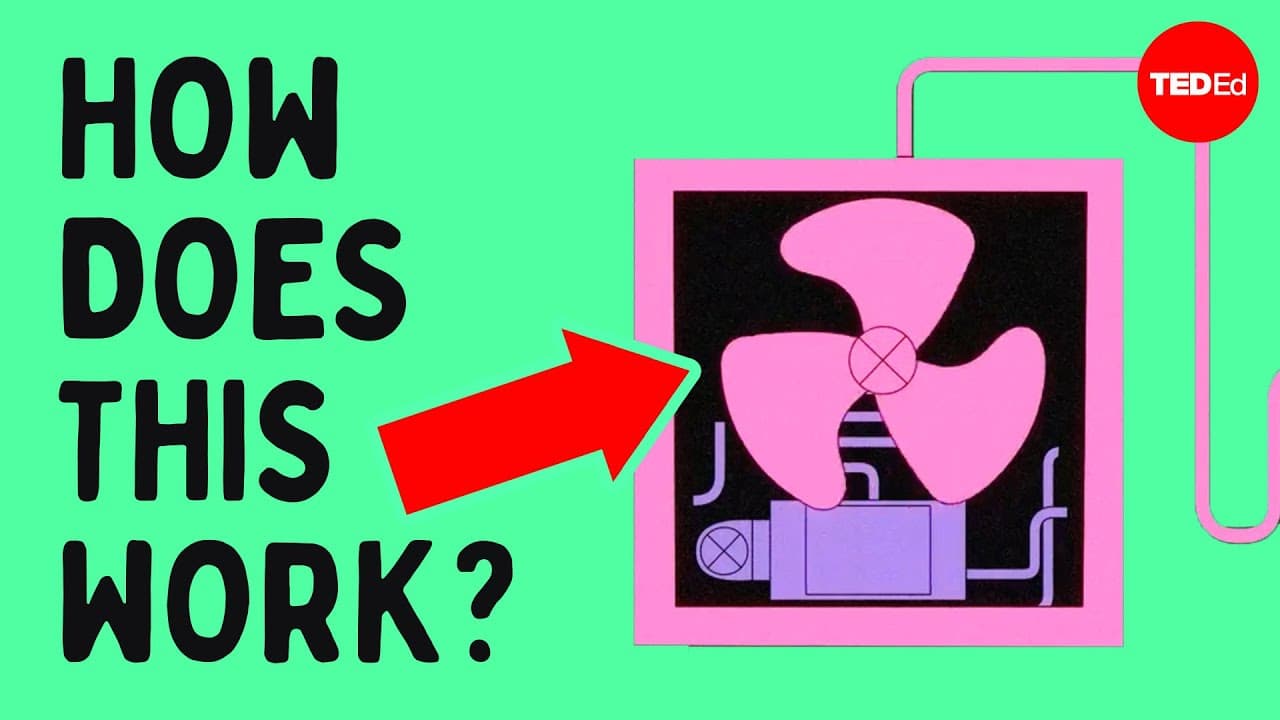
Air conditioners and heat pumps transfer heat using electricity, producing 3 to 5 times more heat than the energy consumed. They work by circulating a refrigerant that absorbs heat from one area and releases it in another, making them a climate-friendly option for heating and cooling. Despite challenges like refrigerant leakage, heat pumps are efficient and can lead to long-term cost savings.
Transcript
Typically, with any piece of technology, you get out what you put in. Pump one unit of energy into an electric toaster and you get about one out in the form of heat. That’s just the first law of thermodynamics: energy has to be conserved. But there's a piece of technology called a heat pump, where for every bit of energy you put in, you get 3 to 5 ... Read More
Key Insights
- 🥵 Heat pumps are an energy-efficient and climate-friendly alternative to traditional heating methods that reduce CO2 emissions and save costs in the long run.
- 🥵 They operate by using electricity to power the compressor and fans, while extracting heat from the air or ground.
- 😘 Refrigerant leakage and lower efficiency in colder temperatures are some challenges associated with heat pumps.
- 🥵 Subsidies and incentives are being provided by many countries to encourage the adoption of heat pumps and mitigate their upfront costs.
- 🥵 Heat pumps have the potential to be used in various sectors, including manufacturing and district heating, through innovative applications.
- 🫢 The development of environmentally friendly refrigerants is crucial to mitigate the greenhouse gas impact of heat pumps.
- 🥵 Heat pumps are gaining popularity in countries like Norway, where more than half of the buildings utilize this technology.
Install to Summarize YouTube Videos and Get Transcripts
Explore YouTube Video Summarizer or Get YouTube Transcript Extractor
Questions & Answers
Q: How do heat pumps reduce CO2 emissions?
Heat pumps reduce CO2 emissions in two ways. Firstly, they run on electricity, which means less reliance on fossil fuels as grids transition to renewable energy sources. Secondly, they are more efficient than traditional heaters, using less energy to produce the same amount of heat.
Q: Can heat pumps be used for both cooling and heating?
Yes, heat pumps can double as air conditioners. In the summer, they take heat from indoors and move it outside, and in the winter, they pick up heat from outside and move it indoors.
Q: Are there any environmental concerns associated with heat pumps?
One concern is the potential leakage of refrigerants, which can be potent greenhouse gases. Efforts are being made to develop new refrigerants that are more environmentally friendly. Additionally, improper installation or disposal of heat pumps can also lead to refrigerant leakage.
Q: Are heat pumps affordable for everyone?
While the upfront cost of installing a heat pump can be expensive, they can save money on utilities in the long run. Many countries offer subsidies to help with the costs, and some cities are finding creative uses for heat pumps in manufacturing and district heating.
Summary & Key Takeaways
-
Heat pumps are a more efficient and climate-friendly alternative to traditional heaters that rely on burning fossil fuels, as they run on electricity and require less energy to produce the same amount of heat.
-
By harnessing the second law of thermodynamics, heat pumps transfer heat from indoors to outdoors (for air conditioning) or from outdoors to indoors (for heating) using a refrigerant.
-
Despite the drawbacks such as the potential for refrigerant leakage and lower efficiency in colder temperatures, heat pumps are gaining popularity due to their long-term cost-saving benefits and subsidies provided by many countries.
Read in Other Languages (beta)
Share This Summary 📚
Summarize YouTube Videos and Get Video Transcripts with 1-Click
Try YouTube Summary with ChatGPT & Claude or YouTube Transcript Generator
Explore More Summaries from TED-Ed 📚


Summarize YouTube Videos and Get Video Transcripts with 1-Click
Try YouTube Summary with ChatGPT & Claude or YouTube Transcript Generator