What Does Beloved Reveal About Slavery and Ghosts?, Crash Course Literature 214
TL;DR
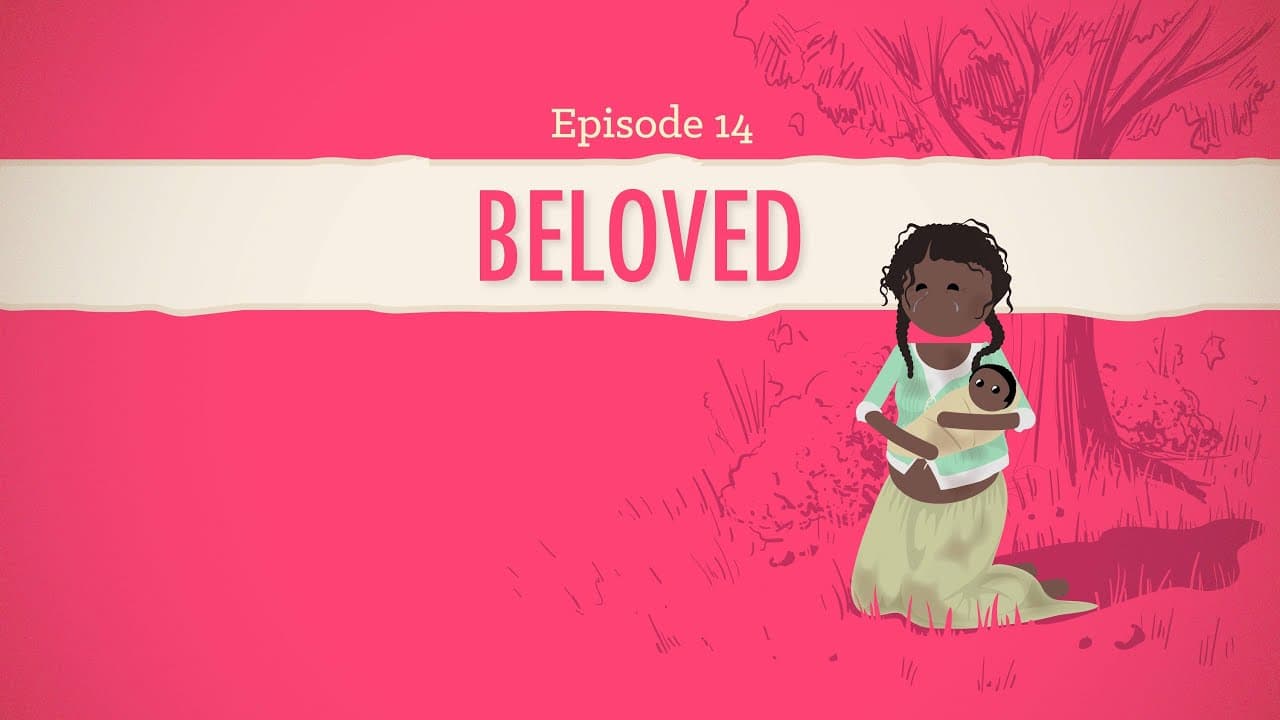
Beloved matters because Toni Morrison uses its ghostly central figure to embody the disremembered and unaccounted for people lost to slavery. Through Sethe’s rememory, maternal love, and attempt to protect her children, the novel confronts slavery’s destruction of identity and family while emphasizing human resilience against dehumanization. Read on to understand Beloved’s uncertain reality, Sethe’s choices, and the hope within this deeply sad story.
Transcript
Hi, I'm John Green, this is Crash Course Literature, and today we're going to talk about Beloved. MFTP: Mr. Green, Mr. Green! I actually like this book. Yeah, I know you do, me from the past, because I'm you. So you read Song of Solomon in class the year that Tony Morrison won the Nobel Prize and that summer you read Beloved, the first, like, prope... Read More
Key Insights
- Beloved is a novel by Toni Morrison that explores the legacy of slavery through a haunting narrative.
- Sethe, the protagonist, is a mother who attempts to escape slavery and protect her children from its horrors.
- Beloved, a central character, symbolizes the untold stories of the millions lost to slavery.
- The novel addresses themes of memory, trauma, and the struggle for identity and humanity.
- Morrison's narrative challenges readers to confront the uncomfortable truths about slavery's impact on individuals and families.
- The character of Beloved blurs the line between reality and the supernatural, representing the unresolved past.
- Sethe's 'thick love' for her children is both a source of strength and a point of contention in the novel.
- Beloved ultimately emphasizes the resilience of the human spirit and the importance of confronting history to move forward.
Install to Summarize YouTube Videos and Get Transcripts
Explore YouTube Video Summarizer or Get YouTube Transcript Extractor
Questions & Answers
Q: What is the significance of Beloved in the novel?
Beloved embodies people who were disremembered and unaccounted for under slavery. John Green describes her as a symbol for the 60 million and more lost in slavery whose stories and names will never be known.
Q: Is Beloved a real ghost?
The novel deliberately provides no definitive answer. Some clues suggest that Beloved is a ghost returned in human form, while others imply that she is a woman who recently escaped sexual slavery and exploitation; her uncertainty is central to her ghostliness.
Q: How does Beloved explore memory and trauma?
Sethe and Paul D confront slavery through what they call “rememory,” showing how the past remains present and unresolved. Beloved embodies this haunting process by bringing disremembered lives and unsettled wrongs into the story.
Q: How does slavery affect motherhood in Beloved?
Slavery intentionally disrupts mother-child relationships: children can be sold separately, marriages are unrecognized, and even Sethe’s children in freedom remain claimable property. Sethe was raised largely without her mother, and Baby Suggs had eight children with six fathers as people were moved around like checkers.
Q: Why does Sethe try to kill her children?
Sethe gets her children across the Ohio River to freedom from Sweet Home, but the slave owner arrives 28 days later to reclaim them. Believing capture would be worse, she takes the children to the woodshed and tries to kill them all, but kills only one.
Q: What does Sethe’s stolen milk signify?
Sethe was fed another woman’s milk as a baby because slavery had separated her from maternal care. The white men’s theft of her own milk is therefore especially horrifying because it violates both her body and her effort to nurture her children herself.
Q: Why is Beloved described as a powerful depiction of slavery?
Although the story is fictional and filled with ghosts and improbabilities, it confronts readers with slavery through Sethe and Paul D’s rememory. It depicts enslaved people being defined and treated as inhuman while showing them resisting, persevering, and finding ways to humanness.
Q: Where does the hope in Beloved come from?
The hope comes from enslaved people’s ability to continue despite every attempt to dehumanize them. The episode emphasizes the unnamed and unknown people who resisted and persevered, presenting that resilience as what made slavery untenable.
Summary & Key Takeaways
-
Beloved explores the haunting legacy of slavery through the experiences of Sethe, a mother determined to protect her children. The novel delves into themes of memory and trauma, with Beloved symbolizing the countless untold stories of those lost to slavery. Morrison's narrative challenges readers to confront uncomfortable truths about history and emphasizes the resilience of the human spirit.
-
Sethe's intense love for her children drives her actions throughout the novel, highlighting the complexities of maternal relationships in the context of slavery. Beloved blurs the line between reality and the supernatural, representing the unresolved past and the need to confront history. The novel ultimately offers a message of hope and resilience in the face of dehumanization.
-
Through its exploration of memory and trauma, Beloved emphasizes the importance of confronting the past to move forward. Morrison's narrative challenges readers to reflect on the impact of slavery on individuals and families, while also celebrating the enduring human spirit. The novel's haunting elements and complex characters make it a powerful and thought-provoking work of literature.
Read in Other Languages (beta)
Share This Summary 📚
Summarize YouTube Videos and Get Video Transcripts with 1-Click
Try YouTube Summary with ChatGPT & Claude or YouTube Transcript Generator
Explore More Summaries from CrashCourse 📚




Summarize YouTube Videos and Get Video Transcripts with 1-Click
Try YouTube Summary with ChatGPT & Claude or YouTube Transcript Generator