What Happens When Calcium Carbonate Meets Hydrochloric Acid?
TL;DR
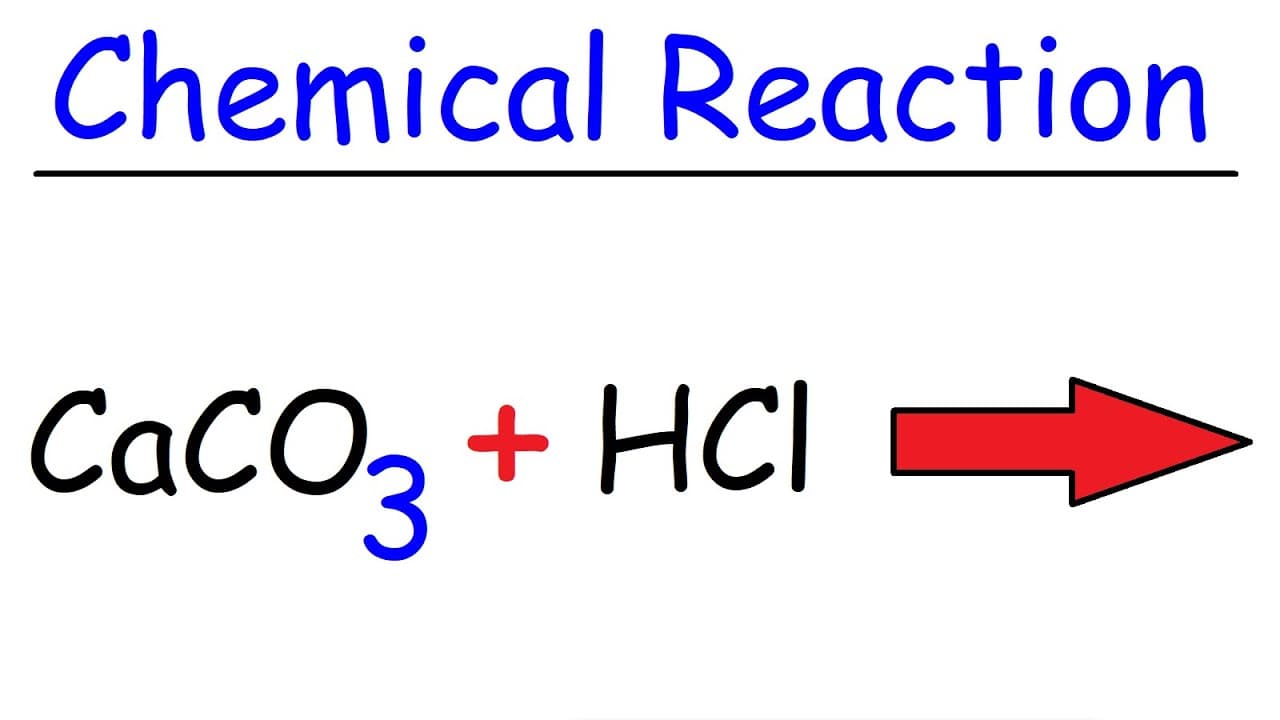
When calcium carbonate reacts with hydrochloric acid, it produces calcium chloride, water, and carbon dioxide. This reaction is classified as a gas evolution reaction, where calcium chloride dissolves in water, and the net ionic equation highlights only the ions that participate in the reaction, excluding spectator ions like chloride.
Transcript
in this tutorial we're going to talk about how to predict the products of the reaction between calcium carbonate and hydrochloric acid and we're also going to talk about how to balance the equation and how to write the net ionic equation so let's begin first we need to predict the products of this chemical reaction this is a double replacement reac... Read More
Key Insights
- ⏫ The reaction between calcium carbonate and hydrochloric acid is a double replacement reaction.
- 😑 In the net ionic equation, only the ions that participate in the reaction are included.
- 💦 Calcium carbonate is insoluble in water, while hydrochloric acid dissolves in water, separating into hydrogen and chloride ions.
- ❓ The balanced equation requires a coefficient of 2 in front of hydrochloric acid.
Install to Summarize YouTube Videos and Get Transcripts
Explore YouTube Video Summarizer or Get YouTube Transcript Extractor
Questions & Answers
Q: What are the products of the reaction between calcium carbonate and hydrochloric acid?
The products of this reaction are calcium chloride, water, and carbon dioxide. Calcium chloride is soluble in water, while carbonic acid decomposes to water and carbon dioxide.
Q: Is calcium chloride soluble or insoluble in water?
Calcium chloride is soluble in water. However, there are exceptions where chlorides bonded to silver, mercury, or lead are insoluble.
Q: Why does carbonic acid decompose in acidic environments?
Carbonic acid decomposes in acidic environments because it is an unstable compound. Its decomposition results in the formation of water and carbon dioxide.
Q: How do you write the net ionic equation for this reaction?
To write the net ionic equation, you first balance the molecular equation, then write the total ionic equation by breaking down compounds into their respective ions. Finally, eliminate the spectator ions to obtain the net ionic equation.
Summary & Key Takeaways
-
The reaction between calcium carbonate and hydrochloric acid results in the formation of calcium chloride, water, and carbon dioxide.
-
Calcium chloride is soluble in water, while carbonate combines with hydrogen to form carbonic acid, which decomposes to water and carbon dioxide.
-
The equation needs to be balanced, and the total ionic equation is written by breaking down the compounds into their respective ions.
Read in Other Languages (beta)
Share This Summary 📚
Summarize YouTube Videos and Get Video Transcripts with 1-Click
Try YouTube Summary with ChatGPT & Claude or YouTube Transcript Generator
Explore More Summaries from The Organic Chemistry Tutor 📚


Summarize YouTube Videos and Get Video Transcripts with 1-Click
Try YouTube Summary with ChatGPT & Claude or YouTube Transcript Generator