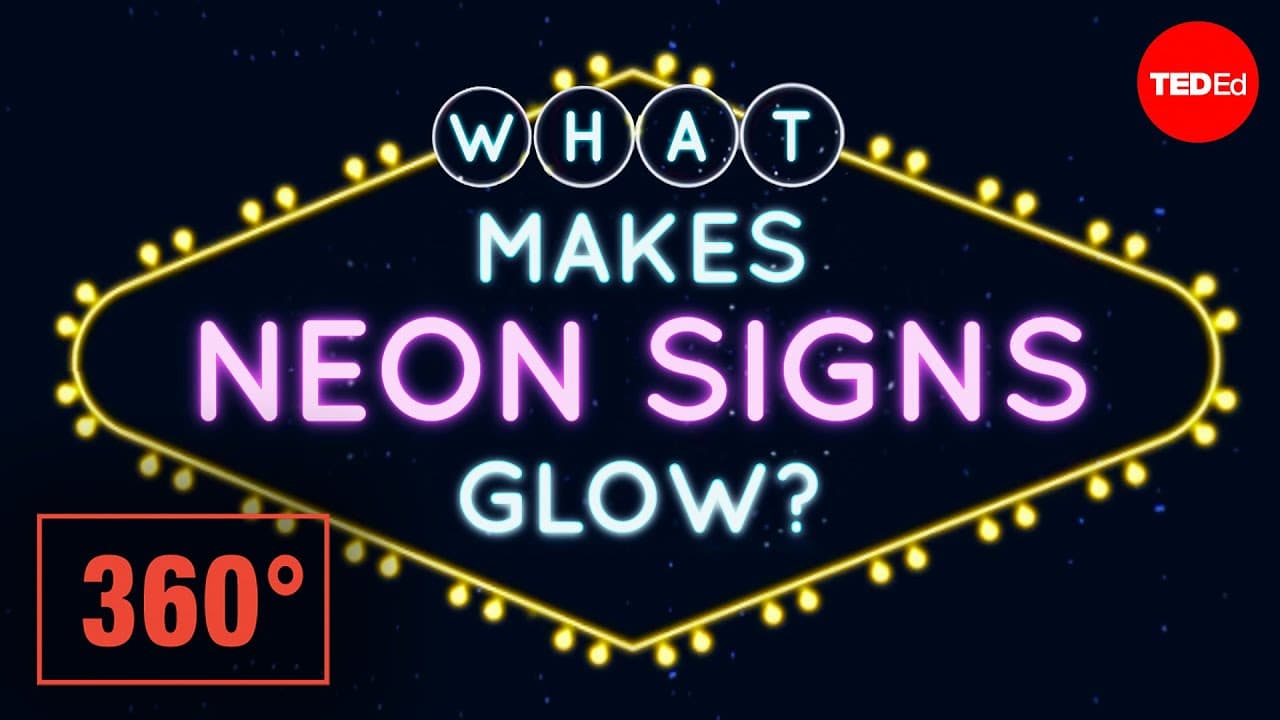
What makes neon signs glow? A 360° animation - Michael Lipman
TL;DR
Neon signs were born in the early 20th century when French inventor Georges Claude developed techniques to capture and make neon gas glow. They quickly became popular for their vibrant and long-lasting display of colorful lights.
Transcript
When the Hoover Dam was completed in 1936, it created a huge source of hydroelectric power and zapped a sleepy desert town to life: Las Vegas, Nevada. With the power supply from the dam, Las Vegas soon exploded with vibrant displays. The source of these dazzling lights was electrified neon gas. There are two tricky obstacles to making lighted... Read More
Key Insights
- 🥺 The completion of the Hoover Dam in 1936 brought hydroelectric power to Las Vegas, leading to the rapid growth of neon signs.
- 🫢 French inventor Georges Claude developed techniques to capture and make neon gas glow, revolutionizing the production of neon signs.
- 💁 Neon signs are created by hand by skilled artisans known as tube-benders, who heat and shape glass tubes to form intricate designs.
- 🙂 Neon signs are made with different gases, each emitting photons of different wavelengths, resulting in various colors of light.
- 💡 Neon signs have advantages over traditional light bulbs, such as longevity and continuous illumination without incandescent filaments burning out.
- 🤘 The fragility of glass tubes limited the long-distance shipping of neon signs, resulting in most signs being produced locally.
- 🤘 Plastic signs became popular after World War II due to their affordability and versatility, replacing many neon signs.
Install to Summarize YouTube Videos and Get Transcripts
Explore YouTube Video Summarizer or Get YouTube Transcript Extractor
Questions & Answers
Q: How did the completion of the Hoover Dam contribute to the popularity of neon signs?
The power supply from the dam enabled Las Vegas to explode with vibrant displays of electrified neon gas, leading to the widespread use of neon signs to attract customers.
Q: Who was responsible for the development of neon signs?
Georges Claude, a French inventor, developed techniques to capture and make neon gas glow, leading to the birth of neon lighting and the creation of neon signs.
Q: How are neon signs made?
Neon signs are made by artisans called tube-benders who shape glass tubes, attach electrodes at either end, remove impurities, pump in different gases, and finally seal off the electrodes to create the iconic glow.
Q: Why did plastic signs replace neon signs after World War II?
Plastics became widely available and inexpensive after World War II, making plastic signs more affordable and versatile. Many towns viewed neon signs as old-fashioned and removed them.
Summary & Key Takeaways
-
The completion of the Hoover Dam in 1936 brought hydroelectric power to Las Vegas, resulting in the explosive growth of neon signs.
-
French inventor Georges Claude played a crucial role in developing techniques to capture and make neon gas glow.
-
Neon signs are created by hand by artisans known as tube-benders, who heat and shape glass tubes, remove impurities, and fill them with different gases for various colors.
Read in Other Languages (beta)
Share This Summary 📚
Summarize YouTube Videos and Get Video Transcripts with 1-Click
Try YouTube Summary with ChatGPT & Claude or YouTube Transcript Generator
Explore More Summaries from TED-Ed 📚


Summarize YouTube Videos and Get Video Transcripts with 1-Click
Try YouTube Summary with ChatGPT & Claude or YouTube Transcript Generator