How Do Vultures Keep Ecosystems Healthy?
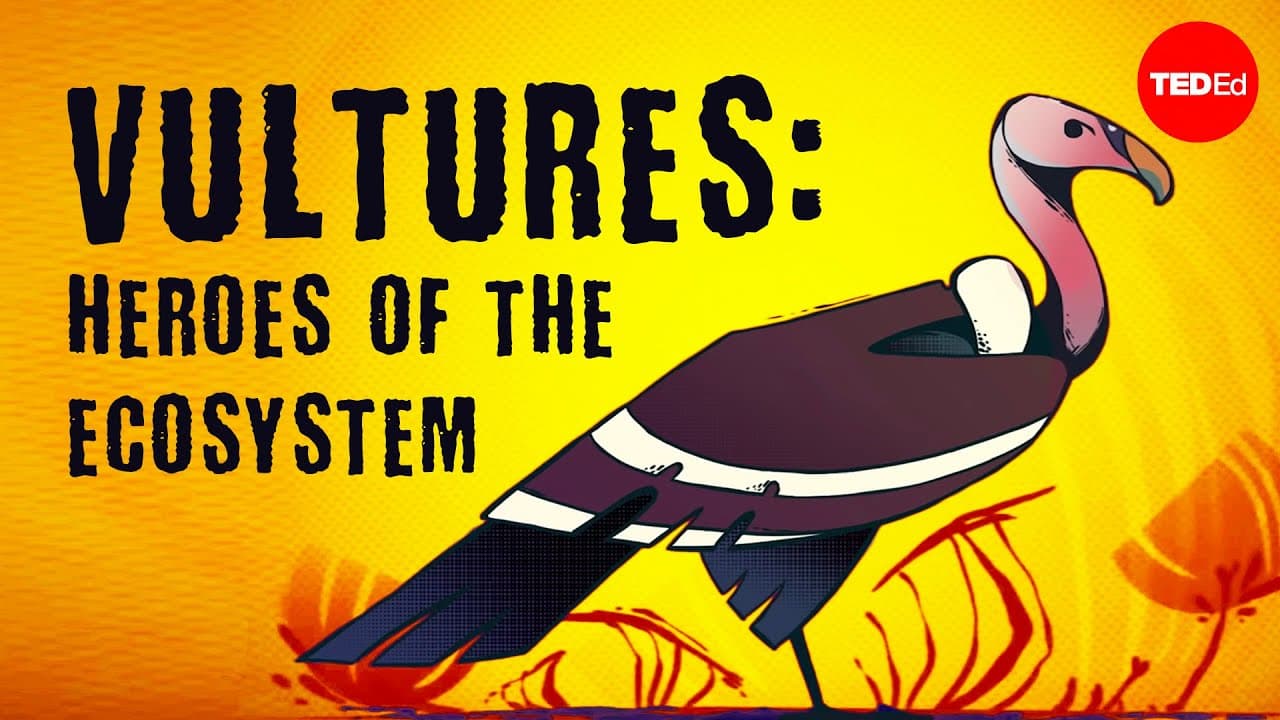
TL;DR
Vultures play a vital role in ecosystems by quickly consuming carrion, which prevents the spread of diseases like tuberculosis and cholera. Their highly acidic stomachs allow them to digest decaying meat and pathogens without falling ill. However, threats such as poisoning and habitat loss have caused a dramatic decline in vulture populations, leading to serious health risks for communities.
Transcript
In the grasslands of Mauritania, a gazelle suffering from tuberculosis takes its last breath. Collapsing near a small pool, the animal’s corpse threatens to infect the water. But for the desert’s cleanup crew, this body isn’t a problem: it’s a feast. Weighing up to 10 kilograms and possessing a wingspan of nearly 3 meters, the lappet-faced vult... Read More
Key Insights
- ❓ Vultures prevent the spread of diseases by quickly removing carcasses and pathogens, keeping the ecosystem clean.
- 🥺 Man-made threats such as the veterinary drug Diclofenac, poisons used by poachers, and habitat loss have led to a decline in vulture populations.
- 💦 The decline of vultures has resulted in contaminated drinking water, increased disease transmission, and even epidemics of rabies.
Install to Summarize YouTube Videos and Get Transcripts
Explore YouTube Video Summarizer or Get YouTube Transcript Extractor
Questions & Answers
Q: What makes the lappet-faced vulture the undisputed king of carcasses?
The lappet-faced vulture's large size, powerful beak, and strong neck allow it to easily tear through hide and muscle, providing entry points for weaker vultures to feed.
Q: How does the Egyptian vulture compensate for its small size?
The Egyptian vulture uses its intelligence to find alternative food sources, such as smashing open ostrich eggs or waiting for larger birds to finish feeding before returning to a carcass.
Q: How do Ruppell's Griffon vultures locate feeding sites despite flying at extreme altitudes?
Ruppell's Griffon vultures can't see individual carcasses from their altitude, but they rely on the presence of other vultures to guide them to feeding locations.
Q: How do vultures protect themselves from pathogens in diseased carrion?
Vultures have evolved the lowest gastric pH in the animal kingdom, allowing them to digest diseased carrion without getting sick. Their stomachs can also digest bones and help remove pathogens from the ecosystem.
Summary & Key Takeaways
-
The lappet-faced vulture, with its powerful beak, is the king of carcasses in the grasslands of Mauritania.
-
The smaller Egyptian vulture, though less dominant, compensates for its size by using intelligence to find alternative food sources.
-
Ruppell's Griffon vultures fly at extreme altitudes and rely on other vultures' presence to locate feeding sites.
Read in Other Languages (beta)
Share This Summary 📚
Summarize YouTube Videos and Get Video Transcripts with 1-Click
Try YouTube Summary with ChatGPT & Claude or YouTube Transcript Generator
Explore More Summaries from TED-Ed 📚






Summarize YouTube Videos and Get Video Transcripts with 1-Click
Try YouTube Summary with ChatGPT & Claude or YouTube Transcript Generator