How Does Carbon-14 Dating Estimate Wood Age?
TL;DR
Carbon-14 dating estimates the age of wood by comparing decay rates of carbon-14 in living trees and dried wood. When a tree dies, it stops absorbing carbon dioxide, leading to a decrease in carbon-14. By measuring the decay rate in the old wood and using the constant decay rate from living trees, scientists can calculate the wood's age.
Transcript
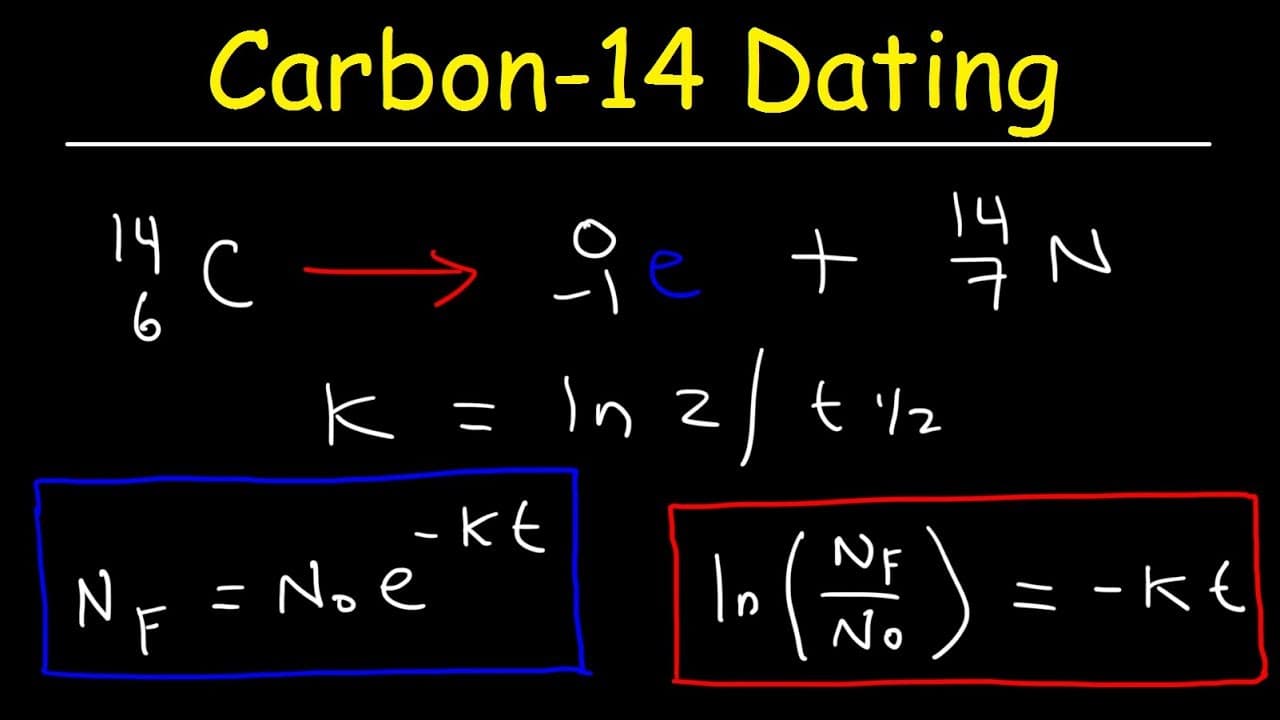
in this video we're going to talk about how to solve a problem associated with carbon 14 dayton so we have a living tree that has a carbon 14 decay rate of 13.6 counts per minute per gram an old dried piece of wood from the same type of tree has a decay rate of 3.4 counts per minute per gram estimate the age of the old piece of wood now first let's... Read More
Key Insights
- ☠️ Carbon-14 decay rates in living trees remain constant due to continuous carbon dioxide absorption.
- ☠️ Dry pieces of wood no longer absorb carbon dioxide, causing carbon-14 counts and decay rates to decrease over time.
- ↗️ Carbon-14 is produced in the upper atmosphere and consumed by beta decay, resulting in a relatively constant concentration in the Earth's atmosphere.
- 🤕 The formula n final / n initial = -kt is used to calculate the age of wood, with n initial representing the initial amount of radiation and n final being the final amount of radiation.
- ☠️ The time or age of wood can be estimated by calculating t using the formula and the rate constant (k).
- 🌲 The age of a living tree cannot be calculated using carbon-14 dating, as it measures the time since the wood has been dead.
- 🌲 The decay rate of carbon-14 can be used to estimate how long a tree or piece of wood has been dead.
Install to Summarize YouTube Videos and Get Transcripts
Explore YouTube Video Summarizer or Get YouTube Transcript Extractor
Questions & Answers
Q: Why are the decay rates different in living trees and dry pieces of wood?
Living trees constantly absorb carbon dioxide from the air, maintaining a constant carbon-14 decay rate. Dry pieces of wood no longer absorb carbon dioxide, causing the carbon-14 count and decay rate to decrease over time.
Q: How can we estimate the age of an old piece of wood?
By comparing the carbon-14 decay rate of the old piece of wood to that of living trees, we can calculate the time since the wood stopped absorbing carbon dioxide and estimate its age.
Q: What is the rate constant, and how is it calculated?
The rate constant (k) is a value used in the carbon-14 dating formula. It is calculated using the natural logarithm of 2 divided by the carbon-14 half-life (5730 years).
Q: Can the age of a living tree be calculated using carbon-14 dating?
No, carbon-14 dating is used to estimate the age of wood once it has stopped absorbing carbon dioxide and is considered "dead." The technique measures the time since the wood has been dead, not the age of a living tree.
Summary & Key Takeaways
-
Living trees constantly absorb carbon dioxide from the air, resulting in a constant carbon-14 decay rate. Dry pieces of wood that are no longer attached to living trees do not absorb carbon dioxide, causing the carbon-14 count to decrease over time.
-
The decay rate of carbon-14 occurs through beta decay, where carbon-14 converts into nitrogen-14. By measuring the decay rate, scientists can estimate the age of wood.
-
The concentration of carbon-14 in the atmosphere is relatively constant, allowing scientists to calculate the age of old pieces of wood by comparing their carbon-14 decay rate to that of living trees.
Read in Other Languages (beta)
Share This Summary 📚
Summarize YouTube Videos and Get Video Transcripts with 1-Click
Try YouTube Summary with ChatGPT & Claude or YouTube Transcript Generator
Explore More Summaries from The Organic Chemistry Tutor 📚


Summarize YouTube Videos and Get Video Transcripts with 1-Click
Try YouTube Summary with ChatGPT & Claude or YouTube Transcript Generator