What Is Reinforcement Learning? Basics Explained
TL;DR
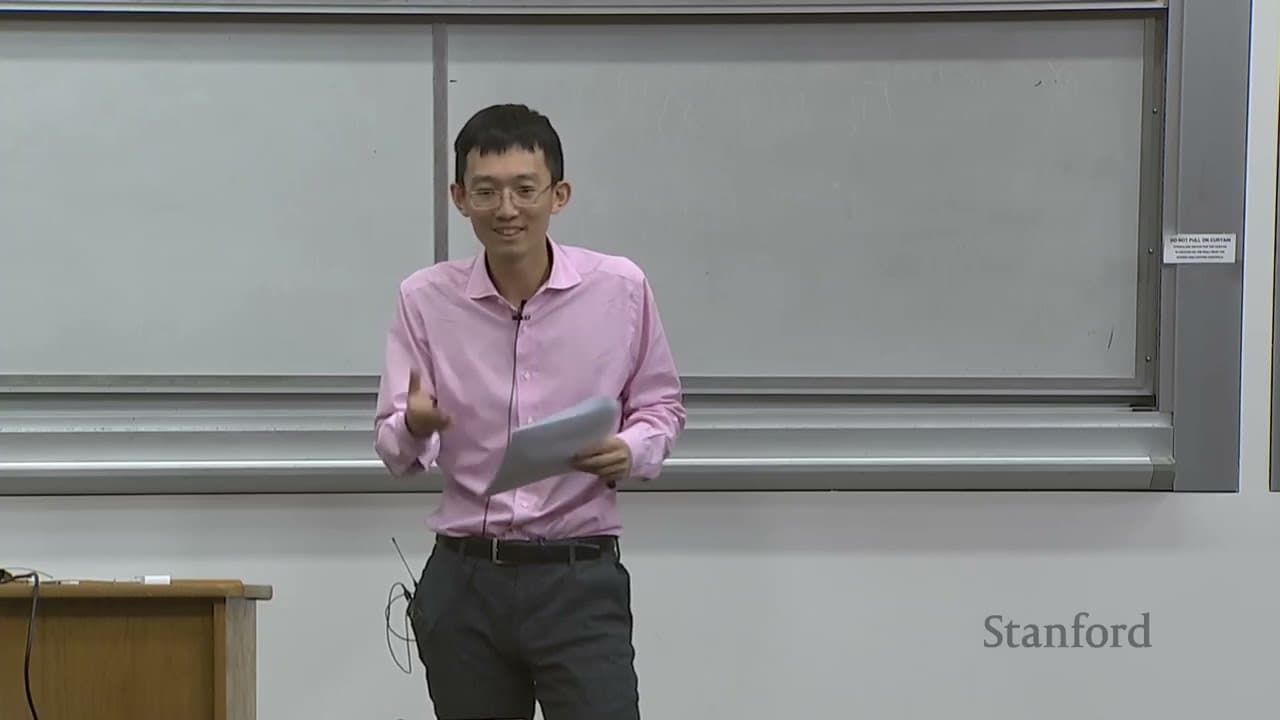
Reinforcement learning focuses on making sequential decisions by learning from interactions with the environment. It uses reward signals to guide actions, emphasizing long-term outcomes over immediate rewards. Essential concepts include policies, value functions, and Markov decision processes, which shape how agents optimize their strategies.
Transcript
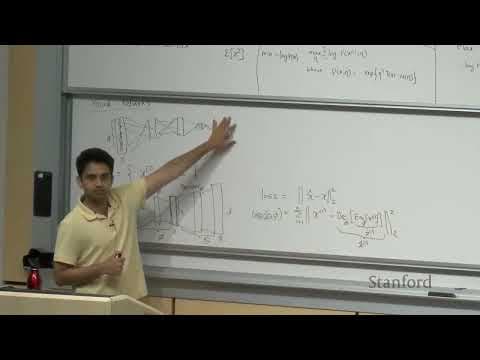
so I guess um let's get started um from today um we're going to talk about um just in two lectures on the topic reinforcement learning so reinforcement learning is um a pretty important sub area of machine learning but it does have a slightly different flavor um we're not going to spend a lot of time we only have just because this course has covere... Read More
Key Insights
- ⚾ Reinforcement learning involves sequential decision making based on predictions and actions.
- ♻️ Markov decision processes (MDPs) capture the dynamics of the environment in reinforcement learning.
- 🤩 The value function and policy evaluation play key roles in determining optimal decisions in reinforcement learning.
- ❓ The concept of rewards and the reward function are crucial in reinforcement learning.
- 🥡 Policies determine the actions taken by an agent in reinforcement learning.
- ⚖️ The balance between exploration and exploitation is an important consideration in reinforcement learning.
- 🍵 Reinforcement learning can handle both deterministic and stochastic environments.
Install to Summarize YouTube Videos and Get Transcripts
Explore YouTube Video Summarizer or Get YouTube Transcript Extractor
Questions & Answers
Q: What is the main difference between reinforcement learning and supervised learning?
The main difference is that reinforcement learning involves decision making based on predictions and actions, while supervised learning is focused on prediction alone. Reinforcement learning also considers long-term consequences of decisions.
Q: How does reinforcement learning deal with the lack of supervision or expert knowledge?
In reinforcement learning, the reward function specifies what the desired outcome is, allowing the algorithm to learn from the rewards obtained. This eliminates the need for explicit supervision or expert knowledge.
Q: Can reinforcement learning be used in environments with stochastic (random) outcomes?
Yes, reinforcement learning can handle stochastic outcomes. The transition probabilities in the Markov decision process (MDP) capture the randomness of the environment, allowing the algorithm to learn and make decisions accordingly.
Q: How does reinforcement learning handle long-term decision making?
Reinforcement learning considers the long-term consequences of decisions by taking into account the expected future rewards. This prevents the algorithm from making purely greedy or short-sighted decisions, allowing it to balance immediate rewards with long-term goals.
Summary & Key Takeaways
-
Reinforcement learning is a subfield of machine learning that involves sequential decision making.
-
In reinforcement learning, decisions are made based on predictions and actions, taking into account long-term consequences.
-
The process involves learning from rewards to optimize decision-making strategies.
Read in Other Languages (beta)
Share This Summary 📚
Summarize YouTube Videos and Get Video Transcripts with 1-Click
Try YouTube Summary with ChatGPT & Claude or YouTube Transcript Generator
Explore More Summaries from Stanford Online 📚


Summarize YouTube Videos and Get Video Transcripts with 1-Click
Try YouTube Summary with ChatGPT & Claude or YouTube Transcript Generator