What Are Tree Recursive Neural Networks and Their Uses?
TL;DR
Tree recursive neural networks capture the hierarchical structure of phrases to improve meaning composition and sentiment analysis. They utilize word vectors and specific weight matrices to handle interactions between words and phrases effectively, enabling better performance in sentiment tasks and addressing complexities like negation.
Transcript
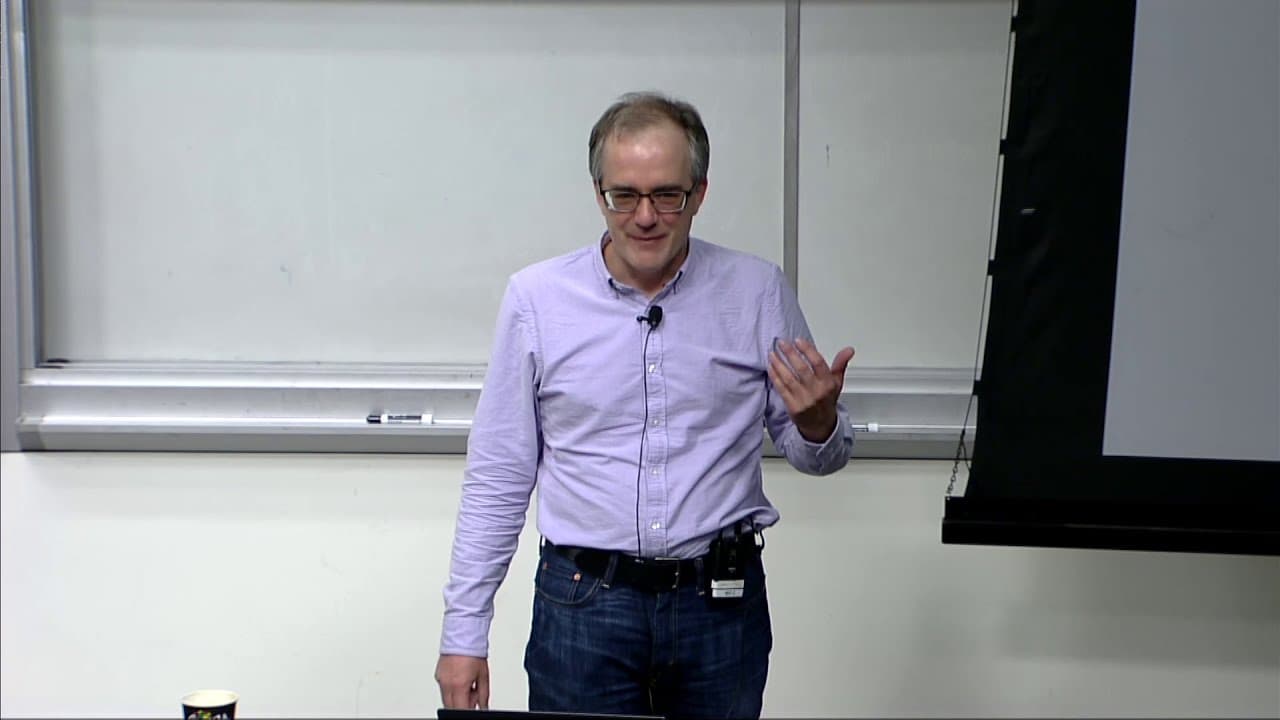
Okay. Hi everyone. Let's get started [NOISE] Okay. So, so for today's lecture, what we're gonna do is look at the topic of having Tree Recursive Neural Networks. I mean, this is actually, uh, a topic which I feel especially fond of and attached to, because actually when we started doing deep learning for NLP here at Stanford in 2010, really for the... Read More
Key Insights
- ❓ Recursive neural networks capture the hierarchical structure of phrases and improve sentiment analysis performance.
- 🍵 The model can handle negation and capture the interaction between words and phrases.
- 😒 The use of tensors enables better computation of meaning composition and handling of modifiers or operators in sentiment analysis tasks.
Install to Summarize YouTube Videos and Get Transcripts
Explore YouTube Video Summarizer or Get YouTube Transcript Extractor
Questions & Answers
Q: What is the motivation behind using tree recursive neural networks?
Tree recursive neural networks allow for the capture of hierarchical structure in phrases and the computation of their meaning composition, which is important in tasks like sentiment analysis and language understanding.
Q: How does the model handle negation in sentiment analysis?
The model captures the meaning of phrases with negation by considering the interaction between words and phrases, allowing for a more accurate sentiment analysis. For example, "definitely not dull" would be interpreted as moderately positive.
Q: What are the key advantages of using recursive neural networks for sentiment analysis?
Recursive neural networks can capture the hierarchical structure of phrases, understand the interaction between words, and improve sentiment analysis performance compared to traditional methods.
Q: How does the model handle phrases with modifiers or operators?
The model allows for the interaction between words and phrases by using tensors instead of matrices, allowing for better computation of meaning composition. This enables the capture of modifiers or operators in sentiment analysis tasks.
Summary & Key Takeaways
-
Recursive neural networks are used to capture the hierarchical structure of phrases and compute their meaning composition.
-
The model combines word vectors and matrices to capture the interaction between words and phrases in sentiment analysis tasks.
-
The model shows promising results in capturing the sentiment of phrases and improving sentiment analysis performance.
Read in Other Languages (beta)
Share This Summary 📚
Summarize YouTube Videos and Get Video Transcripts with 1-Click
Try YouTube Summary with ChatGPT & Claude or YouTube Transcript Generator
Explore More Summaries from Stanford Online 📚

Summarize YouTube Videos and Get Video Transcripts with 1-Click
Try YouTube Summary with ChatGPT & Claude or YouTube Transcript Generator