How to Deploy Office 365 Across an Enterprise
TL;DR
Successful Office 365 deployment depends as much on executive sponsorship, organizational politics, budgets, and legacy-system ownership as on technical execution. Use a compelling business event, simplify fragmented infrastructure, assess network and Internet gateway capacity, address branch security, and give users a common collaboration environment while managing the coexistence of cloud services and remaining legacy architecture.
Transcript
Yep. Good morning, everyone. Thanks for being here. I'm, uh, Tony Summerlin. Um, I invited Dan Shelton to present with me because he can give you a very good view of deploying 365 in the so-called private sector. Um, I apologize, I have a bad throat, and I apologize you have to listen for forty-five minutes. But, uh, if you wanna cut it short, you ... Read More
Key Insights
- Executive sponsorship is a central requirement for enterprise Office 365 adoption because a senior leader can authorize the direction, establish urgency, and help overcome resistance. At the FCC, Chairman Tom Wheeler supported the initiative, while Kelly Services began after its CIO signed the Microsoft agreement.
- A compelling operational event is an effective catalyst for cloud migration because it creates a deadline and connects modernization to an immediate business need. The FCC used its scheduled data center relocation as the opportunity to deploy Office 365 and reduce the infrastructure moving to the new location.
- Organizational resistance is often harder than the technical migration because budgets, internal politics, contractor incentives, and loyalty to systems managed for decades can obstruct change. Both presenters describe decisive leadership as necessary when existing teams or commercial arrangements benefit from preserving the old architecture.
- Infrastructure fragmentation is a strong reason to adopt a common collaboration platform. Kelly Services supported nine hundred locations in twenty-two countries through numerous network providers, Internet connections, management teams, and email environments created through acquisitions, making basic tasks such as viewing colleagues' calendars difficult.
- Office 365 network planning is essential because cloud services increase demands on enterprise networks and Internet gateways. The architecture must account for branch office enablement, branch security, global access patterns, and the continued presence of legacy services rather than treating the deployment as only an email-system replacement.
- Data center relocation is an opportunity to discover and remove unnecessary infrastructure. The FCC inspected its environment before moving, questioned existing equipment, and planned to transfer only part of its rack footprint. The presenter describes similar reductions during an earlier Postal Service relocation in England.
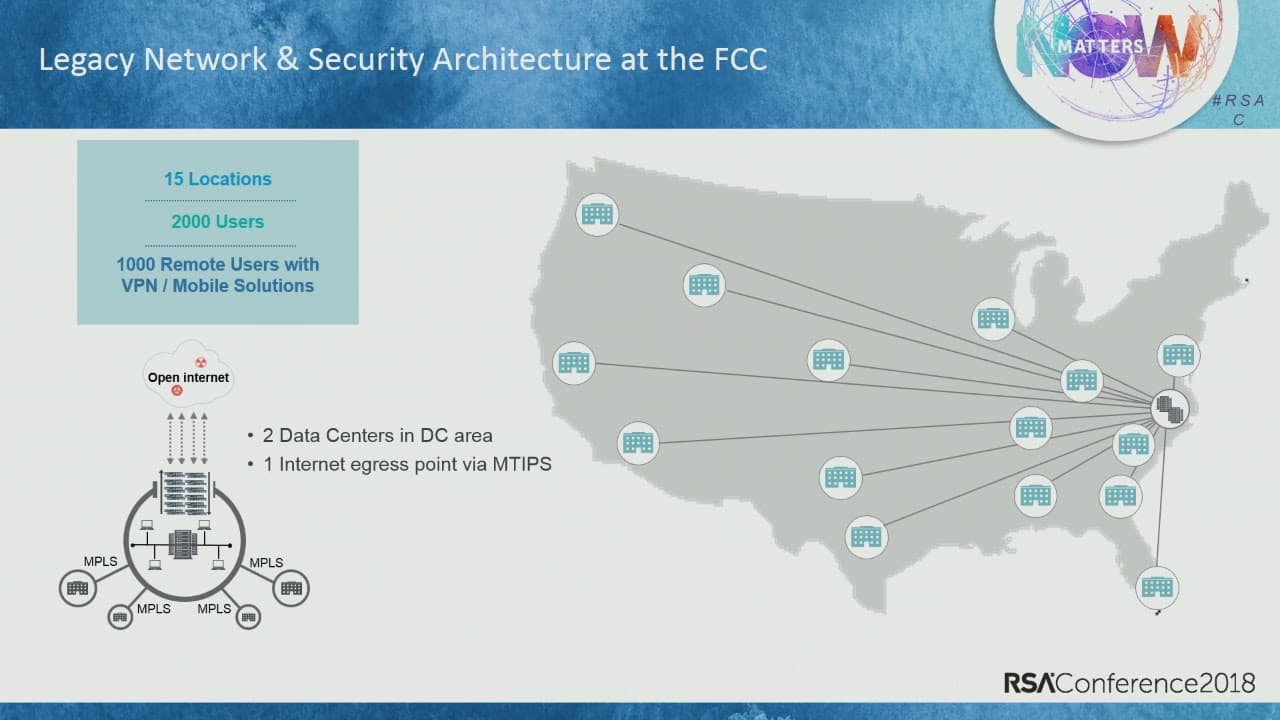
- Security concerns can initiate broader modernization because unresolved findings reveal weaknesses in existing operations. The FCC began its journey with more than one hundred and twenty FISMA findings, prompting an effort to improve security while consolidating data centers and moving collaboration services to Office 365.
- User requirements should shape platform selection because a technically plausible alternative may fail when it conflicts with established work practices. At the FCC, attorneys, engineers, and statisticians depended on Microsoft Outlook, which made continued access to familiar email and calendar tools a decisive consideration.
Install to Summarize YouTube Videos and Get Transcripts
Explore YouTube Video Summarizer or Get YouTube Transcript Extractor
Questions & Answers
Q: How should an enterprise begin an Office 365 deployment?
An enterprise should begin by identifying a compelling operational or business reason for the migration, securing executive sponsorship, and mapping the fragmented systems that the new platform must replace or connect. The FCC linked Office 365 to a scheduled data center move, while Kelly Services linked it to global collaboration problems created by acquisitions. The organization should also assess security findings, network capacity, Internet gateways, branch requirements, and legacy dependencies before execution.
Q: Why is executive sponsorship important for Office 365 migration?
Executive sponsorship is important because an enterprise migration affects budgets, responsibilities, contractor relationships, established processes, and systems that teams may have operated for decades. A senior sponsor can confirm that the migration is an organizational priority and resolve resistance that technical teams cannot settle alone. The FCC benefited from support by Chairman Tom Wheeler, while the Kelly Services initiative began after its CIO signed an agreement with Microsoft and committed the business to adoption.
Q: What nontechnical challenges affect Office 365 deployments?
The major nontechnical challenges include budget constraints, organizational politics, contractor incentives, weak collaboration between departments, and allegiance to legacy architectures. Teams may resist a cloud platform because their roles, funding, or expertise are tied to existing systems. The presenters found that these institutional issues could be more difficult than the technology itself. A clear business objective, decisive leadership, and communication focused on practical collaboration benefits can help the organization move forward.
Q: How does Office 365 affect network and gateway architecture?
Office 365 places greater demands on enterprise networks and Internet gateways because users access collaboration services through cloud connections rather than relying only on systems inside local data centers. Planning must therefore cover gateway capacity, branch office access, branch security, global connectivity, and the interaction between cloud and legacy environments. The deployment should be treated as a network and security architecture change, not merely as the replacement of an email application.
Q: Why can a data center move help an Office 365 migration?
A data center move creates a firm operational deadline and forces teams to inspect what the organization actually owns and uses. At the FCC, the scheduled relocation became the trigger for deploying Office 365 before infrastructure was moved. Reviewing connections and equipment also exposed unnecessary assets, allowing the organization to reduce the rack footprint it planned to transfer. The combination of cloud migration and physical relocation therefore supported both modernization and infrastructure consolidation.
Q: How can Office 365 improve collaboration after acquisitions?
Office 365 can provide a common collaboration environment when acquisitions leave a company with disconnected email platforms, network providers, Internet connections, and operating teams. Kelly Services had inherited Novell GroupWise, Lotus Notes, and multiple Exchange instances as it expanded into different countries. Executives could not easily perform basic collaborative tasks such as viewing one another's calendars. Moving toward one platform addressed that fragmentation and gave geographically separated groups a shared set of tools.
Q: How should organizations balance legacy systems and Office 365?
Organizations should identify which legacy services remain necessary, which can be replaced by Office 365, and which infrastructure exists only because of historical growth or incentives. The transition requires deliberate coexistence planning because email systems, networks, databases, and branch operations may not disappear simultaneously. Reviewing actual usage, dependencies, security requirements, and business workflows helps determine what should migrate, what should temporarily coexist with the cloud, and what can be retired during consolidation.
Q: Why should user work habits influence Office 365 selection?
User work habits matter because a migration succeeds only if the chosen platform supports essential daily tasks. At the FCC, attorneys, engineers, and statisticians relied on Microsoft Outlook, so preserving familiar email and calendar capabilities strongly influenced the decision to use Office 365. Kelly Services also emphasized executives' need to view colleagues' calendars across organizational boundaries. Platform selection should therefore reflect demonstrated user requirements, not only infrastructure preferences or abstract technical comparisons.
Summary & Key Takeaways
-
The FCC selected Office 365 while preparing to relocate its data centers and modernize an environment burdened by security findings, fragmented databases, excess infrastructure, and entrenched operating arrangements. Because employees depended heavily on Microsoft Outlook, the migration had to be completed before the physical move without disrupting essential email access or organizational work.
-
Kelly Services adopted Office 365 to unify collaboration across nine hundred locations in twenty-two countries. Growth through acquisitions had produced multiple email platforms, providers, Internet connections, and management teams. Executives especially needed shared calendar visibility, so leadership presented the migration as a common collaboration initiative that could connect previously separated groups throughout the global business.
-
Both deployments show that cloud adoption is primarily an organizational transformation supported by technical architecture. Executive sponsorship and a compelling deadline helped overcome resistance from teams invested in legacy systems. The migration also created an opportunity to inspect infrastructure, eliminate unnecessary equipment, consolidate services, and reconsider network, Internet gateway, branch, and security designs.
-
Key Insights Used in Summary
-
Key Insights Used in Summary
Read in Other Languages (beta)
Share This Summary 📚
Summarize YouTube Videos and Get Video Transcripts with 1-Click
Try YouTube Summary with ChatGPT & Claude or YouTube Transcript Generator
Explore More Summaries from RSAC Cybersecurity 📚




Summarize YouTube Videos and Get Video Transcripts with 1-Click
Try YouTube Summary with ChatGPT & Claude or YouTube Transcript Generator