What Is Self-Supervised Learning in AI?
TL;DR
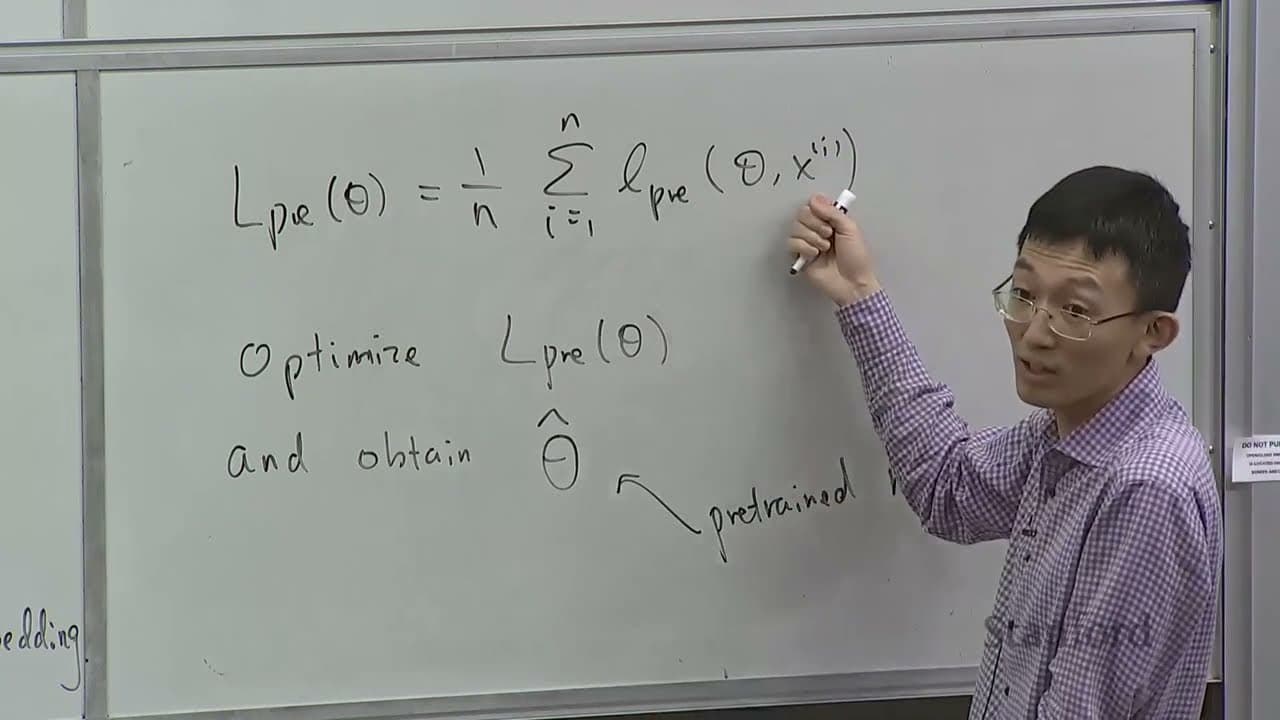
Self-supervised learning is a groundbreaking AI approach that leverages large-scale unlabeled data for model training. This method allows for pre-training on vast datasets without labels, followed by fine-tuning with a smaller amount of labeled data for specific tasks. By utilizing this strategy, models can efficiently learn complex representations and improve performance across various applications.
Transcript
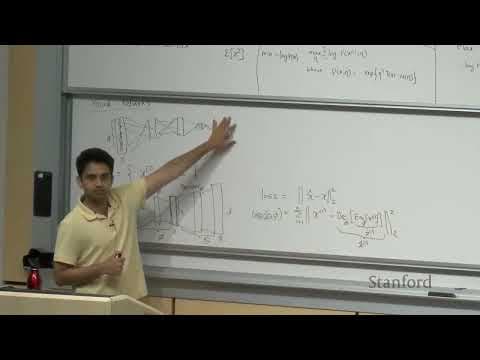
today we're going to talk about self suppress learning this is a lecture that um that doesn't have a lot of math but it's going to be all about very recent works like probably like in the last three or four years at the most so and these are kind of like a pretty interesting kind of intriguing kind of like Concepts you know but nothing very complic... Read More
Key Insights
- 🤳 Self-supervised learning is a new paradigm in AI that focuses on large-scale unsupervised learning.
- 🤩 Pre-training on unlabeled data is a key component of self-supervised learning, allowing models to learn intrinsic representations of the data.
- 🤳 Adaptation to downstream tasks is another crucial step in self-supervised learning, utilizing a smaller amount of labeled data.
- 🤳 Self-supervised learning offers the potential to improve model performance and reduce the need for labeled data.
Install to Summarize YouTube Videos and Get Transcripts
Explore YouTube Video Summarizer or Get YouTube Transcript Extractor
Questions & Answers
Q: What is self-supervised learning?
Self-supervised learning is a type of unsupervised learning that involves pre-training on unlabeled data and then adapting the model to downstream tasks.
Q: How does self-supervised learning differ from traditional supervised learning?
In traditional supervised learning, models are trained using labeled data. In self-supervised learning, models are trained on unlabeled data and then adapted to specific tasks using a smaller amount of labeled data.
Q: What is the goal of pre-training in self-supervised learning?
The goal of pre-training in self-supervised learning is to learn the intrinsic structure or representations of the data, which can then be utilized for downstream tasks.
Q: What are the advantages of self-supervised learning?
Self-supervised learning allows for training on a larger amount of unlabeled data, which can improve model performance. It also reduces the reliance on labeled data, which is often scarce or expensive to obtain.
Summary & Key Takeaways
-
The lecture focuses on the emergence of a new paradigm in AI called self-supervised learning, which is based on large-scale unsupervised learning.
-
Self-supervised learning involves pre-training on unlabeled data and then using it for downstream tasks.
-
The lecture discusses the foundations and concepts behind self-supervised learning and highlights the importance of using unlabeled data for training.
Read in Other Languages (beta)
Share This Summary 📚
Summarize YouTube Videos and Get Video Transcripts with 1-Click
Try YouTube Summary with ChatGPT & Claude or YouTube Transcript Generator
Explore More Summaries from Stanford Online 📚

Summarize YouTube Videos and Get Video Transcripts with 1-Click
Try YouTube Summary with ChatGPT & Claude or YouTube Transcript Generator