How to Understand São Miguel's Unique Accent
TL;DR
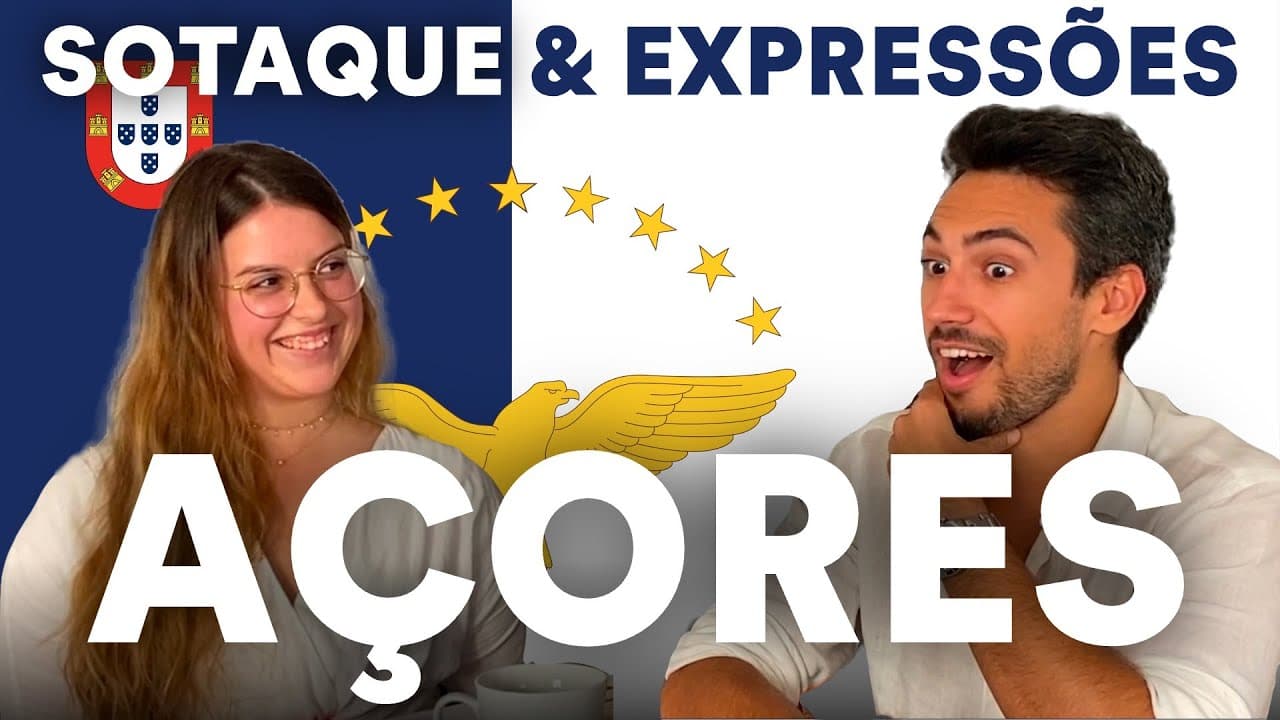
The São Miguel accent in the Azores is distinct due to historical colonization influences, leading to unique vowel pronunciations and expressions. This video explores specific words and phrases used in São Miguel, highlighting how they differ from mainland Portuguese. It also explains how some terms are influenced by English, reflecting the island's cultural exchanges.
Transcript
Do you toast with tea or not? We normally drink tea, but not like that! We are drinking Gorreana black tea bought in the Azores when I was there. A toast to the Azores... Wonderful! Hello everyone and welcome back to Portuguese with Leo, Today I bring you a much requested and long awaited episode, which is the accent and expressions of the Azores. ... Read More
Key Insights
- São Miguel's accent involves closing many vowels, although some are opened depending on emphasis.
- Words ending in 'R' often drop the 'R' and use a nasal vowel, such as 'comê' instead of 'comer'.
- The 'ão' diphthong is sometimes pronounced as 'ã', as in 'cã' instead of 'cão'.
- Certain expressions and words in São Miguel are influenced by English due to historical emigration to America.
- Unique words like 'aboiar' (to throw) and 'escarrolar' (to fight) reflect the island's distinct linguistic characteristics.
- Expressions like 'corisco mal amanhado' describe restless children, showing cultural nuances in language.
- The Azorean accent is sometimes perceived as French-like due to its vowel sounds, especially the 'u' (/y/).
- São Miguel's dialect includes terms like 'besuga' for a beautiful woman, showcasing regional slang.
Install to Summarize YouTube Videos and Get Transcripts
Explore YouTube Video Summarizer or Get YouTube Transcript Extractor
Questions & Answers
Q: How is the São Miguel accent different from mainland Portuguese?
The São Miguel accent features unique vowel pronunciations, such as closing many vowels and dropping the final 'R' in words, using nasal vowels instead. The 'ão' diphthong is sometimes pronounced as 'ã'. These characteristics, along with regional slang, distinguish it from mainland Portuguese.
Q: What influences the expressions used in São Miguel?
Expressions in São Miguel are influenced by historical colonization and cultural exchanges, particularly with America. This has led to the incorporation of English words and phrases into the local dialect, resulting in a unique blend of linguistic elements that reflect the island's history and interactions.
Q: Why is the São Miguel accent sometimes perceived as French-like?
The São Miguel accent is perceived as French-like due to its vowel sounds, especially the 'u' (/y/), which resembles French pronunciation. This distinct feature, combined with other vowel modifications, contributes to the unique auditory quality of the accent, setting it apart from other Portuguese dialects.
Q: What are some unique words used in São Miguel?
Unique words in São Miguel include 'aboiar' (to throw) and 'escarrolar' (to fight). These terms, along with slang like 'besuga' for a beautiful woman, highlight the island's distinctive linguistic characteristics and reflect the cultural nuances present in the local dialect.
Q: How does historical emigration influence São Miguel's language?
Historical emigration, particularly to America, has influenced São Miguel's language by introducing English words and phrases into the local dialect. This cultural exchange is evident in terms like 'dóla' for money and 'alvarós' for overalls, showcasing the blend of linguistic elements from different regions.
Q: What is the meaning of 'corisco mal amanhado' in São Miguel?
In São Miguel, 'corisco mal amanhado' describes a restless child or a prankster. This expression highlights the cultural nuances in the local dialect, emphasizing how specific phrases are used to convey particular behaviors or characteristics, often in a playful or affectionate manner.
Q: What role do vowel sounds play in São Miguel's accent?
Vowel sounds play a crucial role in São Miguel's accent, with many vowels being closed and some diphthongs like 'ão' pronounced as 'ã'. These vowel modifications, along with the dropping of final 'R's and use of nasal vowels, create a distinct auditory profile that sets the accent apart from other Portuguese dialects.
Q: How does the São Miguel dialect incorporate English influences?
The São Miguel dialect incorporates English influences through the use of words and expressions borrowed from English, due to historical emigration to America. Terms like 'dóla' for money and 'alvarós' for overalls reflect this linguistic exchange, demonstrating the island's cultural connections and adaptability in language.
Summary & Key Takeaways
-
The São Miguel accent in the Azores is characterized by unique vowel pronunciations and expressions influenced by historical colonization. Words often drop the final 'R' and use nasal vowels, and some diphthongs are pronounced differently. The accent is sometimes perceived as French-like.
-
Expressions and words in São Miguel are influenced by English, reflecting historical emigration to America. Unique terms like 'aboiar' (to throw) and 'escarrolar' (to fight) highlight the island's linguistic distinctiveness. The dialect also includes slang like 'besuga' for a beautiful woman.
-
Cultural nuances in São Miguel's language include expressions like 'corisco mal amanhado' for restless children. The video explores these linguistic characteristics, emphasizing how they differ from mainland Portuguese and showcasing the island's rich cultural heritage.
Read in Other Languages (beta)
Share This Summary 📚
Summarize YouTube Videos and Get Video Transcripts with 1-Click
Try YouTube Summary with ChatGPT & Claude or YouTube Transcript Generator
Explore More Summaries from Portuguese With Leo 📚


Summarize YouTube Videos and Get Video Transcripts with 1-Click
Try YouTube Summary with ChatGPT & Claude or YouTube Transcript Generator