The Primordial Supernova and the Missing Mass Extinctions
TL;DR
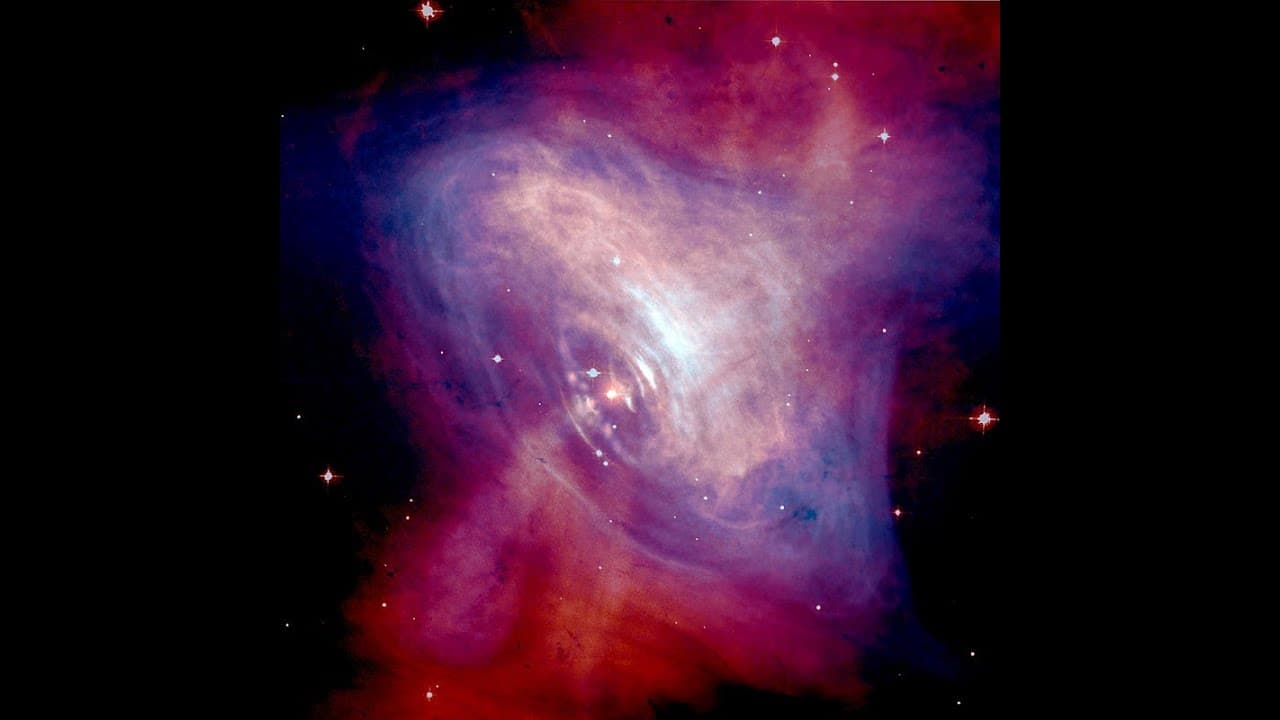
The star system IK Pegasi, located 150 light-years away, poses a potential threat to Earth as it could go supernova in the future, although the timing is uncertain.
Transcript
At a distance of about 150 Light-years lies a ticking time bomb known as the star system IK Pegasi, a system that ranks among the the few star systems that can directly affect earth if and when it goes supernova. This is the nearest known supernova candidate star, and is a member of a binary system. It's an A type main sequence star with a white dw... Read More
Key Insights
- 💨 IK Pegasi is a potential supernova candidate but is moving away from Earth, reducing the risk over time.
- 🤍 Type 1a supernovae involving white dwarfs are of particular concern due to their dim nature and potential proximity.
- 🅰️ Other types of supernovae, such as Type II, are less likely to pose a threat.
- 🖤 The mystery surrounding the lack of mass extinctions despite evidence of recent supernovae remains unsolved.
- 🖐️ Supernovae may play a crucial role in the habitability of galaxies by influencing planet formation, climate, and nutrient distribution.
Install to Summarize YouTube Videos and Get Transcripts
Explore YouTube Video Summarizer or Get YouTube Transcript Extractor
Questions & Answers
Q: What is the potential danger posed by the IK Pegasi system?
The accretion of material onto the white dwarf in the IK Pegasi system could lead to recurrent nova cycles and potentially a Type 1a supernova, posing a threat to Earth.
Q: How do supernovae cause mass extinctions on Earth?
Supernovae emit gamma rays that react with Earth's atmosphere, depleting the ozone layer and allowing harmful radiation to penetrate, potentially leading to mass extinctions.
Q: Why haven't past supernovae caused obvious periods of extinction?
Although evidence of recent supernovae exists in sediment and Antarctic studies, the lack of mass extinctions suggests that either the supernovae were not close enough to Earth, or their effects were somehow mitigated.
Q: How do supernovae and their remnants impact the formation and composition of the solar system?
Supernovae near the solar system's formation may have triggered the collapse of dust and gas, leading to planet formation. They also contribute heavy elements necessary for life and may explain the abundance of certain isotopes.
Summary & Key Takeaways
-
IK Pegasi is a binary star system consisting of an A type main sequence star and a white dwarf companion.
-
The white dwarf accretes material from the red giant star, leading to an eventual fusion and recurrent nova cycles.
-
While the Chandrasekhar limit restricts the white dwarf's mass, the type of core it has will determine whether it results in a neutron star or a Type 1a supernova.
Read in Other Languages (beta)
Share This Summary 📚
Summarize YouTube Videos and Get Video Transcripts with 1-Click
Try YouTube Summary with ChatGPT & Claude or YouTube Transcript Generator
Explore More Summaries from John Michael Godier 📚

Summarize YouTube Videos and Get Video Transcripts with 1-Click
Try YouTube Summary with ChatGPT & Claude or YouTube Transcript Generator