Media Institution: Crash Course Government and Politics #44
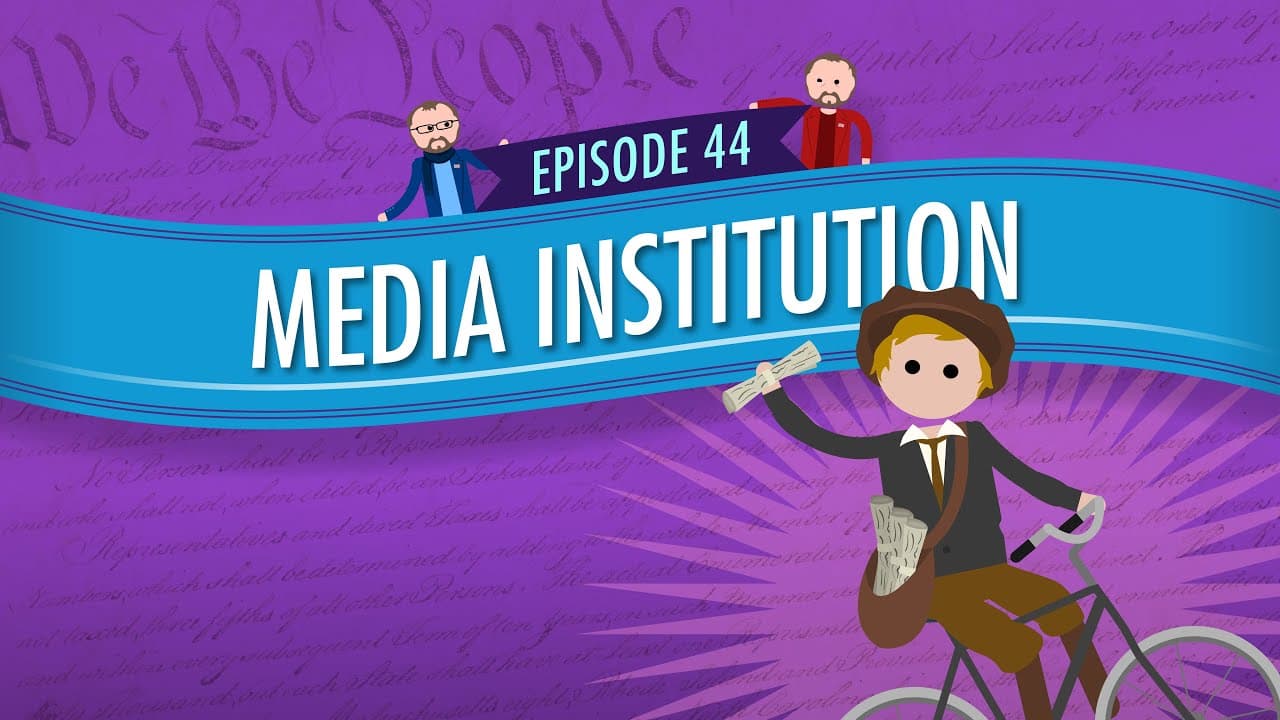
TL;DR
The media provides information for people to make political decisions, but biases and limited coverage can affect public understanding.
Transcript
Hello. I'm Craig, and this is Crash Course Government and Politics, and today, we're going to talk about one of my favorite subjects: the media and its role in politics. At last, we're finally going to hear a fair and balanced account of how the lamestream media is distorting the American public's understanding of current affairs! Yeah, sure, excep... Read More
Key Insights
- 📰 The media's main function in politics is to provide information for people to make decisions and get involved in politics, lowering information costs for the economically inclined.
- 📺 Television still reaches more Americans than any other form of media and remains an important source of political information, but its stories are short and less informative.
- 💻 The Internet's primary advantage as a news source is its ability to update quickly, but there's a concern that it pushes news organizations towards creating more stories and hot takes, rather than deep reporting.
- 🗞️ Print media, although no longer the main source of information, are still important as other news media organizations rely on them for news and they tend to offer more detail and comprehensive news stories.
- 📊 Data shows that an increasing number of people are getting their news from online sources, but a significant percentage still relies on television news, especially when combining local, national, and cable news programs.
- 📣 Social media provides new avenues for politicians, campaigns, and parties to disseminate information to the masses, but it's important to note that it's hardly unbiased news.
- 💰 Non-commercially supported information becoming available on the Internet is a great advantage, as commercial biases can influence news organizations' reporting decisions.
- ❗️ Media bias, whether political or towards sensationalism and conflict, is a significant factor in news coverage and influences how information is presented to the public.
Install to Summarize YouTube Videos and Get Transcripts
Explore YouTube Video Summarizer or Get YouTube Transcript Extractor
Questions & Answers
Q: How has the internet changed the way news is consumed and reported?
The internet has revolutionized the news industry, allowing for quick updates, the growth of political websites and social media platforms, and access to a variety of news sources. However, the internet's ability to provide breaking news quickly may lead to less in-depth reporting and an increase in opinion-based articles and hot takes.
Q: How does bias in the media affect public perception of political issues?
While news organizations strive for objectivity, biases can still be present, which may come from individual journalists or the overall leaning of the organization. Biases can shape how stories are reported and influence public perception. It is essential for readers and viewers to seek multiple sources and perspectives to get a more comprehensive understanding of political issues.
Q: How does the media's focus on conflict and scandal impact political news coverage?
Conflict and scandal tend to garner more attention and interest from audiences, making them more likely to be reported on by the media. However, this focus may overshadow stories about compromise and cooperation, leading to a skewed perception of political events. It is crucial for consumers of news to actively seek out balanced reporting and diverse perspectives.
Q: How do politicians influence the media?
Politicians cultivate relationships with reporters through various means, such as attending significant events, providing leaks to influence news coverage, and issuing press releases. These strategies aim to shape media narratives and present politicians in a positive light. However, this can also result in biased reporting and potential misinformation when politicians control the narrative in press releases.
Summary & Key Takeaways
-
Print media, although less popular, still plays an important role in providing detailed and comprehensive news stories.
-
Broadcast media, particularly television, remains the primary source of political information for many Americans.
-
The internet has drastically changed the media landscape, with blogs, websites, and social media platforms becoming significant sources of political news and information.
Read in Other Languages (beta)
Share This Summary 📚
Summarize YouTube Videos and Get Video Transcripts with 1-Click
Try YouTube Summary with ChatGPT & Claude or YouTube Transcript Generator
Explore More Summaries from CrashCourse 📚

Summarize YouTube Videos and Get Video Transcripts with 1-Click
Try YouTube Summary with ChatGPT & Claude or YouTube Transcript Generator