Should You Pay Off Student Loans or Invest in Real Estate?
TL;DR
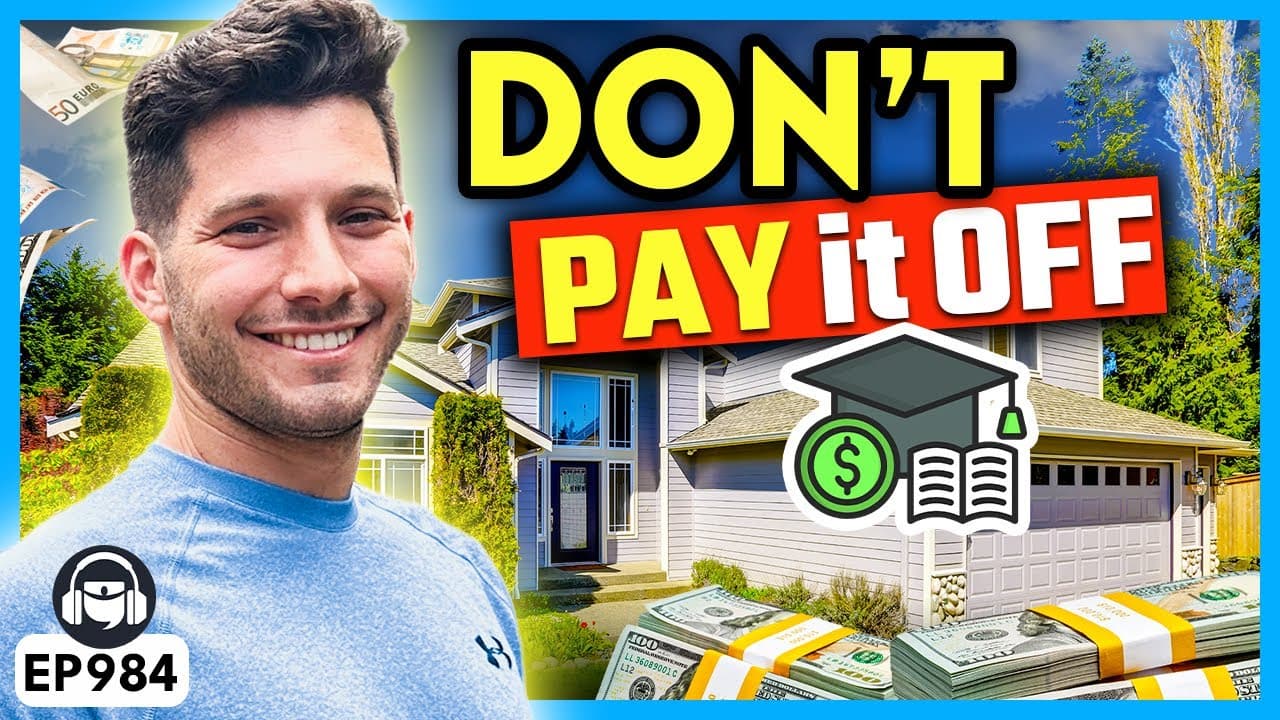
Investing in real estate can be more profitable than paying off student loans if the investment yield exceeds the loan's interest rate. Tom Keating invested despite student debt, leveraging cash flow from real estate to build a diverse portfolio, proving that existing debt doesn't have to block investment opportunities.
Transcript
according to US Census Data about 43 million Americans have outstanding federal student loan debt that's about 133% of the US population and when you factor in other types of Consumer Debt whether it's credit card debt or auto loan debt Americans generally speaking have a lot of debt and for some this feels like a major obstacle when getting starte... Read More
Key Insights
- Tom Keating chose to invest in real estate rather than pay off his student loans, leveraging higher returns from property investments over lower interest rates on loans.
- Despite having student loans, Tom successfully built a diverse real estate portfolio, demonstrating that debt doesn't have to hinder investment opportunities.
- Tom's first entrepreneurial venture involved selling golf balls, which taught him early lessons in business and profit maximization.
- He transitioned from a finance career to real estate investing after reading a book on rental property investing, which sparked his interest in the field.
- Tom emphasizes the importance of understanding interest rates on debt and potential returns on investments when deciding between paying off debt or investing.
- He diversified his real estate investments across different markets and asset classes to balance cash flow and appreciation.
- Tom uses a strategic approach to identify promising real estate markets by analyzing development trends and population movements.
- He plans to further automate his real estate business to achieve more personal freedom and flexibility in his lifestyle.
Install to Summarize YouTube Videos and Get Transcripts
Explore YouTube Video Summarizer or Get YouTube Transcript Extractor
Questions & Answers
Q: Why did Tom Keating choose to invest in real estate instead of paying off his student loans?
Tom Keating decided to invest in real estate because the cash on cash return potential was higher than the interest rate on his student loans. By investing, he could leverage the higher returns to eventually pay off his debt while simultaneously building wealth through appreciation, cash flow, and other real estate benefits.
Q: How did Tom Keating start his journey into real estate investing?
Tom Keating started his journey into real estate investing after reading 'The Book on Rental Property Investing' by Brandon Turner. This book inspired him to learn more about real estate, leading him to listen to the BiggerPockets podcast and eventually purchase his first property just three months after discovering real estate investment.
Q: What strategy does Tom use to identify promising real estate markets?
Tom uses an overlay map to identify promising real estate markets, focusing on areas with significant development and infrastructure improvements. By analyzing where developers are investing and where new transportation services are being introduced, he can pinpoint areas with high appreciation potential.
Q: What is Tom Keating's approach to diversification in real estate?
Tom Keating diversifies his real estate investments across different markets and asset classes to manage risk and balance cash flow with appreciation. He invests in various geographic locations, including New York, Florida, and North Carolina, and in different types of properties, such as small multifamily units and passive investments in self-storage and campgrounds.
Q: How does Tom Keating manage his real estate business while maintaining personal freedom?
Tom Keating manages his real estate business by creating a flexible schedule that allows him to work remotely and travel. He plans to further automate his business operations by delegating day-to-day management tasks, enabling him to focus on strategic decisions and enjoy more personal freedom.
Q: What lessons did Tom Keating learn from his early entrepreneurial ventures?
From his early entrepreneurial ventures, such as selling golf balls, Tom Keating learned valuable lessons in profit maximization, customer relationships, and resilience. These experiences taught him the importance of adaptability and the willingness to take risks, which have been crucial in his real estate investing career.
Q: How does Tom Keating evaluate whether to pay off debt or invest?
Tom Keating evaluates the decision to pay off debt or invest by comparing the interest rates on his debt with the potential cash on cash returns from investments. If the investment returns exceed the cost of debt, he chooses to invest, as this strategy can increase his overall net worth and financial security.
Q: What are Tom Keating's future plans for his real estate business?
Tom Keating plans to scale his real estate business by becoming more hands-off, focusing on strategic growth while delegating operational tasks. He aims to automate processes and build a team to manage day-to-day activities, allowing him to travel and enjoy a flexible lifestyle without being tied to the business constantly.
Summary & Key Takeaways
-
Tom Keating, despite having student loan debt, chose to invest in real estate due to the higher returns compared to his loan interest rates. His approach emphasizes the importance of understanding financial metrics when making investment decisions.
-
Through strategic market analysis and diversification, Tom has built a successful real estate portfolio across various markets and asset classes. This diversification helps balance cash flow and appreciation, mitigating risks associated with investing.
-
Tom's journey from a finance career to full-time real estate investing highlights the potential for financial independence through strategic investments. He aims to further automate his business for greater personal freedom.
Read in Other Languages (beta)
Share This Summary 📚
Summarize YouTube Videos and Get Video Transcripts with 1-Click
Try YouTube Summary with ChatGPT & Claude or YouTube Transcript Generator
Explore More Summaries from BiggerPockets 📚


Summarize YouTube Videos and Get Video Transcripts with 1-Click
Try YouTube Summary with ChatGPT & Claude or YouTube Transcript Generator