What Is the Difference Between Religion and Magic?
TL;DR
The difference between religion and magic lies in their practices and societal perceptions. Religion often centers on communal spirituality and divine intervention, while magic involves personal rituals aimed at influencing the physical world. Despite this distinction, both can coexist and serve to help individuals cope with uncertainty, as many established religions incorporate elements that could be considered magical.
Transcript
Hi, I’m John Green. Welcome to Crash Course Religions. In some Christian traditions, people experience glossolalia, or the “gift of tongues.” It’s described as a gift from the Holy Spirit that allows the receiver to speak a language they don’t understand. But this gift isn’t unique to Christianity. When spirit mediums aim to speak with the dead,... Read More
Key Insights
- Glossolalia in Christianity and spirit mediums in other traditions exhibit similar phenomena, highlighting blurred boundaries between religion and magic.
- Magic, like religion, encompasses diverse practices aimed at influencing the physical world through invisible powers.
- Historically, magic has been stigmatized and associated with negative stereotypes, often demonized by religious authorities.
- The distinction between religion and magic has been debated by scholars, with no consensus on a clear definition.
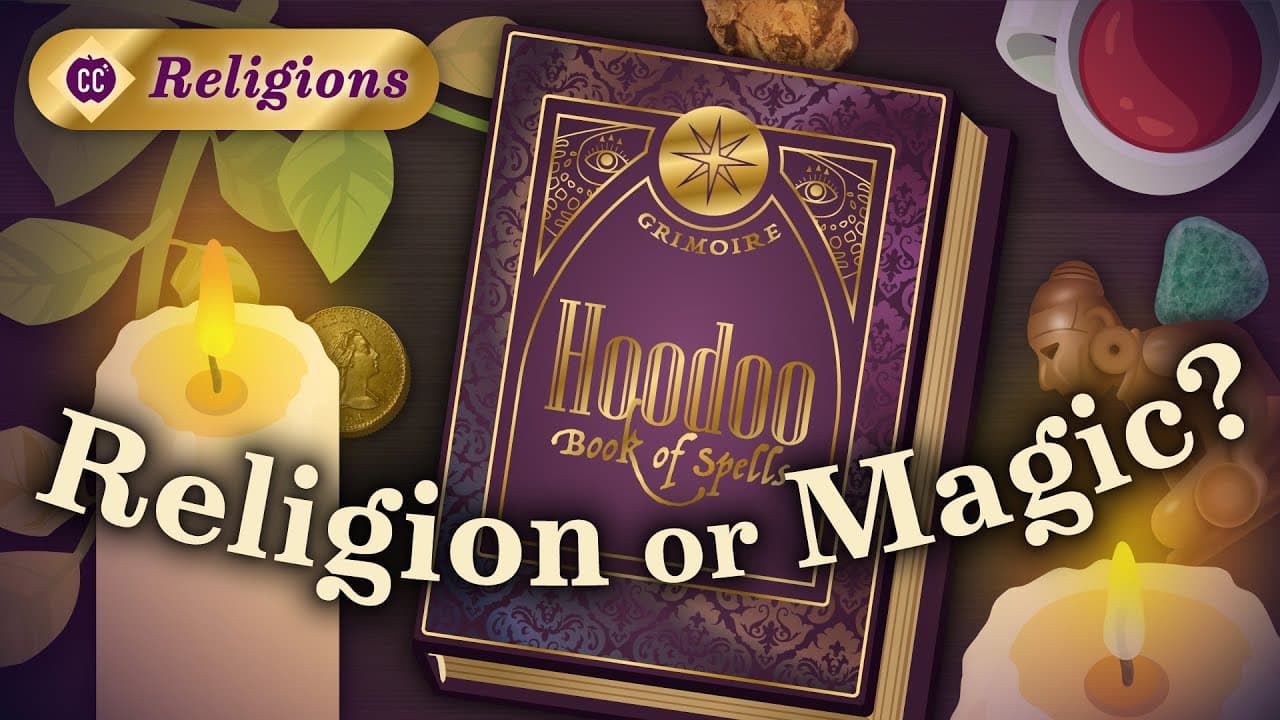
- Hoodoo, an African American tradition, combines magical and religious elements, offering supernatural solutions to everyday problems.
- Magic and rational thinking can coexist, with magical practices providing strategies to cope with uncertainty and explain events.
- Many established religions incorporate practices that can be seen as magical, such as protective amulets and mantras.
- Modern magical communities are reclaiming their identities, challenging historical stigmatization and finding empowerment in their practices.
Install to Summarize YouTube Videos and Get Transcripts
Explore YouTube Video Summarizer or Get YouTube Transcript Extractor
Questions & Answers
Q: What is glossolalia and how does it relate to magic?
Glossolalia, or the 'gift of tongues,' is a phenomenon in some Christian traditions where individuals speak languages they do not understand, believed to be a gift from the Holy Spirit. This is similar to spirit mediums who channel voices in a trance, blurring the line between religious experiences and what is often considered magic.
Q: How has magic been historically perceived in Western societies?
In Western societies, magic has often been perceived negatively, associated with dubious or demonic practices. Historically, religious authorities, particularly during the rise of Christianity, viewed magic as a threat and often demonized those who practiced it, leading to persecution, especially of women and marginalized communities.
Q: What is Hoodoo and how does it combine magic and religion?
Hoodoo is a tradition that originated with enslaved Africans in America, combining African rituals with elements of Christianity. It involves magical practices aimed at solving everyday problems, such as protection and healing, reflecting a blend of religious and magical elements that empower practitioners.
Q: How do scholars differentiate between religion and magic?
Scholars have long debated the distinction between religion and magic, with no clear consensus. Some argue that religion involves communal practices and asking for help from spiritual beings, while magic is more individualistic and manipulative. However, these distinctions often have exceptions, and the definitions remain fluid.
Q: What role does magic play in established religions?
In many established religions, practices that could be considered magical are common. These include the use of protective objects, mantras, and prayers believed to have supernatural effects. Such practices illustrate how religions incorporate elements that provide comfort and protection, similar to magical practices.
Q: How are modern magical communities reclaiming their identities?
Modern magical communities, such as witches and brujas, are actively reclaiming their identities by challenging historical stigmatization and highlighting the positive aspects of their practices. They emphasize how these practices help them find balance, empowerment, and connection to their cultural and ancestral roots.
Q: What are some examples of magical practices in different cultures?
Examples of magical practices include Hoodoo in African American culture, brujería in Latin America, and the use of amulets and mantras in various religions. These practices often serve to address uncertainties and provide a sense of control and protection in people's lives, demonstrating the universal appeal of magic.
Q: Why is the distinction between religion and magic important?
The distinction between religion and magic is important because it influences how practices are perceived and treated in society. Historically, labeling practices as magic has been used to marginalize and persecute certain groups. Understanding this distinction helps us appreciate the cultural significance and diversity of these practices.
Summary & Key Takeaways
-
The episode explores the complex relationship between religion and magic, highlighting how both involve practices aimed at influencing the world through supernatural means. It discusses historical stigmatization of magic and how modern practitioners are reclaiming the term.
-
Key examples include glossolalia in Christianity and spirit mediums, both of which blur the lines between religion and magic. The episode also examines Hoodoo, a tradition with African roots that combines magical and religious elements.
-
Scholars have long debated the distinction between religion and magic, with no consensus. The episode argues that both can coexist and serve as strategies to cope with uncertainty, with many established religions incorporating elements that could be considered magical.
Read in Other Languages (beta)
Share This Summary 📚
Summarize YouTube Videos and Get Video Transcripts with 1-Click
Try YouTube Summary with ChatGPT & Claude or YouTube Transcript Generator
Explore More Summaries from CrashCourse 📚
Summarize YouTube Videos and Get Video Transcripts with 1-Click
Try YouTube Summary with ChatGPT & Claude or YouTube Transcript Generator