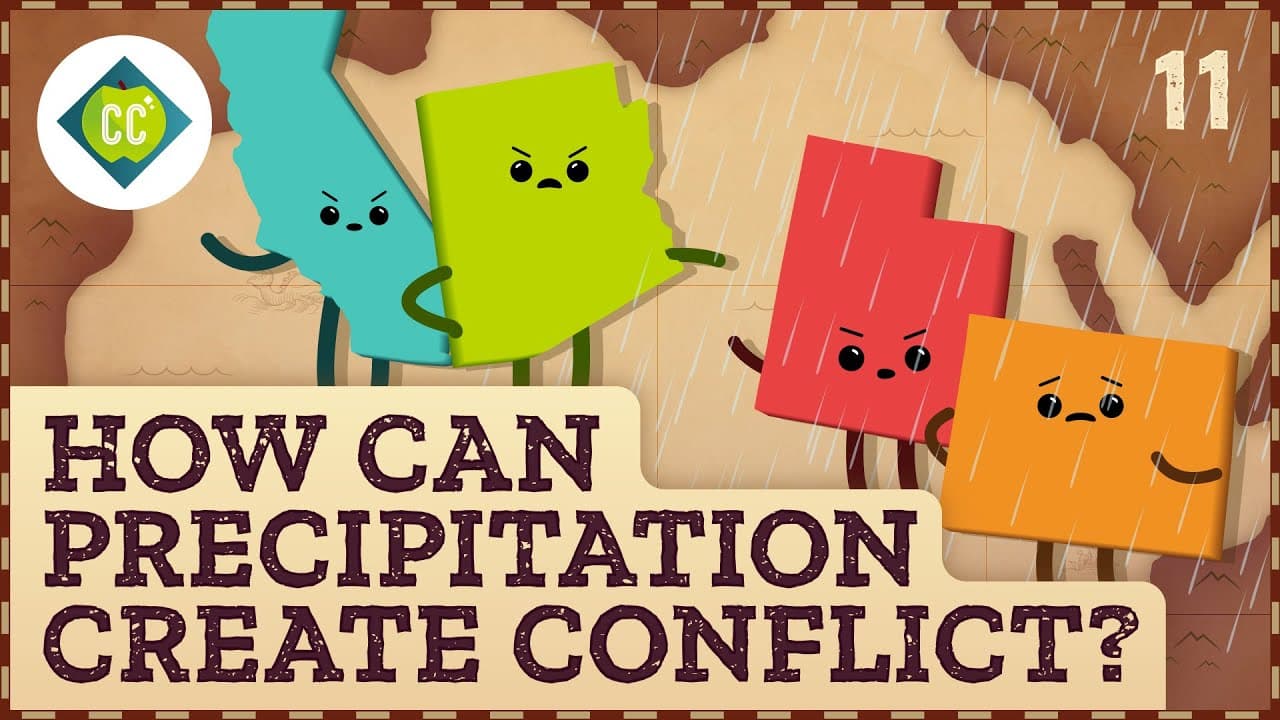
How Can Rain Create Conflict? Precipitation and Water Use: Crash Course Geography #11
TL;DR
The world's map of precipitation is crucial to understanding various aspects of life on Earth, including agriculture, industry, and human geography.
Transcript
Even though lots of maps help us understand our geographical space, there’s one map that some geographers would say is the most important to understand all life on Earth: the map of the world’s precipitation. We can think of precipitation as the final flourish in the hydrological cycle that circulates water molecules between the four Ear... Read More
Key Insights
- 🏍️ Precipitation is a vital component of the hydrological cycle and supports various human activities and natural processes.
- 🧑🏭 Geographical factors such as latitude, proximity to mountains or oceans, and atmospheric conditions influence precipitation patterns.
- 🖐️ Orographic precipitation plays a significant role in determining rainfall or snowfall in mountainous regions.
- 🥺 Uneven precipitation distribution can lead to droughts, affecting human health, agriculture, and ecological systems.
- 💦 Conflict and tension can arise from the management and allocation of water resources in regions with limited precipitation.
- ❎ Human activities, such as overfarming and overgrazing, can exacerbate the negative impacts of unpredictable precipitation patterns.
- 💦 Water management and allocation involve complex socio-political dynamics, including legal battles, interstate disputes, and the potential for water privatization.
Install to Summarize YouTube Videos and Get Transcripts
Explore YouTube Video Summarizer or Get YouTube Transcript Extractor
Questions & Answers
Q: Why is precipitation important for human life?
Precipitation is crucial for agriculture, industry, transportation, and recreation. It supports the growth of crops, provides water for industrial processes, enables transportation through rivers and lakes, and contributes to various recreational activities.
Q: How does precipitation vary in different geographical regions?
Precipitation varies based on geographical factors such as proximity to oceans, latitude, and the presence of mountain ranges. Regions near the equator receive more precipitation, while areas further from oceans or mountain barriers experience less.
Q: How do mountain ranges influence precipitation patterns?
Mountain ranges can lead to orographic precipitation, where air is forced to rise, cool, and condense, resulting in rainfall or snowfall. On the other side of the mountains, a rain shadow effect occurs, creating a drier area with less precipitation.
Q: What are the implications of uneven precipitation distribution?
Uneven precipitation distribution can result in droughts, which can have severe impacts on both human and natural systems. Droughts can lead to water shortages, damage to agricultural productivity, and ecological system degradation.
Summary & Key Takeaways
-
Precipitation, which includes rain, snow, and other forms of water falling from the atmosphere, is an essential part of the hydrological cycle and supports various aspects of life on Earth.
-
Precipitation patterns vary significantly based on geographical location, with areas near the equator receiving more precipitation and regions further from oceans experiencing less.
-
Mountain ranges can impact precipitation through orographic effect, leading to more rainfall or snowfall on one side of the mountains and creating a rain shadow effect on the other side.
Read in Other Languages (beta)
Share This Summary 📚
Summarize YouTube Videos and Get Video Transcripts with 1-Click
Try YouTube Summary with ChatGPT & Claude or YouTube Transcript Generator
Explore More Summaries from CrashCourse 📚




Summarize YouTube Videos and Get Video Transcripts with 1-Click
Try YouTube Summary with ChatGPT & Claude or YouTube Transcript Generator