How Chevron Stayed in Venezuela's Oil Industry
TL;DR
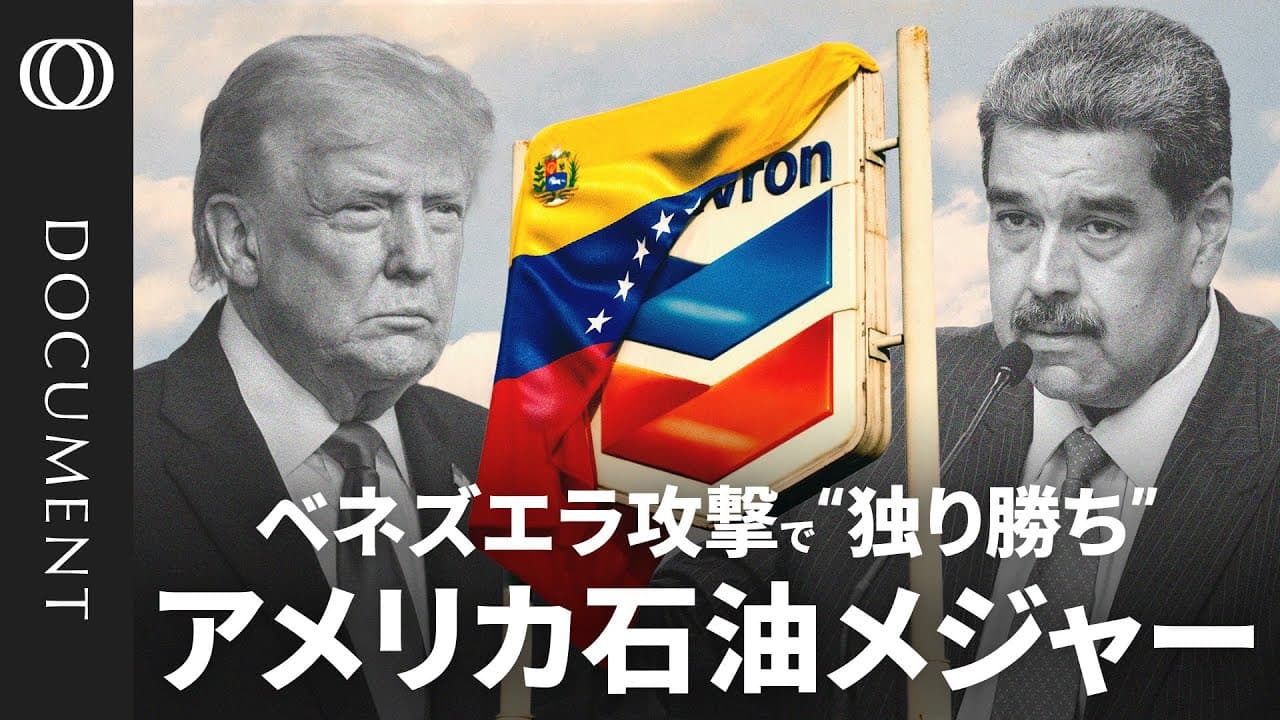
Chevron remained in Venezuela by accepting state-majority joint ventures, cultivating unusually strong government relationships, and persuading Washington that its departure could benefit China or Russia. Its decades-long presence now gives it access to about 25% of national output and significant upside, but deteriorated infrastructure, political instability, environmental liabilities, crime, weak oil prices, and enormous investment needs make expansion a dangerous wager.
Transcript
The United States has carried out a series of strikes against Venezuela, announcing the capture of Nicholas Maduro and his wife. >> Nicholas Maduro stood in federal court and pleaded not guilty to narco terrorism charges. >> Donald Trump said his military buildup in the Caribbean and destruction of civilian boats there was about alleged drug traffi... Read More
Key Insights
- Venezuela has more than 300 billion barrels of oil, representing roughly 17% of the world's known reserves. The US Geological Survey estimates that the Orinoco belt contains more than 1 trillion barrels in place, although demand may disappear before all of it is produced.
- Venezuelan crude is difficult to commercialize because most Orinoco oil is exceptionally heavy and sludgy. It requires a diluent to flow, plus foreign expertise, substantial capital, processing facilities, and market access, unlike the lighter crude described as coming from Saudi Arabia.
- PDVSA became a successful state-run oil company after nationalization in the 1970s, but the government did not reinvest enough in producing assets. Later corruption, mismanagement, and diversion of oil revenue into other spending accelerated infrastructure deterioration and weakened national production capacity.
- Chevron stayed when major competitors left because it accepted rules requiring PDVSA to hold majority interests in joint ventures. Its Latin American leader, Ali Moshiri, also developed a strong personal relationship with Hugo Chavez, creating privileged access that other foreign producers did not enjoy.
- Chevron produces about 25% of Venezuela's current oil output and is described as the country's largest oil-industry investor. With virtually no competition and little oversight, it occupies a rare position that could become highly profitable if political conditions and production prospects improve.
- Chevron's operations bring dollars into Venezuela and help reduce inflation, making the company important to both Venezuela and the United States. The company has also argued that forcing it to leave would create opportunities for China and Russia, an argument that persuaded some officials in Washington.
- Restoring Venezuelan production to its historical peak would require enormous patience and capital. Estimates cited in the transcript suggest spending about $10 billion each year for perhaps ten years, while damaged infrastructure, political instability, environmental liabilities, and crime create substantial additional risk.
- Chevron's position has option value because maintaining a presence preserves the possibility of a large future payoff without guaranteeing near-term success. The strategy resembles placing one chip repeatedly, accepting years without a win in exchange for potentially substantial gains when conditions eventually become favorable.
Install to Summarize YouTube Videos and Get Transcripts
Explore YouTube Video Summarizer or Get YouTube Transcript Extractor
Questions & Answers
Q: How did Chevron remain in Venezuela when competitors left?
Chevron remained by accepting the rules introduced under Hugo Chavez that required state-owned PDVSA to hold a majority interest in oil joint ventures. Exxon and Conoco rejected those terms, withdrew, and pursued international arbitration. Chevron also benefited from the strong personal relationship between Chavez and Ali Moshiri, who led Chevron's Latin American operations, establishing an unusually durable relationship with the government.
Q: How much oil does Venezuela have?
Venezuela has more than 300 billion barrels of oil on paper, equal to roughly 17% of the world's known reserves. Most of those reserves are concentrated in the Orinoco oil belt. The US Geological Survey estimates that the belt contains more than 1 trillion barrels of oil in place, compared with about 1.5 trillion barrels consumed worldwide to date.
Q: Why is Venezuela's oil difficult to produce and sell?
Most Venezuelan oil, particularly crude in the Orinoco belt, is extremely heavy and sludgy. It cannot flow effectively without a diluent and requires substantial technical expertise, capital, processing, and transportation support before reaching markets. These requirements distinguish it from lighter oil and make foreign investment important even though Venezuela possesses exceptionally large resources underground.
Q: Why did Venezuela's oil industry decline?
The industry declined because the government failed to reinvest enough money in oil assets, allowing infrastructure to deteriorate. During Hugo Chavez's presidency, oil prices rose from about $25 per barrel to a record $146, but revenue was mismanaged and directed toward other government spending. Corruption, operational mismanagement, large deficits, economic collapse, and hyperinflation further weakened production under Nicholas Maduro.
Q: What strategic value does Chevron provide to Venezuela?
Chevron produces about 25% of Venezuela's oil, brings dollars into the economy, and helps reduce inflation. Its continuing operations preserve investment, expertise, and production capacity during a period when many foreign competitors have departed. This role has made Chevron central to both Venezuelan economic stability and US policy calculations, particularly when sanctions might otherwise remove American commercial influence from the country.
Q: Why has the United States allowed Chevron to keep operating?
Chevron has argued for years that its withdrawal would allow US adversaries, specifically China and Russia, to move into Venezuela's oil sector. According to the transcript, this argument proved persuasive within some Washington circles. Under Joe Biden, Chevron received greater leniency as part of a carrots-and-sticks approach intended to encourage Maduro to reverse democratic backsliding and hold free and fair elections.
Q: How much investment could Venezuela's oil recovery require?
Returning production to more than 1 million barrels per day might take a few months, according to some analysts cited in the transcript. Restoring Venezuela to the peak production level recorded around the 1970s would be much harder, potentially requiring about $10 billion per year for ten years. That investment would confront deteriorated infrastructure, political instability, environmental liabilities, and crime.
Q: Why is expanding in Venezuela a risky bet for Chevron?
Chevron could benefit greatly because it already produces about 25% of national output, has virtually no competition, and has maintained local relationships and assets for decades. However, expansion faces political uncertainty, precarious infrastructure, crime, environmental liabilities, market oversupply, and weak oil-price incentives. The strategy offers substantial option value, but it could also demand years of spending without a reliable payoff.
Summary & Key Takeaways
-
Venezuela holds more than 300 billion barrels of oil, roughly 17% of known global reserves, primarily in the Orinoco belt. However, much of this crude is exceptionally heavy and requires diluent, specialized expertise, processing capacity, and extensive capital. Its abundance therefore does not automatically translate into profitable or rapidly expandable production.
-
Venezuela nationalized its oil industry in the 1970s, but inadequate reinvestment, corruption, government spending, and operational mismanagement contributed to declining infrastructure and output. After Hugo Chavez required state-owned PDVSA to control joint ventures, Exxon and Conoco left and pursued arbitration, while Chevron accepted the new structure and preserved its position.
-
Chevron now produces about 25% of Venezuela's oil and has virtually no foreign competition, giving it valuable exposure if the industry recovers. Yet restoring peak production could require about $10 billion annually for ten years. Political uncertainty, environmental liabilities, crime, damaged infrastructure, oversupply, and previous disputes continue to discourage other producers.
Read in Other Languages (beta)
Share This Summary 📚
Summarize YouTube Videos and Get Video Transcripts with 1-Click
Try YouTube Summary with ChatGPT & Claude or YouTube Transcript Generator
Explore More Summaries from TBS CROSS DIG with Bloomberg 📚






Summarize YouTube Videos and Get Video Transcripts with 1-Click
Try YouTube Summary with ChatGPT & Claude or YouTube Transcript Generator