How Do Concentration Gradients Drive Ocean Currents?
TL;DR
Concentration gradients of temperature and salinity drive thermohaline circulation, essential for global ocean currents. As solar warmth causes water molecules to disperse and lower their concentration, they move toward equilibrium, creating currents. Additionally, salt ions also shift along these gradients, influencing water movement in both temperate and polar regions.
Transcript
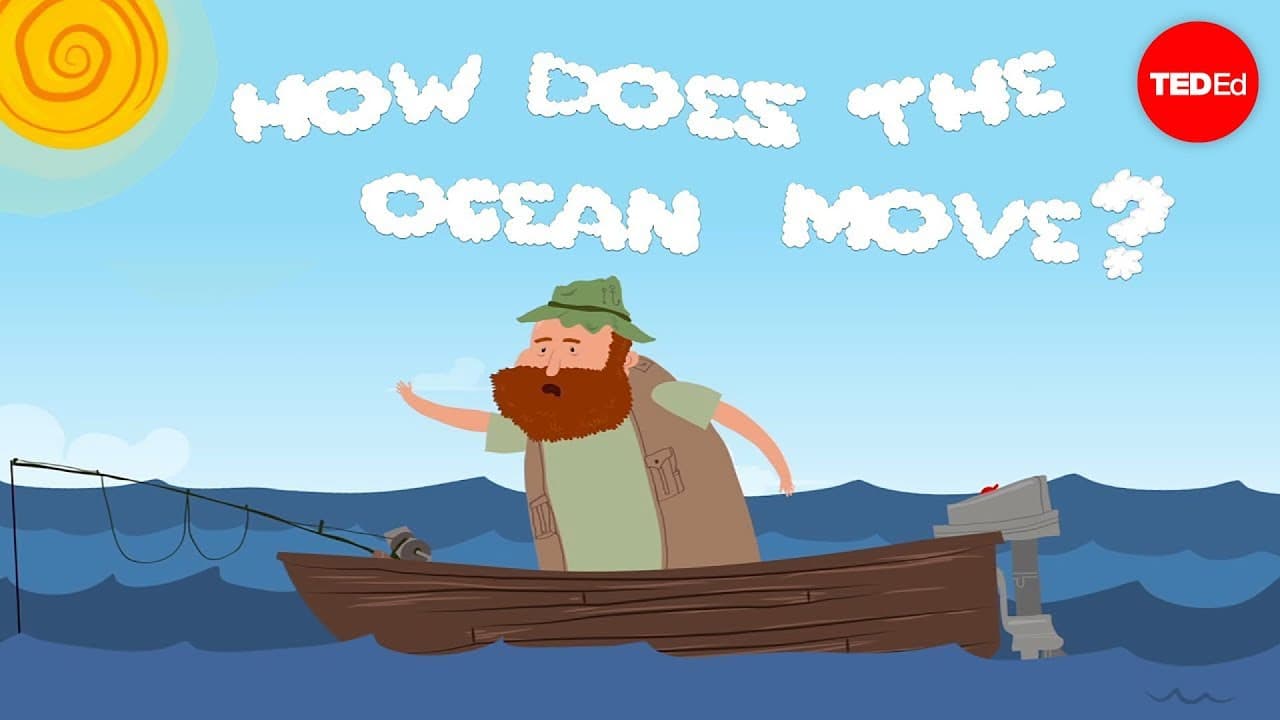
If you've ever floated on an ocean swell, you'll know that the sea moves constantly. Zoom out, and you'll see the larger picture: our Earth, covered by 71 percent water, moving in one enormous current around the planet. This intimidating global conveyor belt has many complicated drivers, but behind it all is a simple pump that moves water all over ... Read More
Key Insights
- 🌊 Thermohaline circulation is driven by concentration gradients of temperature and salinity in the ocean.
- 💦 Solar warmth causes water molecules to spread out, lowering concentration and driving currents.
- 😑 Salt ions in seawater also move along concentration gradients, contributing to the motion of water.
- 🖐️ Thermohaline circulation plays a crucial role in global ocean currents and climate regulation.
- 🌊 Concentration gradients are not exclusive to the ocean, as they govern various natural phenomena.
- ❓ Understanding complex systems like thermohaline circulation can often stem from simple concepts.
- 🙈 The importance of concentration gradients can be seen in everyday phenomena, such as electric currents.
Install to Summarize YouTube Videos and Get Transcripts
Explore YouTube Video Summarizer or Get YouTube Transcript Extractor
Questions & Answers
Q: What is thermohaline circulation and what drives it?
Thermohaline circulation is a global conveyor belt system in the ocean, driven by concentration gradients of temperature and salinity. These gradients cause water molecules and salt ions to move from areas of higher concentration to lower concentration, creating currents.
Q: How does solar warmth affect thermohaline circulation?
Solar warmth energizes water molecules at the ocean's surface, causing them to spread out and lower the concentration. This passive motion drives the shift of water from higher to lower concentrations, contributing to thermohaline circulation.
Q: What role do salt ions play in thermohaline circulation?
Salt ions in seawater have a desire for spacious real estate. As solar warmth evaporates water molecules, the concentration of salt ions increases. This leads to an invasion of salt ions from lower concentrations in the water column, driving currents in the ocean.
Q: How do temperature and salinity gradients differ in polar regions?
In polar regions, temperature differences are minimal due to ice slabs on the water's surface. However, salinity gradients still exist, as melting ice increases the concentration of water molecules and dilutes the salt ions. This leads to the movement of water and salt ions along concentration gradients.
Summary & Key Takeaways
-
Thermohaline circulation is driven by a simple concept: concentration gradients of temperature and salinity in the ocean.
-
As water molecules spread out due to solar warmth, they move from higher to lower concentrations, towards equilibrium.
-
Salt ions in seawater also move along concentration gradients, causing currents to form in both temperate and polar regions.
Read in Other Languages (beta)
Share This Summary 📚
Summarize YouTube Videos and Get Video Transcripts with 1-Click
Try YouTube Summary with ChatGPT & Claude or YouTube Transcript Generator
Explore More Summaries from TED-Ed 📚






Summarize YouTube Videos and Get Video Transcripts with 1-Click
Try YouTube Summary with ChatGPT & Claude or YouTube Transcript Generator