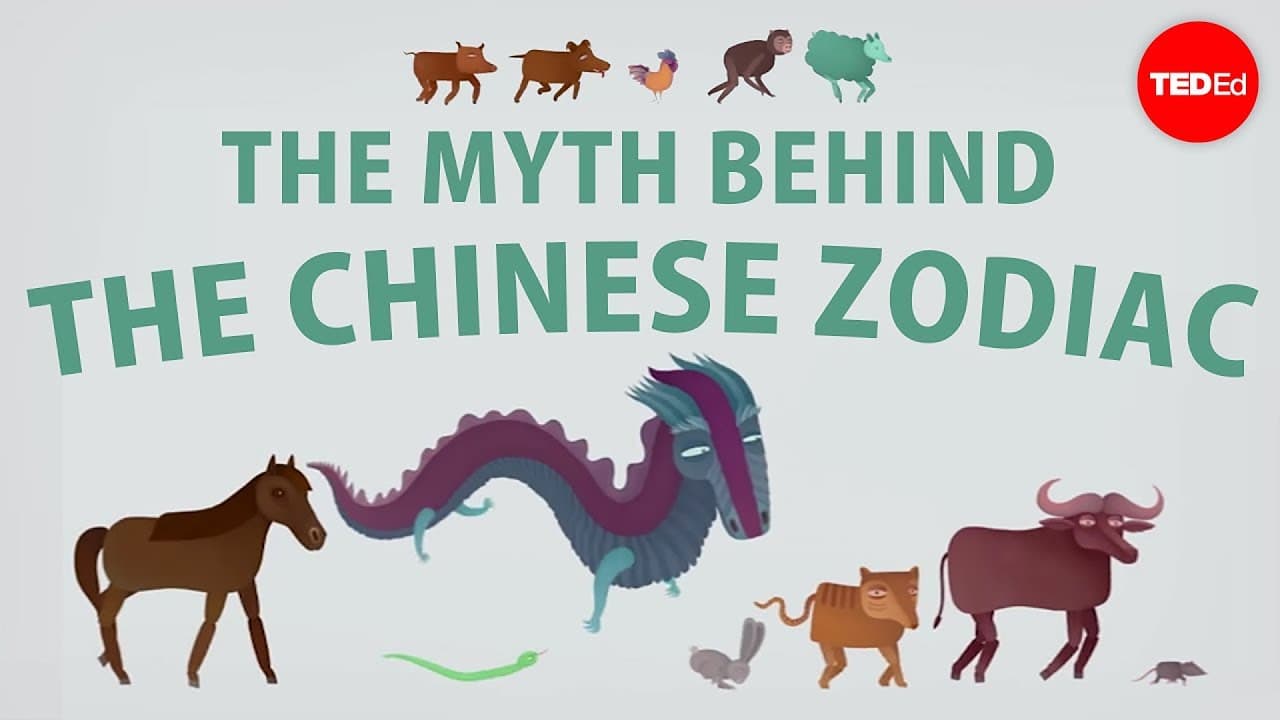
The myth behind the Chinese zodiac - Megan Campisi and Pen-Pen Chen
TL;DR
The Chinese zodiac animals were assigned through a Great Race organized by the Jade Emperor, where the clever rat secured first place by riding on the ox. Each animal's traits influenced their order, creating a unique zodiac linked to a 60-year cycle that combines animals with the five elements.
Transcript
What's your sign? In Western astrology, it's a constellation determined by when your birthday falls in the calendar. But according to the Chinese zodiac, or shēngxiào, it's your shǔxiàng, meaning the animal assigned to your birth year. And of the many myths explaining these animal signs and their arrangement, the most enduring one is that of the G... Read More
Key Insights
- 🤘 The Chinese zodiac's animal signs were determined by the animals' attributes in a race organized by the Jade Emperor.
- 🧘 Each animal's position on the zodiac reflects its characteristics and how they navigated the Great Race.
- 🏍️ The combination of animals and elements creates a complex 60-year cycle in the Chinese zodiac.
Install to Summarize YouTube Videos and Get Transcripts
Explore YouTube Video Summarizer or Get YouTube Transcript Extractor
Questions & Answers
Q: How did the rat manage to secure first place in the Great Race?
The rat cleverly asked the ox for help, then jumped off its head to claim first place, displaying its resourcefulness and cunning nature in the race.
Q: How are the animals and elements combined in the Chinese zodiac system?
The 12 Earthly Branches and 10 Heavenly Stems are matched to create a 60-year cycle with different animal-element combinations, showcasing the complexity and symbolism of the zodiac.
Q: How do other cultures alter the Chinese zodiac system?
Different cultures, like the Vietnamese and Thai, make changes to the zodiac to reflect their traditions, such as replacing the dragon with a Naga in Thailand, showcasing the zodiac's adaptability.
Summary
The Chinese zodiac, known as shēngxiào, is determined by the animal assigned to your birth year. The story of the Great Race explains how these animal signs were determined, with the first twelve animals to cross the river earning a spot in the zodiac calendar. The Chinese zodiac is part of a larger system that includes the Twelve Earthly Branches and the Ten Heavenly Stems, creating a 60-year cycle known as a sexagenary cycle. While the Chinese zodiac has spread through Asia, different cultures have made changes to reflect their communities, resulting in variations of the zodiac in different regions.
Questions & Answers
Q: Can you explain the story of the Great Race and how it determined the animal signs in the Chinese zodiac?
According to the myth, the Jade Emperor organized a race where the first twelve animals to cross the river would earn a spot on the zodiac calendar. The rat, being small and unable to swim well, asked the bigger animals for help. The kind-hearted ox agreed to carry the rat across but was tricked as the rat jumped off its head and secured first place. The remaining animals followed in the order they arrived, thus determining the animal signs of the Chinese zodiac.
Q: How is the Chinese zodiac connected to the traditional Chinese calendar?
The traditional Chinese calendar consists of two systems: the Twelve Earthly Branches (shí'èrzhī) and the Ten Heavenly Stems (tiāngān). The animal signs of the Chinese zodiac are associated with the Twelve Earthly Branches, while the Ten Heavenly Stems are linked with the five classical elements (metal, wood, water, fire, and earth). The combination of the animal signs and the elements creates a sixty-year cycle known as the sexagenary cycle (gānzhī).
Q: How is the Chinese zodiac calculated based on birth year?
Each year is associated with one of the animals in the Chinese zodiac. The cycle of animal signs repeats every twelve years, but the larger sexagenary cycle repeats every sixty years. To determine one's Chinese zodiac sign, you need to know the year of your birth and its corresponding animal sign. For example, someone born in 1980 would have the sign of the yang metal monkey.
Q: Are there any other factors besides birth year that influence the Chinese zodiac?
Yes, besides the animal sign based on birth year, there are additional factors that can determine your inner animal, true animal, and secret animal within the Chinese zodiac. The inner animal is based on birth month, the true animal is based on birth date, and the secret animal is based on birth hour.
Q: How have other cultures made changes to the Chinese zodiac?
As the Chinese zodiac spread through Asia, different cultures made changes to reflect their communities. For example, the Vietnamese zodiac replaces the rabbit with the cat. In Thailand, a mythical snake called a Naga replaces the dragon. These variations show how the Chinese zodiac has been adapted and modified to fit different cultures and traditions.
Q: What does the Chinese zodiac reveal about the culture it comes from?
The Chinese zodiac is deeply rooted in Chinese culture and reflects its values and beliefs. The emphasis on animal symbolism, mythology, and the cyclical nature of the sexagenary cycle are all aspects that reveal the cultural significance of the Chinese zodiac. Additionally, the variations in different cultures' interpretations of the zodiac further demonstrate the influence of local customs and beliefs.
Q: How accurate is the Chinese zodiac in predicting individuals' traits or fortunes?
The Chinese zodiac should be approached with a level of skepticism when it comes to predicting individuals' traits or fortunes. While many people find aspects of the zodiac to be relatable and sometimes accurate, it is ultimately a form of divination or astrology that lacks scientific evidence. However, it is important to note that the Chinese zodiac holds cultural and historical significance beyond its predictive qualities.
Q: What are the Twelve Earthly Branches and the Ten Heavenly Stems?
The Twelve Earthly Branches (shí'èrzhī) are the animal signs associated with the Chinese zodiac. These animal signs include the rat, ox, tiger, rabbit, dragon, snake, horse, sheep, monkey, rooster, dog, and pig. The Ten Heavenly Stems (tiāngān) are another system linked with the five classical elements and assigned yin or yang, creating a ten-year cycle. The combination of the Twelve Earthly Branches with the Ten Heavenly Stems results in the sexagenary cycle of sixty years.
Q: How does the Chinese zodiac relate to the yin and yang philosophy?
The Chinese zodiac is connected to the yin and yang philosophy through the association of the Ten Heavenly Stems with yin and yang. The yin and yang balance represents the dualistic nature of the universe and its harmonious coexistence. The assignment of yin or yang to the elements in the Ten Heavenly Stems reflects this concept of balance and contributes to the overall symbolism of the Chinese zodiac.
Q: What are the different animals in the Vietnamese and Thai variations of the zodiac?
In the Vietnamese zodiac, the cat replaces the rabbit in the Chinese zodiac. Meanwhile, in the Thai variation, a mythical snake called a Naga replaces the dragon. These variations reflect the cultural differences and influences in Vietnam and Thailand, showcasing their unique interpretations of the zodiac.
Q: How can someone find out their Chinese zodiac sign and its meaning?
To find out your Chinese zodiac sign and its meaning, you need to know the year of your birth. There are many online resources and calculators available that can provide you with your specific zodiac sign and its corresponding traits and meanings. Exploring these resources can give you insights into your zodiac sign and its cultural significance.
Takeaways
The Chinese zodiac, with its animal signs determined by the Great Race, is deeply rooted in Chinese culture. It is part of a larger system that includes the Twelve Earthly Branches and the Ten Heavenly Stems, forming a sixty-year sexagenary cycle. Other cultures have made changes to the Chinese zodiac to reflect their traditions, resulting in variations such as the Vietnamese zodiac with the cat instead of the rabbit, and the Thai zodiac with the Naga instead of the dragon. While the Chinese zodiac may not accurately predict individuals' traits or fortunes, it reveals much about the culture it comes from and holds historical significance.
Summary & Key Takeaways
-
The Chinese zodiac's animal signs were chosen through a Great Race organized by the Jade Emperor, where each animal's characteristics determined their position on the zodiac calendar.
-
The rat cleverly secured first place with the help of the ox, showcasing the rat's resourcefulness.
-
The zodiac's unique combination of animals and elements creates a 60-year cycle, reflecting the intricate system behind the Chinese zodiac.
Read in Other Languages (beta)
Share This Summary 📚
Summarize YouTube Videos and Get Video Transcripts with 1-Click
Try YouTube Summary with ChatGPT & Claude or YouTube Transcript Generator
Explore More Summaries from TED-Ed 📚


Summarize YouTube Videos and Get Video Transcripts with 1-Click
Try YouTube Summary with ChatGPT & Claude or YouTube Transcript Generator