How to Aim Higher and Build a Meaningful Life
TL;DR
Choose the highest good you can honestly conceive, organize your daily actions around it, and correct the behaviors that repeatedly damage your life. Meaning grows when distant aims guide present challenges, while progress requires clear criteria for success, serious commitment, regular goal revision, personal responsibility, courageous action, and the willingness to sacrifice weaker versions of your future self.
Transcript
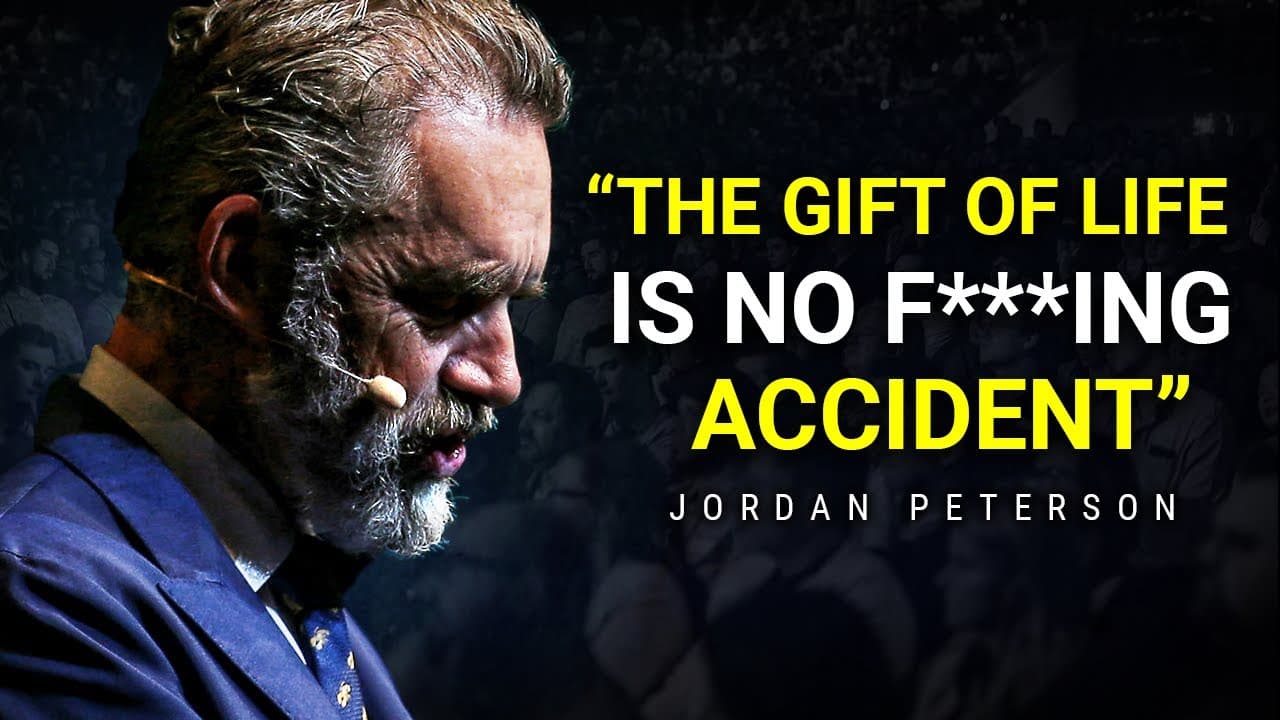
sit on your bed one day and ask yourself uh what's what remarkably stupid things am i doing on a regular basis to absolutely screw up my life and if you actually ask that question but you have to want to know the answer right because that's actually what asking the question means it doesn't mean just mouthing the words it means you have to decide t... Read More
Key Insights
- Honest self-examination is a direct path to discovering repeated behaviors that damage your life. The question only works when you genuinely want the answer, because merely repeating the words cannot reveal what you are unwilling to recognize or change.
- A high aim organizes perception, emotion, and motivation around a chosen direction. Because people naturally act as aiming creatures, the goal they adopt influences what they notice, which challenges appear relevant, and how their daily conduct fits into a broader pattern.
- Meaning is created when ordinary actions serve the highest good a person can conceive. A distant aim and attention to present responsibilities can coexist, allowing each daily problem to become a worthwhile step along a longer path.
- Preparation for hardship is strongest when it begins before chaos arrives. Building a life around worthwhile action provides stability during catastrophe, while waiting until circumstances collapse leaves little time to develop the judgment and capacity needed to endure them.
- Clear criteria for success are necessary because desirable outcomes are unlikely to appear through random movement. People must identify what would genuinely be good for them, aim toward it seriously, and continually adjust their formulation as experience exposes its weaknesses.
- Serious desire is expressed by reorganizing life to make a chosen outcome more probable. Asking for something is not a temporary wish, since commitment requires taking stock of yourself, establishing priorities, and sacrificing alternatives that conflict with what you truly need.
- Personal responsibility begins with examining how your own blindness contributes to a problem. Blaming other people or outside conditions can prevent correction, while asking how you are wrong directs attention toward actions and omissions that are within your influence.
- Thinking is a method for testing possible futures without personally suffering every failure. By imagining different versions of yourself, identifying which paths are likely to fail, and relinquishing harmful elements of your present conduct, you can embody a more promising future.
Install to Summarize YouTube Videos and Get Transcripts
Explore YouTube Video Summarizer or Get YouTube Transcript Extractor
Questions & Answers
Q: How can I identify behaviors that are damaging my life?
Sit down and sincerely ask which remarkably foolish things you do regularly that make your life worse. The important condition is that you must genuinely want to know the answer, rather than merely repeat the question. Honest attention can reveal harmful actions and omissions quickly. Once they become visible, you can begin correcting them instead of locating every cause outside yourself.
Q: How does choosing a high aim create meaning in daily life?
A high aim organizes what you notice, how you feel, and what motivates you. Daily life then appears as a series of challenges related to that direction. When you solve those problems properly, you remain on the path toward your larger goal. This connection between present action and a valued future gives ordinary moments meaning that can sustain you through difficulty.
Q: Why should worthwhile action begin before hardship arrives?
Worthwhile action should begin early because chaos can arrive before you have developed the skills or structure needed to withstand it. The transcript compares preparation to building and learning to captain an ark before a flood. If the structure is unfinished when trouble begins, failure becomes more likely. Meaningful preparation provides something stable to follow when circumstances become overwhelming.
Q: Why do people fail to get what would be good for them?
One major reason is that people do not clearly determine what a good life would require. They may have vague wants, but they do not establish specific criteria for success or organize their behavior around those criteria. Since success follows a narrow path, random effort is unlikely to reach it. Clear aims make deliberate movement, evaluation, and correction possible.
Q: How should goals change as a person makes progress?
Goals should be revised when experience reveals that the original formulation was incomplete or mistaken. A person may define what seems good, take several steps toward it, and then discover that the direction needs adjustment. Progress therefore follows a correcting path rather than a perfectly straight line. The essential practice is to keep aiming, learning, and reformulating without abandoning responsibility.
Q: What does it mean to truly want a goal?
Truly wanting a goal means reorganizing your life in every possible way that makes its achievement more probable. It is not a passing wish or an attempt to force the world to provide status or possessions. Serious commitment requires identifying what would genuinely be good for you, prioritizing it, and sacrificing incompatible alternatives while continuing to act toward it.
Q: How can personal responsibility improve conflicts with others?
Personal responsibility improves conflict by shifting attention from the other person's faults to your own contribution. When an argument reaches an impasse, separating briefly and asking what you may have done wrong can reveal a workable opening. Truthful relationships still require disagreement, but examining even a small personal contribution is more useful than assuming the entire problem belongs to someone else.
Q: How can thinking help someone build a better future?
Thinking allows a person to imagine several possible future versions of themselves and examine how each might succeed or fail. The failing possibilities can be rejected mentally before they are fully lived. A person can then identify which parts of their current conduct must be surrendered, embody a more promising alternative, and direct sacrifice toward improving the future.
Summary & Key Takeaways
-
A meaningful life begins with honest self-examination and a clearly chosen aim. Asking which repeated behaviors are damaging your life can quickly expose opportunities for change. When the highest good you can conceive becomes your direction, daily problems gain significance because solving them properly keeps you moving toward something you genuinely value.
-
People often fail to obtain what would be good for them because they never define it clearly or establish criteria for success. A serious aim reorganizes priorities and requires sacrifice. Progress also involves revising the goal as experience reveals errors, creating a correcting path rather than a perfectly straight journey.
-
Personal responsibility begins by examining your own blindness before blaming other people. Relationships improve when disagreements are addressed truthfully and each person considers their contribution to an impasse. Courageous conduct, thoughtful simulation of possible futures, and the abandonment of failing patterns can strengthen a person against hardship and improve the future.
Read in Other Languages (beta)
Share This Summary 📚
Summarize YouTube Videos and Get Video Transcripts with 1-Click
Try YouTube Summary with ChatGPT & Claude or YouTube Transcript Generator
Explore More Summaries from Motivation Madness 📚

Summarize YouTube Videos and Get Video Transcripts with 1-Click
Try YouTube Summary with ChatGPT & Claude or YouTube Transcript Generator