How to Turn Failure Into Purposeful Success
TL;DR
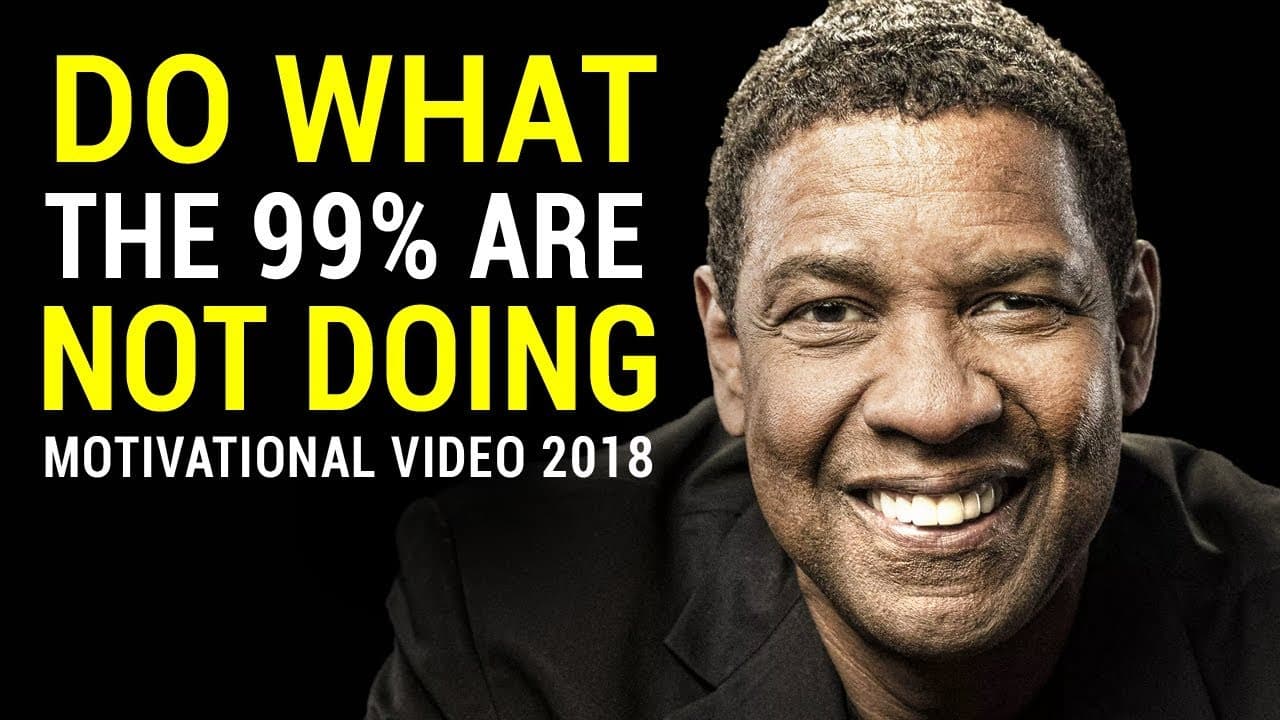
Put God first, accept failure as inevitable, and turn dreams into goals supported by daily discipline, consistency, planning, and hard work. Take professional risks, measure real progress instead of mere activity, use your talents to help others, practice gratitude, and define success by the difference you make rather than by possessions you cannot keep.
Transcript
no one put God first put God first in everything you do everything that you think you see in me everything that I've accomplished everything that you think I have and I have a few things everything that I have is by the grace of God understand that it's a gift 40 years ago March 27th 1975 it was 40 years ago just this past March I was flunking out ... Read More
Key Insights
- Putting God first is Washington’s central principle for staying protected, directed, corrected, and humble. He describes his accomplishments as gifts received through God’s grace and says that although he did not always remain faithful, God continued to remain with him.
- Washington’s 1.7 grade point average illustrates that an uncertain beginning does not determine a person’s future. While flunking out of college and considering the army, he heard a prophecy that he would travel the world and speak to millions, which he says later happened.
- Failure is inevitable when people pursue difficult goals and take meaningful risks. Washington says everyone will lose, face embarrassment, or perform badly at something, so failure should be accepted as part of trying instead of treated as a reason to quit.
- Dreams without goals can produce disappointment because aspiration alone does not create progress. Washington recommends setting life goals, yearly goals, monthly goals, and daily goals, then applying discipline, consistency, planning, and hard work to them every day.
- Movement is not the same as progress because high activity does not guarantee meaningful results. Washington compares unproductive busyness to running in place and advises listeners to keep striving while checking whether their effort is actually moving them toward their goals.
- Persistence works by turning each rejection into preparation for the next opportunity. After failing a Broadway musical audition because singing and theatrical acting did not suit him, Washington kept auditioning and later won a Tony Award at the same theater 30 years afterward.
- Material wealth cannot be taken beyond death, so its significance depends on how it is used. Washington’s image of never seeing a U-Haul behind a hearse supports his argument that talents, time, prayers, treasures, patience, and kindness should benefit other people.
- Helping others is Washington’s definition of meaningful joy and success. He calls service selfish because of the gratification it gives the helper, then urges successful people to reach back, lift someone else, teach others, and aspire to make a difference.
Install to Summarize YouTube Videos and Get Transcripts
Explore YouTube Video Summarizer or Get YouTube Transcript Extractor
Questions & Answers
Q: How can dreams be turned into achievable goals?
Dreams become achievable when they are divided into life goals, yearly goals, monthly goals, and daily goals. Washington says those goals must be supported by discipline, consistency, planning, and hard work every day. Occasional effort is insufficient, and activity should be evaluated for actual progress because doing more tasks does not necessarily mean accomplishing more meaningful work.
Q: Why should people accept failure when pursuing success?
Failure should be accepted because losing, becoming embarrassed, or performing badly is inevitable when people attempt difficult things. Washington argues that a person who never fails may not be trying beyond familiar limits. Each failed experiment can move someone closer to success when the experience becomes preparation for another attempt rather than a reason to stop pursuing the goal.
Q: What does it mean to fail big?
To fail big means taking professional chances, thinking outside the box, and pursuing goals large enough to include a genuine possibility of failure. Washington connects ambitious failure with dreaming big, but he also insists that dreams need specific goals. Courageous risk must therefore be combined with disciplined work, consistent effort, daily planning, and continued preparation after setbacks.
Q: How did Denzel Washington respond to failed auditions?
Washington says he failed an early audition for a Broadway musical after struggling with both singing and the exaggerated acting style expected in musical theater. He did not quit or retreat. Instead, he prepared for the next audition and continued through repeated failures. Thirty years later, he performed in Fences at the same theater and won a Tony Award.
Q: What is the difference between movement and progress?
Movement is activity, while progress is effort that actually advances a goal. Washington warns that doing many things does not automatically mean getting more done. His mother compared empty activity to running in place, where considerable energy produces no forward movement. Planning and clearly defined goals help people judge whether daily work is creating genuine advancement.
Q: Why does Washington say possessions do not define success?
Possessions do not define success because money and material goods cannot be taken beyond death. Washington illustrates this by saying that a U-Haul is never seen behind a hearse and that the Egyptians tried taking wealth with them but were robbed. The more important question is not how much someone owns, but what that person does with available talents and resources.
Q: How can helping others create meaningful success?
Helping others creates meaningful success because service produces joy and gratification that jewelry, houses, and cars do not provide. Washington urges people to contribute whatever they possess, including time, talent, prayers, treasures, patience, or kindness. After achieving a goal, they should reach back, pull someone else up, teach others, and aspire to make a difference rather than merely earn a living.
Q: What role do gratitude and faith play in Washington’s advice?
Gratitude and faith provide the foundation for Washington’s approach to life. He advises putting God first, remaining humble, and giving thanks for grace, mercy, understanding, wisdom, parents, love, kindness, humility, peace, and prosperity. He also recommends giving thanks in advance, claiming good desires, working hard to fulfill them, and using the results to help other people.
Summary & Key Takeaways
-
Denzel Washington credits God’s grace for his accomplishments and recalls having a 1.7 grade point average before his career took shape. He urges listeners to remain humble, recognize their abilities as gifts, express gratitude for grace and wisdom, and trust that sincere desires to do good can guide purposeful action.
-
Dreams become useful when they are converted into life, yearly, monthly, and daily goals. Achieving them requires discipline, consistency, planning, and hard work every day. Washington warns that constant activity can resemble running in place, so people should distinguish movement from measurable progress while continuing to take ambitious professional risks.
-
Failure is inevitable for anyone pursuing meaningful ambitions, but each failed attempt can provide preparation for another opportunity. Washington describes repeatedly failing acting auditions before later winning a Tony Award at the same theater. He concludes that possessions cannot be taken beyond death, while helping others creates joy and meaningful success.
Read in Other Languages (beta)
Share This Summary 📚
Summarize YouTube Videos and Get Video Transcripts with 1-Click
Try YouTube Summary with ChatGPT & Claude or YouTube Transcript Generator
Explore More Summaries from Motivation Madness 📚



Summarize YouTube Videos and Get Video Transcripts with 1-Click
Try YouTube Summary with ChatGPT & Claude or YouTube Transcript Generator