How to Shape Your Future with Five Life Rules

TL;DR
Pursue what you want without blocking others, accept responsibility for both success and failure, and build relationships based on mutual help. Strong leadership also requires listening before speaking, while lasting humility comes from remembering that privileges often belong to a position, not the person holding it.
Transcript
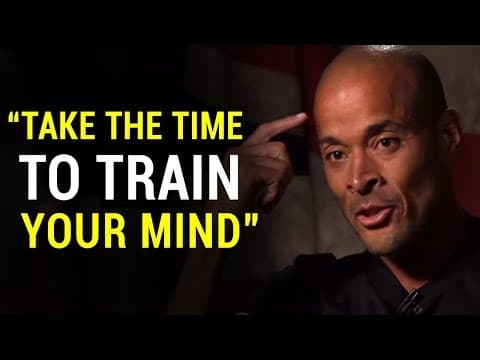
So I had the chance to meet with some of the kids in the program today, where are you - scream out - there you go? I love those kids and So what I thought I would do Because they gave me a little bit of time - um To say whatever I want is offer you a little bit of Some observations for your future. I have five little rules that you can follow as ... Read More
Key Insights
- Initiative begins with seeing the desired outcome instead of concentrating exclusively on the obstacle. The bagel story illustrates that a person can find an unconventional route, accept less choice, and still obtain what they want without preventing anyone else from pursuing the same opportunity.
- Personal freedom has an ethical boundary: pursuing your own objective must not deny another person the ability to pursue theirs. Rules and customary processes can sometimes be challenged, but personal ambition does not justify obstructing or harming other participants.
- Accountability must accompany recognition. A person may take credit for actions that produce good results only if that person is equally willing to acknowledge mistakes and accept responsibility for actions that contribute to failure.
- Preventable problems can persist when responsible people refuse to consider their own role. The childbirth-fever story describes doctors conducting autopsies before delivering babies without washing their hands, then dismissing the warning that their own practices were causing the deaths.
- Elite performance depends on supporting others when personal reserves are depleted. According to the Navy SEAL selection example, those who succeed are not necessarily the strongest-looking candidates, but people who still find enough energy to help the person beside them.
- Asking for help is a practical skill, not an admission of worthlessness. People who care may remain on the sidelines when someone continually appears in control, but openly admitting confusion, fear, or difficulty gives them an opportunity to provide support.
- Effective leadership requires speaking after others, not merely inviting opinions after announcing a preferred answer. Remaining neutral, listening carefully, and asking clarifying questions allow participants to feel heard while giving the leader access to every viewpoint before reaching a conclusion.
- Status-related privileges belong to the position rather than permanently to the individual. The ceramic-cup story teaches that special travel, assistance, and treatment may disappear when an office ends, so leaders should retain the humility of someone who deserves an ordinary styrofoam cup.
Install to Summarize YouTube Videos and Get Transcripts
Explore YouTube Video Summarizer or Get YouTube Transcript Extractor
Questions & Answers
Q: How can I pursue what I want without harming others?
Focus on the outcome you want, look beyond the conventional route, and accept the tradeoffs attached to your chosen approach. In the bagel example, bypassing the line meant surrendering the ability to select a particular bagel. The governing rule is that you may pursue what you want in your own way, provided you do not prevent anyone else from pursuing what they want.
Q: What does the free bagel story teach about obstacles?
The story contrasts two ways of viewing an opportunity. One person sees the desired result, a free bagel, while the other sees only the long line blocking access to it. The lesson is that an obstacle does not always dictate the method. A different route may work, although it can require accepting a sacrifice, such as receiving whichever bagel happens to be available.
Q: Why must accountability accompany credit for success?
Credit and accountability form a balanced equation. If people want recognition for decisions and actions that work well, they must also accept responsibility when their conduct contributes to a bad result. Taking only the praise while assigning every failure to external causes prevents honest evaluation. The childbirth-fever example shows how serious a problem can become when responsible professionals refuse to examine their own behavior.
Q: What lesson comes from the childbirth-fever example?
The central lesson is that the people trying to solve a problem may sometimes be contributing to it. Doctors conducted autopsies in the morning, delivered babies later, and did not wash their hands between those activities. Oliver Wendell Holmes identified their role, but his warning was dismissed for 30 years. Washing hands and sterilizing instruments eventually made the deadly childbirth fever disappear.
Q: How does helping others contribute to elite performance?
The Navy SEAL example presents cooperation as more important than looking strong, acting dominant, or relying on an impressive athletic background. Candidates who make it through can reach physical and emotional exhaustion yet still find energy to help the person beside them. Advancement therefore depends on becoming skilled at supporting others, especially when the situation is too difficult or dangerous to handle alone.
Q: When should someone ask for or accept help?
A person should ask for help when stuck, afraid, uncertain, or unable to complete a challenge alone, and should accept useful assistance when it is offered. Continually pretending that everything is under control can make caring people believe support is unnecessary. Openly admitting difficulty allows those people to step forward. Mutual support becomes strongest when someone also practices caring for others first.
Q: Why should a leader be the last person to speak?
Speaking last allows everyone else to contribute without being influenced by the leader's declared position. It also gives participants the feeling that they were genuinely heard and provides the leader with more information before forming or stating a conclusion. During the discussion, the leader should avoid signaling agreement or disagreement and instead ask questions that clarify both what people believe and why they believe it.
Q: What does the ceramic cup story teach about status?
The ceramic cup represented privileges attached to a senior government position, not a permanent reward belonging to the individual. While serving as Undersecretary of Defense, the speaker received business-class travel, organized transportation, hotel assistance, backstage access, and coffee in a ceramic cup. After leaving the role, he handled his own travel and received a styrofoam cup, which reminded him to remain humble as status changes.
Summary & Key Takeaways
-
The first two rules concern initiative and accountability. People can focus either on what they want or on the barriers before them. Pursuing an unconventional route is acceptable when it does not obstruct others. Likewise, claiming credit for good results requires accepting responsibility when personal actions contribute to failure.
-
The third and fourth rules emphasize cooperation and listening. Elite performance depends on helping people nearby, requesting assistance when necessary, and accepting support when offered. Effective leaders withhold their opinions until others have spoken, ask questions to understand each viewpoint, and give participants a genuine sense that their contributions were heard.
-
The fifth rule protects against entitlement. An Undersecretary of Defense once received business-class travel, personal assistance, and coffee in a ceramic cup because of his position. After leaving office, he traveled independently and used a styrofoam cup, recognizing that the earlier privileges belonged to his office rather than to him personally.
Read in Other Languages (beta)
Share This Summary 📚
Summarize YouTube Videos and Get Video Transcripts with 1-Click
Try YouTube Summary with ChatGPT & Claude or YouTube Transcript Generator
Explore More Summaries from Motivation Madness 📚





Summarize YouTube Videos and Get Video Transcripts with 1-Click
Try YouTube Summary with ChatGPT & Claude or YouTube Transcript Generator