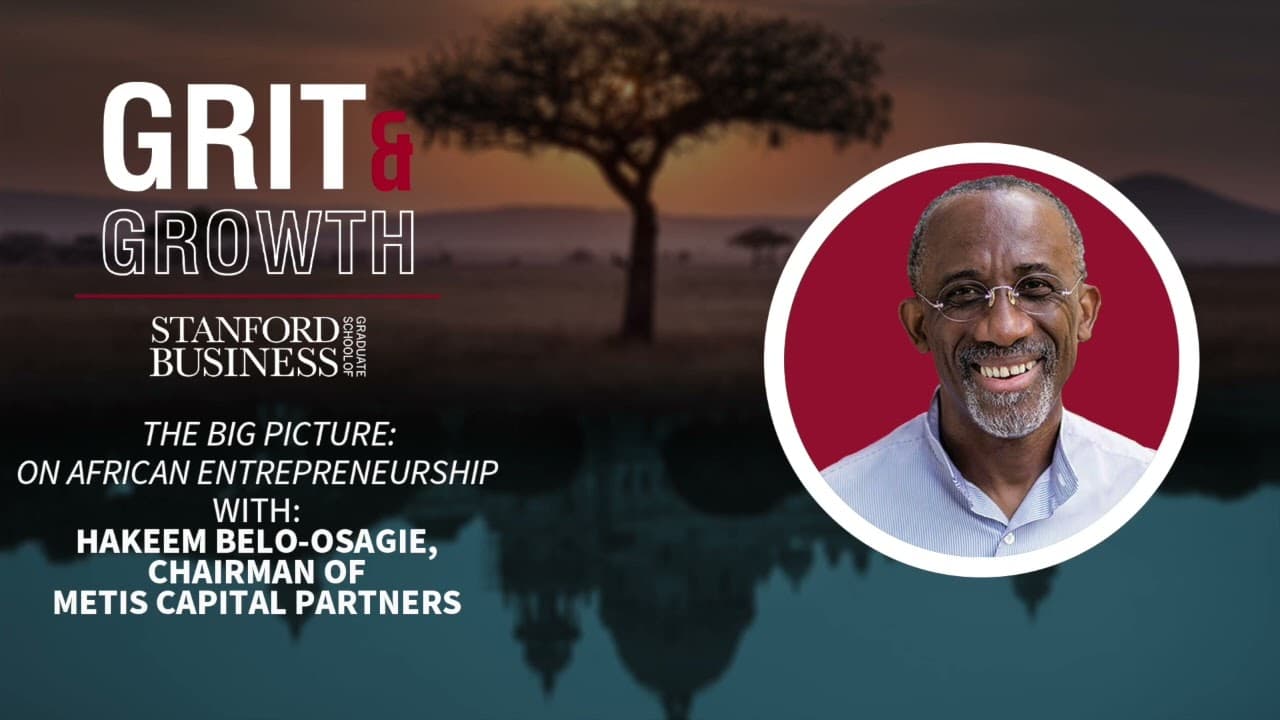
S02E01 Grit & Growth | The Big Picture: Hakeem Belo-Osagie on African Entrepreneurship
TL;DR
Hakeem Belo-Osagie argues that African entrepreneurship depends on vision, adaptability, trusted collaboration, and an understanding of regulation. Drawing on three decades across Nigeria’s energy, finance, and telecom sectors, including a failed first venture and the takeover of the effectively bankrupt United Bank for Africa, he explains why patient capital, diverse teams, good governance, and broader social impact matter. Read on for his practical lessons on leadership, fintech, credit, and long-term growth.
Transcript
For all the CEOs and founders who are listening, on April 1st, we will start accepting applications for the 2023 class of the Seed Transformation Program. The 11 month intensive program will start in January, and it includes a combination of face to face teaching, networking and virtual learning. You'll have the opportunity to participate in a coho... Read More
Key Insights
- 🥺 Crisis and difficulties can trigger introspection and rethinking, leading to growth and development.
- 🌍 Successful entrepreneurship requires a combination of vision, execution, and an understanding of the national regulatory environment.
- 🇨🇫 African FinTech companies have the potential for growth, but regulatory challenges can restrain their progress.
- 😤 Trust, collaboration, and diverse talents are essential in business leadership and team-building.
- 👨💼 Social impact, inclusivity, and poverty reduction should be yardsticks for measuring business success in Africa.
- 👋 Good governance, effective leadership, and a long-term vision are crucial for sustainable economic growth.
- 🪡 African entrepreneurs need to consider the cultural context and engage with government officials to foster understanding and collaboration.
Install to Summarize YouTube Videos and Get Transcripts
Explore YouTube Video Summarizer or Get YouTube Transcript Extractor
Questions & Answers
Q: What is Hakeem Belo-Osagie’s outlook for entrepreneurship and economic growth in Nigeria?
Belo-Osagie is cautiously optimistic because Nigeria has a large population that has historically been entrepreneurial and does not feel dependent on government. He also sees oil as a resource that, if properly used, can fund infrastructure, while emphasizing that good governance and effective leadership are crucial for long-term growth.
Q: What did Hakeem Belo-Osagie learn from his first entrepreneurial failure?
His first finance venture was a complete failure, which he says was largely his own fault, but it became a valuable lesson. He recovered and built a second venture, a securities trading company, that performed well.
Q: What happened when Hakeem Belo-Osagie took over United Bank for Africa?
After his securities trading company succeeded, Belo-Osagie staged the takeover of the large government-owned United Bank for Africa, or UBA. Only after buying it did he realize that the bank was effectively bankrupt.
Q: How can African fintech companies respond to regulatory challenges?
Belo-Osagie says regulators need a better understanding of fintech technology and its ecosystem. Market participants can help by sharing their experiences, practicing self-regulation, and building trust with regulators.
Q: How can entrepreneurs make credit more affordable for African SMEs?
Entrepreneurs need predictive data and technology to lower the cost of reaching customers and providing credit. Belo-Osagie also stresses patient capital and a longer investment horizon.
Q: What leadership qualities support business success in Africa?
Belo-Osagie emphasizes trust, adaptability, collaboration, and the ability to address problems as they arise. He also highlights the value of a clear vision and a team with diverse talents.
Q: How should business success in Africa be measured?
Belo-Osagie argues that success should extend beyond shareholder value. Social impact, inclusivity, poverty reduction, and benefits for a wider population should also serve as measures of achievement.
Q: Who is eligible for the Seed Transformation Program described in the episode?
Founders and CEOs of companies based in Sub-Saharan Africa and South Asia are eligible if their companies have annual revenue of at least $300,000. The 11-month intensive program combines face-to-face teaching, networking, and virtual learning in a cohort of 60 entrepreneurs from across the participant’s region.
Summary & Key Takeaways
-
Hakeem Belo-Osagie is a prominent figure in the Nigerian economy, having made significant contributions in sectors such as energy, finance, and telecoms.
-
He believes that Nigeria has the potential for long-term growth due to its large, entrepreneurial population and oil resources, but good governance and effective leadership are crucial for its success.
-
Belo-Osagie emphasizes the importance of trust, collaboration, and patience in entrepreneurship. He also highlights the need for founders to have a clear vision, adaptability, and a diverse team.
Read in Other Languages (beta)
Share This Summary 📚
Summarize YouTube Videos and Get Video Transcripts with 1-Click
Try YouTube Summary with ChatGPT & Claude or YouTube Transcript Generator
Explore More Summaries from Stanford Graduate School of Business 📚

Summarize YouTube Videos and Get Video Transcripts with 1-Click
Try YouTube Summary with ChatGPT & Claude or YouTube Transcript Generator