John Donahoe on Creating a Healthy & Sustainable Life

TL;DR
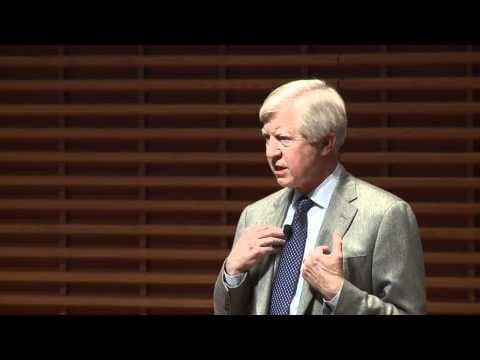
John Donahoe builds sustainable high performance by investing in physical, mental, emotional, spiritual, and social capacity rather than treating relentless work as strength. He protects sleep and exercise, learns from every interaction, seeks help from coaches and therapists, and builds enduring communities, including a couples group that met monthly for 15 years. Read on for practical lessons about integrating work, family, support, and adversity.
Transcript
[MUSIC] It was only 30 years ago that just like you are. And I distinctly remember feeling to figure out how I could build my Tom will remember, we had our oldest kid, >> [LAUGH] >> The first day of finals of fall term, first year. And it was sort of one of those And I'll just start with this story. Because I showed up to the GSB, kind of really st... Read More
Key Insights
- Sustainable high performance is built by investing in physical, mental, emotional, and spiritual capacity. Donahoe argues that business leaders should prepare as deliberately as world-class athletes, including getting sleep, exercising, developing skills, and accepting help from coaches or other trusted advisers.
- Sleep is a practical driver of productivity rather than an optional reward. Donahoe says he repeatedly notices his productivity decline when he becomes busy and neglects sleep, reinforcing the need to protect basic physical health even during demanding professional periods.
- Learning is available in every interaction, not only through senior mentors or bosses. Donahoe trained himself to approach meetings by asking what he could learn from each person, which increased his curiosity and encouraged others to share more openly with him.
- Professional support is a sign of strength rather than weakness. Donahoe openly describes working with professional, spiritual, and personal advisers, including a couples therapist, because greater consciousness of recurring habits and anxiety helps him recognize patterns even when they do not disappear completely.
- Community provides support without requiring members to solve one another's problems. Donahoe describes colleagues meeting every Friday morning and couples gathering monthly for 15 years, using regular conversation to share difficulties and build durable relationships through repeated honesty and mutual presence.
- Work and family are not always a zero-sum contest. Flexible enrollment, local client work, and family cooperation allowed Donahoe and his wife to pursue education, parenting, and careers through unconventional arrangements that became productive despite skepticism from some professional peers.
- Personal responsibilities can develop valuable leadership capabilities. Donahoe says parenting taught him humility, listening, multitasking, and the importance of being present because his children did not care about his professional title or respond to authority in the same way employees might.
- Adversity is often where the deepest growth occurs. Donahoe observes that his proudest periods and his greatest learning frequently came together, even though those experiences felt difficult at the time, so he reframes hardship as evidence that meaningful growth may be underway.
Install to Summarize YouTube Videos and Get Transcripts
Explore YouTube Video Summarizer or Get YouTube Transcript Extractor
Questions & Answers
Q: How does John Donahoe build a healthy, sustainable high-performance life?
Donahoe invests in his whole capacity through exercise, sleep, skill development, emotional awareness, spiritual guidance, and community. He compares this preparation with world-class athletes, who train extensively and seek coaching instead of assuming talent alone will sustain their performance.
Q: Why are sleep and exercise essential to sustainable professional performance?
Sleep and exercise provide the physical capacity needed for consistent performance. Donahoe says that when work gets busy and he neglects sleep, he can watch his productivity decline, so caring for the body must remain part of professional preparation.
Q: How can someone learn from every professional interaction?
Donahoe trained himself to enter each meeting asking what he could learn from the other person, including people who were not bosses or established mentors. He found that genuine curiosity encouraged people to engage more openly, creating a reinforcing cycle of conversation and learning.
Q: Why does John Donahoe view coaching and therapy as signs of strength?
Donahoe says coaches and therapists help people develop abilities and become more conscious of recurring habits, weaknesses, and emotional reactions. He has relied on coaches, a spiritual coach, priests, a longtime professor, and a couples therapist, even though awareness does not make every anxiety disappear.
Q: How can community support a healthy and sustainable life?
Community provides a dependable place to discuss difficulties honestly without requiring members to solve one another's problems. Donahoe describes eight Bain colleagues meeting every Friday morning and a group of six couples meeting monthly for 15 years, with trust developing through repeated conversation.
Q: Can work and family strengthen each other instead of competing?
Donahoe rejects automatically framing work and family as a zero-sum choice. When his wife started law school, he asked to take time off and was instead offered a flexible, part-time arrangement, showing how unconventional solutions can support family responsibilities alongside professional development.
Q: What leadership abilities can personal and family life develop?
Donahoe presents real life as a source of professional capability rather than merely a constraint on work. His account emphasizes learning through family responsibilities, flexibility, listening, humility, and being present instead of relying solely on professional authority.
Q: How do permission to fail and adversity support growth?
Donahoe recalls giving himself permission to fail during a stressful first term of business school that coincided with the birth of his oldest child. He argues that meaningful achievement can require difficulty, resilience, teamwork, and continued effort even when the experience does not feel positive at the time.
Summary
In this video, the speaker shares his experiences and lessons learned over the past 30 years, discussing topics such as investing in oneself, the importance of a balanced life, and the concept of winning. He emphasizes the need for individuals to define their own aspirations and not let others define what winning and losing means for them. He also talks about the power of resilience and commitment in overcoming adversity and achieving personal and professional growth. The speaker discusses the role of mindfulness and meditation in his life, and highlights the importance of building a strong community and support system. Ultimately, he encourages individuals to pursue a full and fulfilling life while acknowledging that it is not always easy.
Questions & Answers
Q: How can one retain the memory of resilience and maintain a positive mindset during challenging times?
The speaker suggests that resilience and a positive mindset can be developed through regular practice and building mental, emotional, and spiritual resilience. He mentions the benefits of meditation and mindfulness in reprogramming the brain to counteract negative thought patterns. He also shares his own experience of attending a ten-day silent Buddhist retreat and finding value in reconnecting with his inherent qualities of kindness, generosity, compassion, and love. By recognizing that challenging times are opportunities for growth, individuals can better navigate and overcome adversity.
Q: How can individuals find a balance between personal and professional life, and how can one's entire life be a competitive advantage?
The speaker shares personal anecdotes and advises individuals to embrace a positive-sum mindset, where personal and professional priorities are not viewed as mutually exclusive. He highlights the importance of investing in oneself, which includes taking care of one's body, developing skills, and nurturing mental, emotional, and spiritual health. By recognizing that learning can come from a variety of sources and experiences, individuals can develop a more well-rounded and comprehensive skill set. The speaker emphasizes the role of community and support systems in building a full life, and how experiences in personal life, such as parenting, can contribute to professional growth and leadership qualities.
Q: How can one embrace adversity and still strive to win in life?
The speaker discusses the importance of reframing one's perspective on adversity and recognizing that it is often during challenging times that personal growth and development occur. He highlights the example of world-class athletes who understand the need for rigorous preparation and embrace the difficulty and intensity of their chosen field. He encourages individuals to define their own version of winning and not let others dictate what winning and losing means for them. The speaker also discusses the power of commitment, resilience, and faith in navigating and overcoming adversity, and the value of recognizing and learning from past experiences.
Q: Is winning more important than losing and how can one embrace losing for the sake of others or society as a whole?
The speaker acknowledges that the definition of winning may vary for individuals, and emphasizes the importance of personal intention in defining what winning means. He also brings attention to the fact that winning does not always mean that someone else has to lose. The speaker explains that there are valuable lessons to be learned from losing, and that losing can contribute to personal growth and development. He suggests that society needs a different definition of winning, one that is not solely focused on individual success, but considers the greater good and the interest of others.
Q: How did the speaker and his wife find balance in their relationship and what lessons did they learn throughout their journey?
The speaker shares that he and his wife have always approached their relationship as a partnership and have seen each other as teammates. He highlights the importance of constantly striving to be a better person in the context of their relationship and views his wife as a source of inspiration in this regard. The speaker emphasizes that marriage requires work and commitment, and that the journey has not always been easy. He discusses the value of community and support networks in navigating the challenges of marriage and parenting. The speaker also acknowledges the societal barriers and expectations that women often face in their careers and emphasizes the need for equal recognition and opportunities.
Summary & Key Takeaways
-
John Donahoe argues that world-class professional performance requires deliberate investment in the whole person. Exercise and sleep support productivity, while coaches, therapists, mentors, and spiritual advisers strengthen capabilities and self-awareness. Seeking help is presented as a sign of strength, comparable to how elite athletes continuously train with expert support.
-
Personal life and professional life can reinforce each other when people reject automatic zero-sum assumptions. Donahoe describes flexible academic and work arrangements that helped his family while preserving career progress. Parenting also taught him humility, listening, multitasking, and presence, qualities that proved valuable in leadership and organizational settings.
-
Growth and accomplishment often emerge from periods that feel difficult rather than comfortable. Donahoe compares leadership with competitive sports, where success depends on resilience, teamwork, faith, and capitalizing on limited opportunities. His baseball lesson is to enter the batter's box, accept likely failures, and keep taking meaningful swings.
Read in Other Languages (beta)
Share This Summary 📚
Summarize YouTube Videos and Get Video Transcripts with 1-Click
Try YouTube Summary with ChatGPT & Claude or YouTube Transcript Generator
Explore More Summaries from Stanford Graduate School of Business 📚
Summarize YouTube Videos and Get Video Transcripts with 1-Click
Try YouTube Summary with ChatGPT & Claude or YouTube Transcript Generator