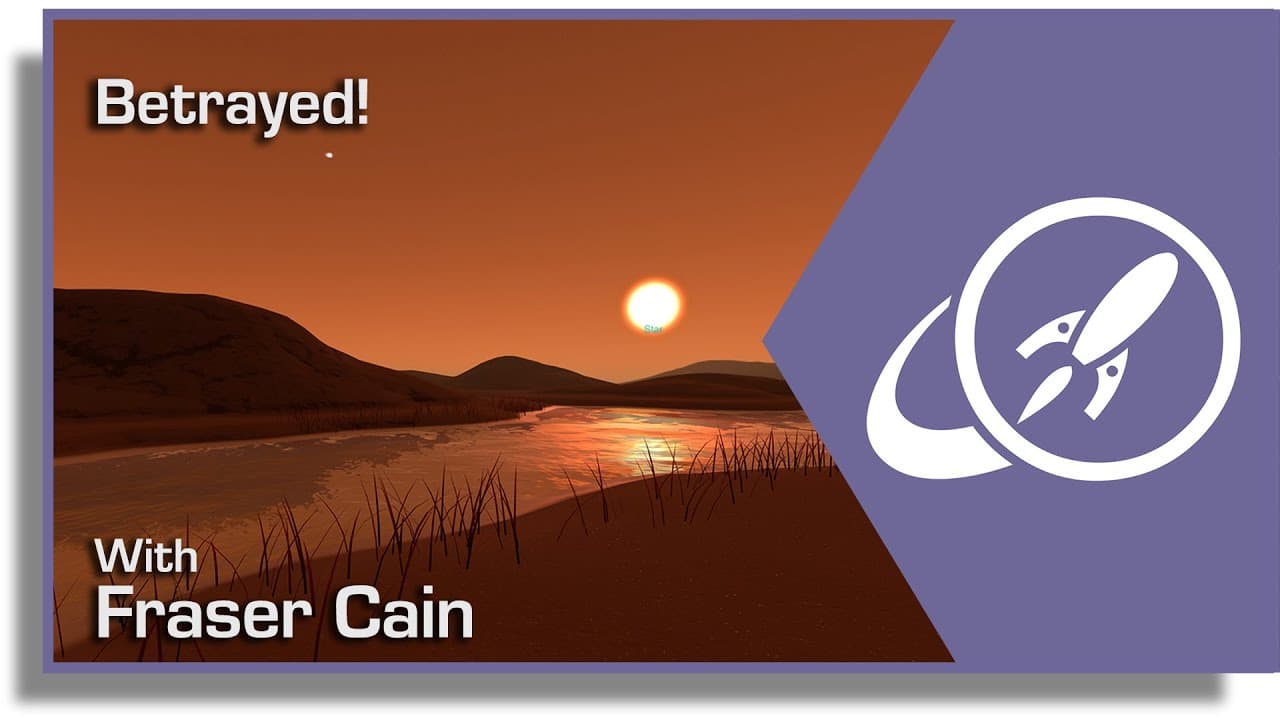
Betrayed By The Red Edge. How We Can Find Aliens, And Why They Already Know We're Here
TL;DR
Life on Earth has been broadcasting its existence through specific wavelengths of light, such as the red edge biosignature, created by plants, lichen, and other life forms. Research suggests that similar signals could be used to detect life on other planets.
Transcript
People are always worried that alien civilizations will detect the transmissions from our old radio shows and television broadcasts, and send in the invasion fleet. But the reality is that life itself has been broadcasting the existence of life on Earth for 500 million years. Blame it on the plants. In addition to filling the atmosphere with oxygen... Read More
Key Insights
- 🙂 Life on Earth has been broadcasting its existence for 500 million years through specific wavelengths of light, such as the red edge biosignature.
- 🛟 The Galileo spacecraft and subsequent missions have confirmed the presence of life on Earth through the detection of methane, oxygen, and ozone in the atmosphere.
- 💢 Different eras of Earth's history have been modeled to simulate the biosignatures emitted by various life forms, including lichen, cyanobacteria, corals, and animals.
- 🦸 Telescopes like ESA's ARIEL and ground-based super observatories will enable the direct observation of exoplanet atmospheres and the detection of potential biosignatures.
- 😪 The red edge biosignature emitted by plants is just one example of a potential biosignature, with lichen, cyanobacteria, corals, and animals also generating unique spectral signatures.
Install to Summarize YouTube Videos and Get Transcripts
Explore YouTube Video Summarizer or Get YouTube Transcript Extractor
Questions & Answers
Q: Can we use the red edge biosignature to find life on other worlds?
Yes, researchers have found that the red edge biosignature emitted by plants, lichen, cyanobacteria, corals, and even some animals can potentially help in detecting life on other planets. By studying the specific wavelengths of light emitted, we can search for similar signals in the atmospheres of exoplanets.
Q: What telescopes are being developed to observe exoplanets and detect potential biosignatures?
Techniques such as radial velocity, transit method, and analysis of the chemical spectrum are currently used to study exoplanets. However, the most promising method is direct imaging, which involves blocking the light from stars using a coronograph to observe the light emitted by the planet itself. Future missions like ESA's ARIEL and ground-based super observatories will be dedicated to studying exoplanet atmospheres.
Q: What are some examples of potential biosignatures besides the red edge?
Besides the red edge, lichen, cyanobacteria, corals, and even some animals can generate detectable biosignatures. Each of these life forms has its own unique spectral signature that could indicate the presence of life on planets outside our solar system.
Q: Can minerals mimic biosignatures and create false positives?
Yes, certain minerals like mercury sulfide could emit a red edge biosignature, leading to a false positive for signs of life. Careful analysis and examination of multiple biosignatures are necessary to confirm the presence of life on exoplanets.
Summary & Key Takeaways
-
Plants and other life forms on Earth emit specific wavelengths of light, such as the red edge, which can be detected as a biosignature.
-
The Galileo spacecraft captured evidence of life on Earth through its flyby maneuvers, and subsequent missions have confirmed the presence of life through the detection of methane, oxygen, and ozone in the atmosphere.
-
Researchers have modeled different eras of Earth's history to simulate the signals emitted by various life forms, including lichen, cyanobacteria, corals, and animals, which could be used to detect life on alien worlds.
Read in Other Languages (beta)
Share This Summary 📚
Summarize YouTube Videos and Get Video Transcripts with 1-Click
Try YouTube Summary with ChatGPT & Claude or YouTube Transcript Generator
Explore More Summaries from Fraser Cain 📚


Summarize YouTube Videos and Get Video Transcripts with 1-Click
Try YouTube Summary with ChatGPT & Claude or YouTube Transcript Generator