How Do Digital Dictatorships Undermine Democracy?
TL;DR
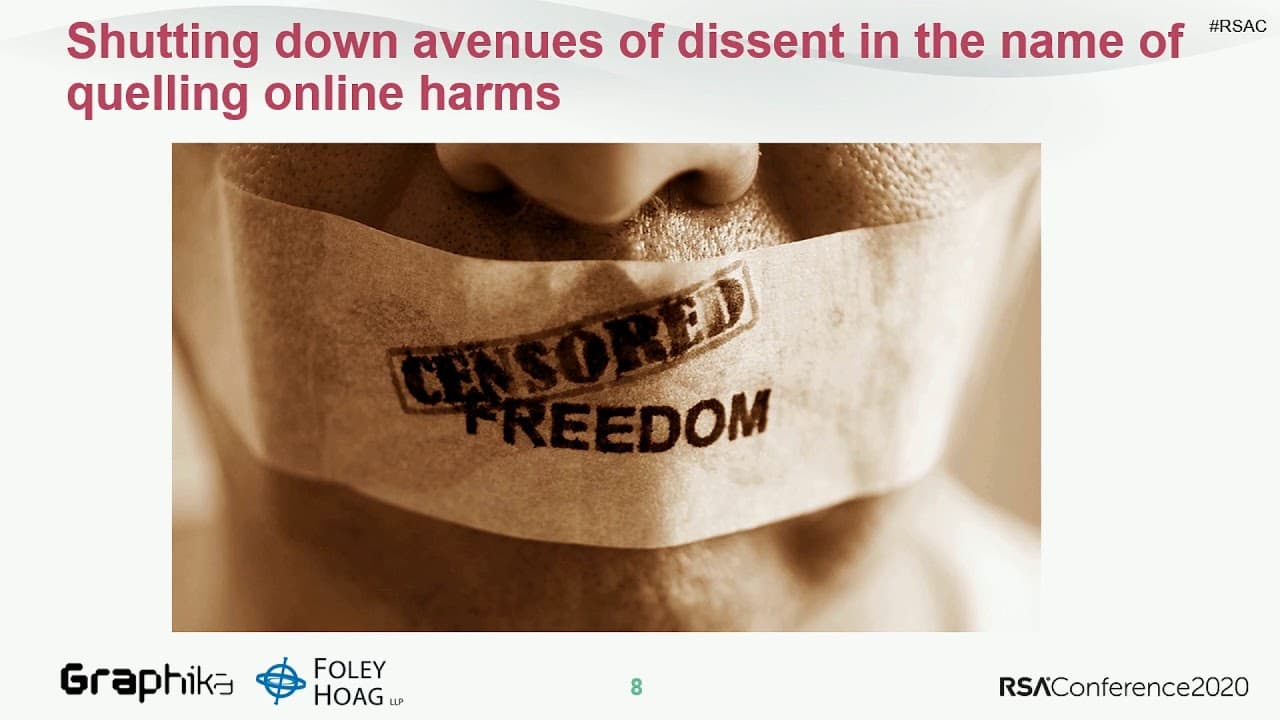
Digital dictatorships undermine democracy by exploiting social divisions, intimidating influential critics, restricting internet access, and manipulating laws intended to address online harms. Effective defenses should examine coordinated behavior rather than target particular actors or content, while accounting for each country's human rights record and democratic vulnerabilities.
Transcript
Good morning. My name is Britton Heller. I am counsel for business and human rights at Foley Hoag. And I'm Ben Nimmo, and I'm director of investigations at Graphika, which is a New York, uh, social media analytics firm. Um, it, it's a pleasure to be here at RSA. I come from Scotland, so it's a particular pleasure to be somewhere where the sun actua... Read More
Key Insights
- Digital authoritarianism is a mainstream tactic that combines control over citizens' data, constraints on information, and suppression of dissent. These practices erode public trust in both the internet and the democratic institutions that depend on open communication and credible information.
- Digital dictatorships create domestic chaos by aggravating social divisions that already exist. Rather than invent every conflict, influence operations can focus attention on sensitive issues, deepen distrust among communities, and use authentic grievances as material for coordinated manipulation.
- Online intimidation can be deliberately organized to silence researchers and critics. The campaign targeting Brittan Heller instructed participants to frame abuse as opinion, remain just short of the legal definition of a threat, and select platforms with comparatively permissive moderation.
- The Internet Research Agency emphasized race in its activity before the 2016 United States presidential election. According to the cited Senate Intelligence Committee report, about two-thirds of the Russian social media activity sought to influence African American voters by demoralizing them and amplifying racial tensions.
- Blackstagram was the Internet Research Agency's most popular account discussed in the presentation, reaching 300,000 followers before detection. More than half of the agency's most popular Instagram accounts explicitly targeted African American issues and users, while pages such as Blacktivist generated millions of interactions.
- Internet shutdowns are used during elections and social unrest to restrict avenues for dissent. The presentation cites shutdowns in the Democratic Republic of the Congo, The Gambia, Sierra Leone, and Uganda, along with restrictions connected to protests in several other countries.
- Identical disinformation laws can produce fundamentally different consequences across countries. The important variables include each government's human rights record and democratic vulnerabilities, which can determine whether a rule addresses harmful conduct or becomes a tool for suppressing legitimate political expression.
- Uganda's 2016 election illustrates the unequal effects of a shutdown. President Museveni's government disabled internet access for four days while citing security, misinformation, rumors, and continued campaigning, yet researchers found that the government kept posting while opposition parties could not.
Install to Summarize YouTube Videos and Get Transcripts
Explore YouTube Video Summarizer or Get YouTube Transcript Extractor
Questions & Answers
Q: How do digital dictatorships undermine democracy?
Digital dictatorships undermine democracy by creating fear and chaos, worsening existing social divisions, silencing influential critics, and exploiting measures presented as responses to online harms. They may coordinate disinformation, intimidate journalists or researchers, restrict internet access during elections and protests, and use loosely worded laws to suppress dissent while claiming to protect security or public discourse.
Q: How are online critics and researchers deliberately intimidated?
Online critics and researchers can face coordinated campaigns designed to frighten them without clearly crossing legal or platform boundaries. The campaign targeting Brittan Heller instructed participants to describe abuse as political opinion, approach but not exceed the legal threshold for threats, and use content formats and platforms where moderation was comparatively permissive. The purpose was to silence a person exposing harmful conduct.
Q: How did the Internet Research Agency target African American voters?
The Internet Research Agency created social media accounts focused on African American communities and issues, promoted racial grievances, purchased Facebook advertisements, and amplified tensions surrounding events such as the police shooting of Keith Lamont Scott in Charlotte. According to the cited Senate report, about two-thirds of the Russian social media activity sought to influence African American voters during the 2016 election.
Q: What evidence showed the scale of the Internet Research Agency campaign?
More than half of the Internet Research Agency's most popular Instagram accounts explicitly targeted African American issues and users. Blackstagram, described as its most popular account, had 300,000 followers when detected. Other Facebook pages, including Blacktivist, attracted millions of likes, shares, and comments. These figures demonstrate substantial reach, although the presentation says the concrete electoral impact remains difficult to measure.
Q: Why do governments shut down the internet during elections?
Governments often claim that internet shutdowns are necessary to address security threats, misinformation, rumors, unlawful campaigning, or protests organized through services such as Facebook, Twitter, and WhatsApp. The presentation argues that shutdowns can also close avenues for dissent. Examples include election-related restrictions in the Democratic Republic of the Congo, The Gambia, Sierra Leone, and Uganda.
Q: What happened during Uganda's 2016 election internet shutdown?
President Museveni shut down internet access for four days without warning during Uganda's 2016 election. The stated reasons included preventing security threats, limiting misinformation and rumors, and stopping the illegal continuation of campaigning. Researchers later found that the Ugandan government continued posting during the shutdown while opposition parties could not, showing that the restriction affected political participants unequally.
Q: How did Ugandan users respond to the internet shutdown?
Ugandan users turned to circumvention tools after internet access was restricted. Opposition figure Bobby Wine used one of his final posts to tell people about VPNs and explain how to use them. Data presented from the Tor Project showed a jump in VPN use following the shutdown, indicating that people actively sought alternative ways to regain access and communicate.
Q: How should laws against disinformation protect free expression?
Laws addressing disinformation should focus on harmful behaviors rather than particular actors or categories of content if they are intended to support freedom of expression. The same legal wording can operate very differently in Singapore, Russia, the United States, or Germany. Its effects depend on the implementing country's human rights record, political environment, and existing democratic vulnerabilities.
Summary & Key Takeaways
-
Digital authoritarians create chaos and fear by intensifying existing social divisions. During the 2016 United States election, the Internet Research Agency placed an overwhelming emphasis on race, built popular accounts aimed at African American users, and sought to demoralize voters while amplifying tensions already present in society.
-
Governments increasingly restrict internet and social media access during elections, protests, and periods of unrest. Authorities commonly justify shutdowns as responses to security threats, misinformation, rumors, or unlawful campaigning, but these measures can disproportionately silence opposition parties, advocates, journalists, scholars, minorities, and other voices challenging those in power.
-
Laws addressing disinformation can either protect public discourse or provide cover for repression. Regulation that focuses on behavior is more compatible with freedom of expression than rules targeting particular actors or content. Identical legislative language can produce fundamentally different outcomes depending on a country's human rights record and democratic vulnerabilities.
Read in Other Languages (beta)
Share This Summary 📚
Summarize YouTube Videos and Get Video Transcripts with 1-Click
Try YouTube Summary with ChatGPT & Claude or YouTube Transcript Generator
Explore More Summaries from RSAC Cybersecurity 📚

Summarize YouTube Videos and Get Video Transcripts with 1-Click
Try YouTube Summary with ChatGPT & Claude or YouTube Transcript Generator