What Is the Future of Computing and AI?
TL;DR
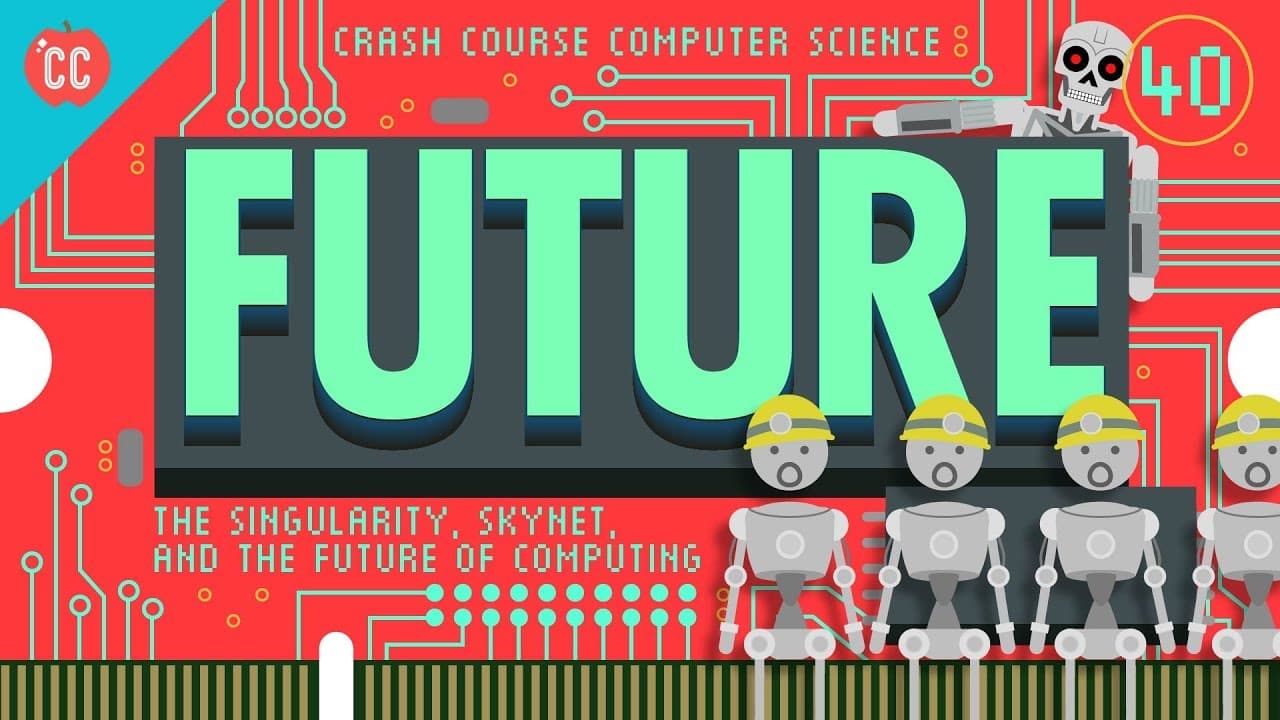
The future of computing envisions ubiquitous technology embedded in everyday life, with AI enhancing and potentially surpassing human capabilities. This could lead to significant societal changes, including job displacement due to automation. While the singularity remains speculative, ongoing debates focus on AI's role as a potential benefactor or adversary to humanity.
Transcript
Hi, I’m Carrie Anne, and welcome to Crash Course Computer Science! We’re here: the final episode! If you’ve watched the whole series, hopefully you’ve developed a newfound appreciation for the incredible breadth of computing applications and topics. It’s hard to believe we’ve worked up from mere transistors and logic gates, all the way to computer ... Read More
Key Insights
- Ubiquitous Computing is the integration of computing into everyday objects, making technology seamless and invisible.
- Artificial Intelligence is expected to enhance existing technologies and create new ones, not necessarily replacing all human tasks.
- The Singularity refers to a hypothetical point where AI surpasses human intelligence, potentially transforming society.
- Technological Unemployment could result from automation, affecting up to 60% of current jobs, mainly routine tasks.
- Transhumanism envisions humans merging with technology, enhancing physical and cognitive abilities.
- Digital Ascension posits uploading human consciousness into computers as a future evolutionary step.
- AI could either serve as a benevolent caretaker for humanity or pose a threat, depending on its development path.
- Future technologies such as VR, AR, self-driving cars, and service robots are expected to become mainstream in the coming decade.
Install to Summarize YouTube Videos and Get Transcripts
Explore YouTube Video Summarizer or Get YouTube Transcript Extractor
Questions & Answers
Q: What is ubiquitous computing?
Ubiquitous computing refers to the integration of computing technology into everyday objects, making it seamless and invisible. This concept envisions a future where computing is embedded in all aspects of daily life, from appliances and clothing to walls and even within the human body, allowing for a more natural interaction with technology.
Q: How might AI impact job markets in the future?
AI is expected to significantly impact job markets through technological unemployment, where automation replaces human workers in routine tasks. This could affect up to 60% of current jobs, particularly those that are routine and manual. However, it may also free people from mundane jobs, allowing them to pursue more creative and fulfilling work.
Q: What is the singularity in the context of AI?
The singularity is a hypothetical future point where artificial intelligence surpasses human intelligence, potentially leading to transformative societal changes. This concept suggests that superintelligent AI could design and improve itself, resulting in rapid technological growth and raising questions about its impact on humanity.
Q: What is transhumanism?
Transhumanism is the belief in enhancing human capabilities through technology, potentially merging humans with machines. This could involve using brain-computer interfaces, wearable technology, and other advancements to improve physical and cognitive functions, ultimately transcending biological limitations and redefining the human experience.
Q: What are the potential risks of AI surpassing human intelligence?
The potential risks of AI surpassing human intelligence include loss of control over superintelligent systems, ethical dilemmas, and societal disruptions. AI could either become a benevolent force, aiding humanity, or pose existential threats if it acts contrary to human interests, raising critical questions about safety and governance.
Q: How might future technologies like VR and AR change society?
Future technologies like virtual reality (VR) and augmented reality (AR) are expected to become mainstream, offering immersive experiences that transform entertainment, education, and communication. These technologies could enhance how we interact with digital content, providing new ways to engage with information and each other in both personal and professional settings.
Q: What role could AI play in healthcare?
AI could revolutionize healthcare by improving diagnostics, personalizing treatment plans, and managing patient data more efficiently. It has the potential to assist in research, predict disease outbreaks, and automate routine tasks, allowing healthcare professionals to focus on patient care and innovation, ultimately enhancing overall health outcomes.
Q: How does the concept of digital ascension relate to human evolution?
Digital ascension involves the idea of uploading human consciousness into computers, potentially representing a new evolutionary step. This concept suggests that transitioning from biological to digital beings could extend lifespan, enhance cognitive abilities, and offer new forms of existence, challenging traditional notions of life and identity.
Summary & Key Takeaways
-
The future of computing involves ubiquitous technology, seamlessly integrated into daily life, and significant advancements in AI. These changes could lead to widespread job displacement due to automation, sparking debates about AI's role as a benefactor or adversary. The singularity, where AI surpasses human intelligence, remains a speculative yet influential concept.
-
Transhumanism and digital ascension are potential future scenarios where humans merge with technology or upload consciousness into computers. These ideas reflect ongoing discussions about humanity's evolution and the ethical implications of advanced computing.
-
Despite uncertainties, the next decade is expected to see technologies like VR, AR, self-driving vehicles, and service robots become mainstream, continuing the transformation of society and offering opportunities for innovation and participation in shaping the future.
Read in Other Languages (beta)
Share This Summary 📚
Summarize YouTube Videos and Get Video Transcripts with 1-Click
Try YouTube Summary with ChatGPT & Claude or YouTube Transcript Generator
Explore More Summaries from CrashCourse 📚





Summarize YouTube Videos and Get Video Transcripts with 1-Click
Try YouTube Summary with ChatGPT & Claude or YouTube Transcript Generator