How Does Globalization Shape the World Economy? | Crash Course World History #41: The Upside
TL;DR
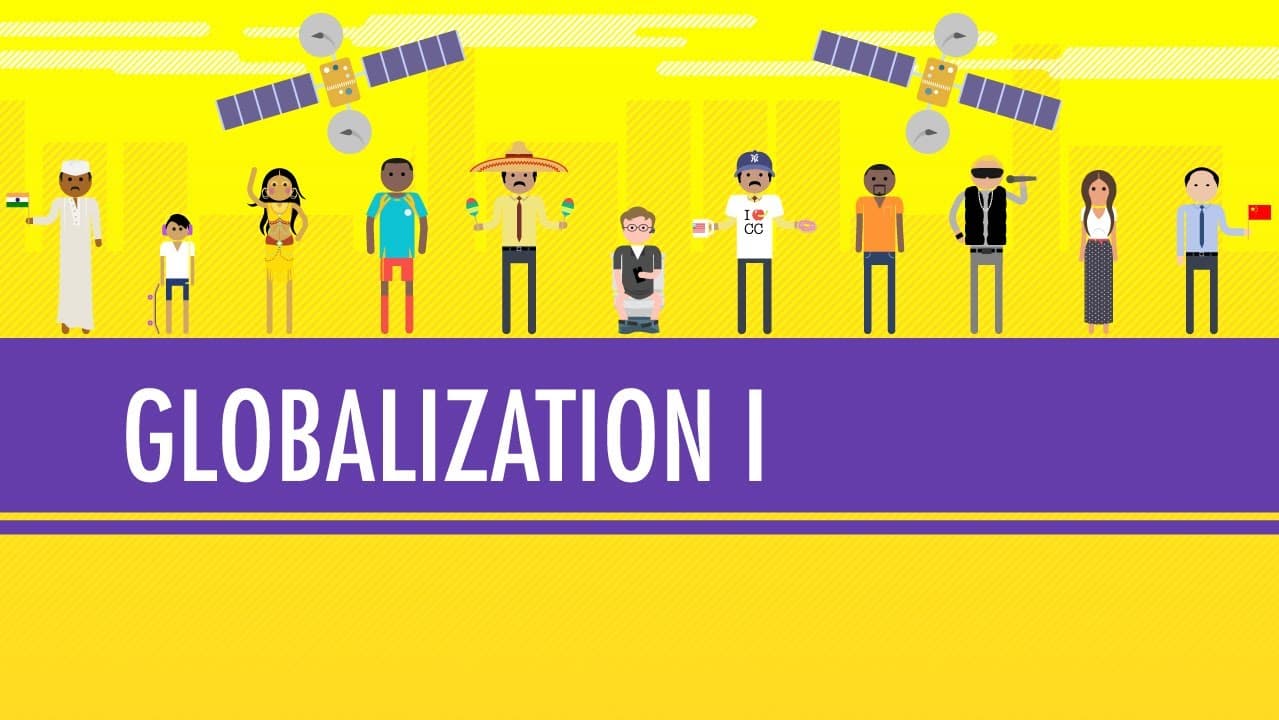
Globalization shapes the world economy by expanding trade, international manufacturing, and economic interdependence. Crash Course World History #41 follows a T-shirt whose cotton, manufacturing, printing, and sale span multiple countries, while explaining how multinational corporations, cheaper transport, and reduced trade barriers increased globalization’s scale. Read on to understand the system’s efficiencies, inequalities, cultural effects, and unsustainability.
Transcript
Hi, I’m John Green. This is Crash Course World History and today is the penultimate episode of Crash Course. We’re gonna talk about globalization. This was going to be the last episode, but I just can’t quit you, World Historians. So, today we’re going to talk about globalization, and in doing so, we’re going to talk about why we study history at a... Read More
Key Insights
- Globalization is a cultural and economic phenomenon, heavily influenced by trade.
- Multinational corporations have significant power and influence in global trade.
- Technological advancements have made travel and shipping cheaper and faster.
- Governments have reduced tariffs and regulations, promoting 'free trade.'
- The U.S. subsidizes cotton production, affecting global cotton markets.
- Manufacturing often occurs in lower-wage countries, benefiting global consumers.
- Global capitalism has increased economic output and reduced poverty.
- Migration and cultural blending are key aspects of globalization, enhancing cultural diversity.
Install to Summarize YouTube Videos and Get Transcripts
Explore YouTube Video Summarizer or Get YouTube Transcript Extractor
Questions & Answers
Q: How does globalization shape the world economy?
Globalization creates widespread economic interdependence by connecting production, trade, and consumption across countries. Its scale has grown through multinational corporations, cheaper and safer transportation, and government reductions in tariffs and trade regulations.
Q: Why does Crash Course World History #41 use a T-shirt to explain globalization?
The T-shirt contains what John Green calls the global economy’s efficiency, massive surplus, hyperconnectedness, and unsustainability. Its cotton, spinning, weaving, printing, and retail stages show how one product can connect workers, governments, businesses, and consumers across several countries.
Q: What factors have dramatically increased the scale of global trade?
The episode identifies three factors: multinational corporations’ growing reach and power, cheaper and safer travel and shipping, and lower tariffs and regulations. It notes that crossing the Atlantic took about two months in 1800, compared with about five hours by plane or less than a week by ship today.
Q: How do government cotton subsidies affect global trade?
The U.S. government subsidizes cotton production, making American cotton cheaper than cotton of similar quality from Brazil or India. However, the U.S. share of cotton exports has fallen over the last 30 years as exports from Brazil, India, and Africa have increased.
Q: How is a T-shirt produced through a global supply chain?
Cotton may come from the United States, Brazil, India, Uganda, or a mixture of countries. Spinning and weaving often occur in lower-wage countries such as Mexico, Guatemala, Vietnam, China, and India, after which blank shirts are commonly sent to Europe or the United States for printing and sale.
Q: Why can globally manufactured T-shirts be inexpensive?
Wholesale blank T-shirts can cost as little as $3 despite materials and products crossing the Pacific Ocean. The episode says much of the expense instead comes from printing, retail operations, and paying the designer.
Q: How have manufacturing patterns changed since the 1960s?
Industrial Western powers once produced most manufactured goods, with domestic consumption remaining especially important. Since the 1960s, formerly non-industrialized regions have increasingly manufactured consumer products for their own markets but primarily for foreign markets.
Q: What cultural effects are part of globalization?
Globalization is both an economic and cultural phenomenon. The episode connects it to contemporary art, population migration, linguistic change, cultural borrowing, and cultural blending, while also noting concerns about cultural diversity.
Summary & Key Takeaways
-
Globalization has increased global economic interdependence, with multinational corporations and reduced trade barriers playing significant roles. The t-shirt's journey exemplifies the complex global supply chain, highlighting both benefits and challenges.
-
While globalization has lifted millions out of poverty and increased economic output, it has also posed challenges for families, the environment, and cultural diversity. Migration and cultural blending have become more prevalent.
-
The phenomenon of globalization underscores the importance of studying history to understand the changes and impacts on our world, both positive and negative. The journey from a t-shirt's production to its sale illustrates these global dynamics.
Read in Other Languages (beta)
Share This Summary 📚
Summarize YouTube Videos and Get Video Transcripts with 1-Click
Try YouTube Summary with ChatGPT & Claude or YouTube Transcript Generator
Explore More Summaries from CrashCourse 📚




Summarize YouTube Videos and Get Video Transcripts with 1-Click
Try YouTube Summary with ChatGPT & Claude or YouTube Transcript Generator