Interstellar Meteorite Underwater // Shortest Day Ever // Earth's Magnetosphere Collapse
TL;DR
Jupiter lacks rings due to its giant moons destabilizing any potential ring system. An interstellar meteorite may have landed in the ocean. The Chinese Long March booster crashed into the ocean off the coast of Borneo. The Earth experienced its shortest day in history due to the Chandler wobble. Astronomers simulate the destruction of neutron stars by black holes. The search for Planet Nine narrows down potential locations. Citizen scientists gain access to James Webb Space Telescope, and an image of the Cartwheel Galaxy is shared.
Transcript
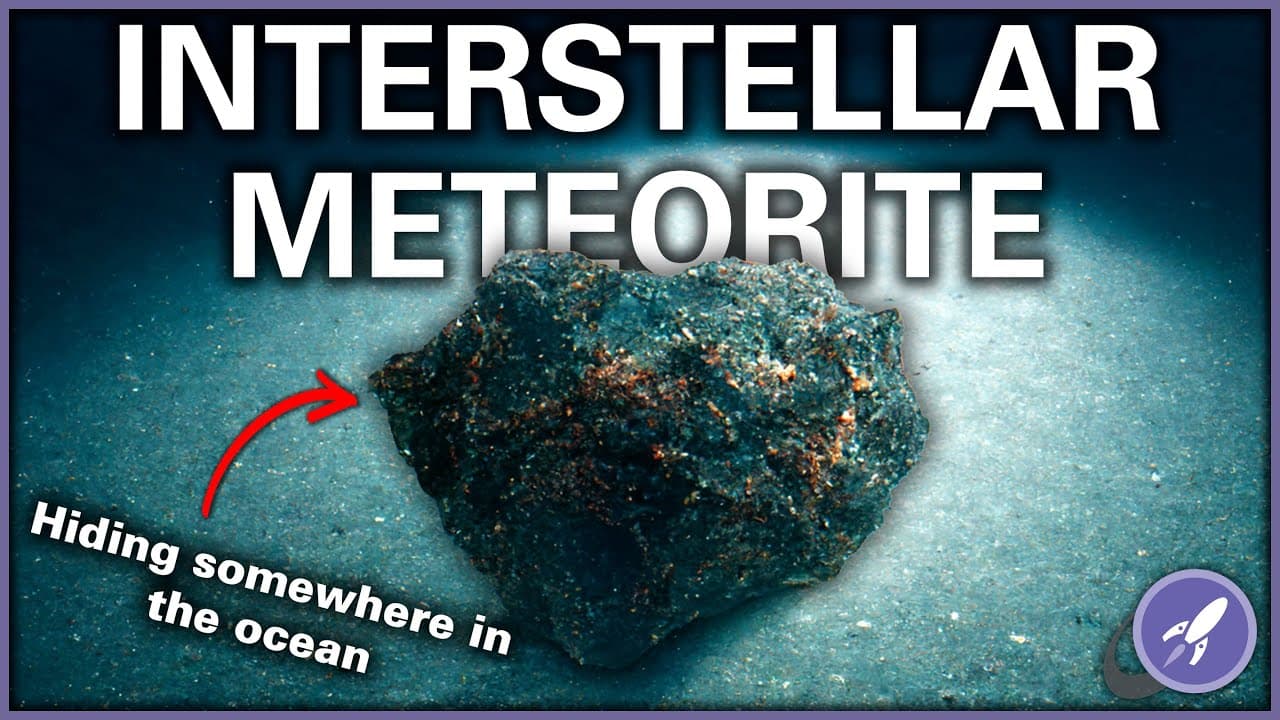
an interstellar meteorite could be hiding in the ocean. Why doesn't Jupiter have rings like Saturn, when the Earth's magnetic field almost collapsed the shortest day on Earth, and Planet Nine is running out of places to hide all this and more space news in this week's episode of Space bites. Hi, everyone. I'm Fraser Cain. I'm the publisher of Unive... Read More
Key Insights
- 😋 The giant moons of Jupiter destabilize any potential ring system, making stable icy rings impossible to form.
- 🕵️ Interstellar meteorites detected by the US Department of Defense may have landed in the ocean, offering insights into objects from outside the Solar System.
- 🌱 Uncontrolled reentries of boosters like the Chinese Long March pose risks, and their destinations should be carefully planned and communicated.
- 🥳 Variations in the Earth's spin rate, such as the recent shortest day, can have implications for technological systems dependent on accurate timekeeping.
- ✴️ The destruction of neutron stars by black holes occurs rapidly and can be detected through gravitational wave signatures.
- 👨🔬 The ongoing search for Planet Nine has not yielded any direct evidence, further constraining its potential locations in the outer solar system.
- 👨🔬 Citizen scientists play a significant role in space research, as demonstrated by their contributions to the Zooniverse project and access to the James Webb Space Telescope.
Install to Summarize YouTube Videos and Get Transcripts
Explore YouTube Video Summarizer or Get YouTube Transcript Extractor
Questions & Answers
Q: Why doesn't Jupiter have rings while other giant planets like Saturn do?
Jupiter's giant moons destabilize any potential ring system, making it impossible for long-term stable icy rings to form. Saturn, with its large moon Titan and fewer moons, can sustain its rings.
Q: Has an interstellar meteorite been detected on Earth?
Yes, the US Department of Defense has declassified information about a meteorite with an interstellar trajectory. It exploded in the upper atmosphere and possibly landed in the ocean near Papua New Guinea.
Q: What happened to the Chinese Long March booster during its reentry?
The booster returned uncontrolled and crashed off the coast of Borneo into the ocean. The lack of notice by the Chinese and the uncontrolled entry led to concerns and NASA writing a sternly worded letter.
Q: Why did the Earth have its shortest day in history?
The Earth's shortest day occurred due to the Chandler wobble, which can slightly change the spin rate of the planet over time. The rotational slowing is also influenced by the tidal interaction between the Earth and the Moon.
Q: How are neutron stars destroyed by black holes?
Astronomers have simulated the destruction of neutron stars by black holes, which results in the neutron star being torn into fragments and blasted out into space within a few seconds. This process emits a signature that can be detected through gravitational waves.
Q: What progress has been made in the search for Planet Nine?
Recent infrared surveys have failed to find any objects matching the predicted characteristics of Planet Nine. This further narrows down potential locations for the elusive object in the outer solar system.
Q: How are citizen scientists contributing to space research?
Citizen scientists participating in the Zooniverse project have made important discoveries in the outer solar system, leading to follow-up observations with the James Webb Space Telescope. This highlights the accessibility of space research to amateur astronomers.
Q: What is the significance of the image of the Cartwheel Galaxy?
The image showcases the result of a collision between galaxies, with the smaller galaxy punching through the larger one. The dust and gas piled up as a result of the collision, creating the observed unique shape.
Summary & Key Takeaways
-
Jupiter lacks rings due to the gravitational interactions between its giant moons, making it impossible for long-term stable icy rings to form.
-
The US Department of Defense has detected an interstellar meteorite that exploded in the upper atmosphere and potentially landed in the ocean near Papua New Guinea.
-
The Chinese Long March booster reentered the Earth's atmosphere and crashed into the ocean off the coast of Borneo, causing concerns over uncontrolled entries.
-
The Earth experienced its shortest day in recorded history, likely due to the Chandler wobble and the tidal interaction between the Earth and the Moon.
-
Astronomers simulate and study the destruction of neutron stars by black holes, which results in the tear apart of the neutron star into fragments in a short amount of time.
-
The search for Planet Nine, a predicted object in the outer solar system, continues, with recent infrared surveys failing to find any objects matching its characteristics.
-
Citizen scientists participating in the Zooniverse project have made important discoveries in the outer solar system and have been granted follow-up time on the James Webb Space Telescope.
-
An image of the Cartwheel Galaxy, a result of a collision between galaxies, is shared, showcasing the dust and gas piled up during the collision.
Read in Other Languages (beta)
Share This Summary 📚
Summarize YouTube Videos and Get Video Transcripts with 1-Click
Try YouTube Summary with ChatGPT & Claude or YouTube Transcript Generator
Explore More Summaries from Fraser Cain 📚

Summarize YouTube Videos and Get Video Transcripts with 1-Click
Try YouTube Summary with ChatGPT & Claude or YouTube Transcript Generator