How to Boost Motivation and Conquer Procrastination
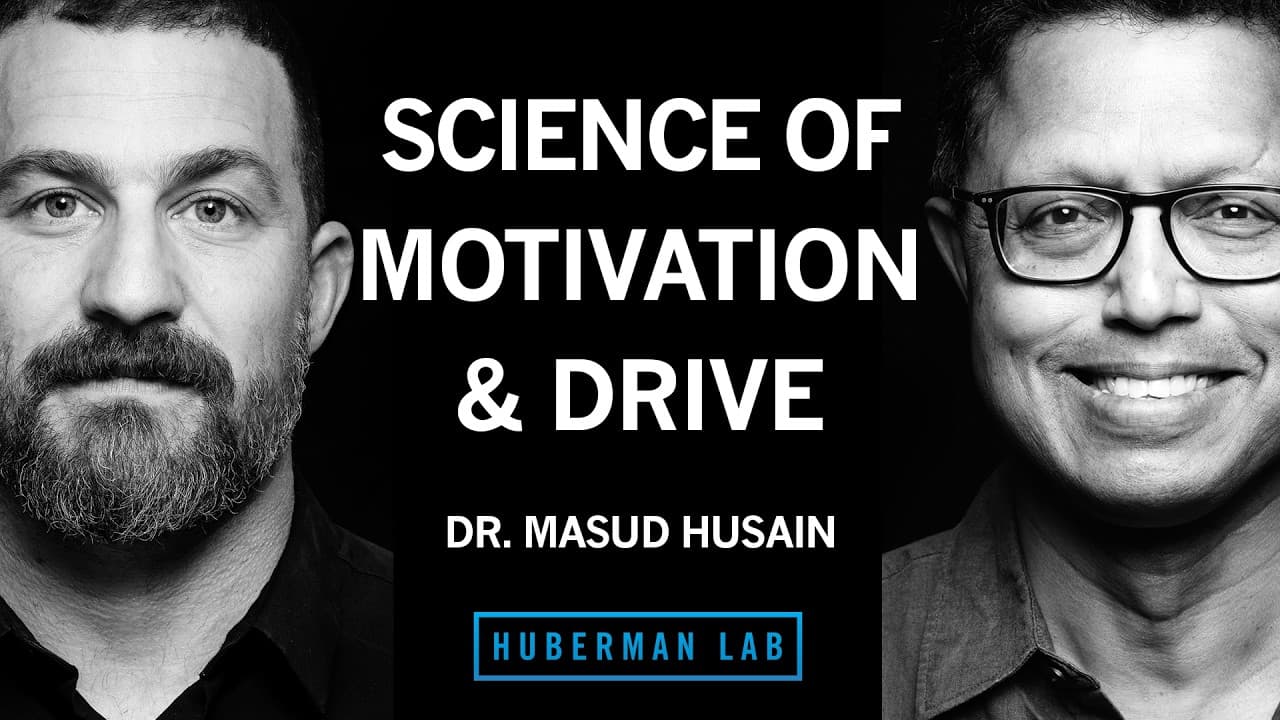
TL;DR
Dopamine plays a crucial role in motivation, influencing our drive to pursue goals by weighing effort against reward. Understanding this can help us enhance motivation and overcome procrastination. By adjusting incentives or reducing perceived effort, we can facilitate goal pursuit and improve productivity.
Transcript
Almost every drug of addiction, whether we go from nicotine to alcohol to heroin to cocaine to amphetamine, almost every drug of addiction hijacks that dopamine system we were talking about. We find when that circuitry is not working that you can get profound loss of motivation, apathy. When that circuitry is on overdrive because it's been hijacked... Read More
Key Insights
- Dopamine is a key neurotransmitter in regulating motivation and is involved in the brain's reward system.
- Motivation involves a trade-off between the perceived effort required and the potential reward.
- Apathy and motivation are influenced by the basal ganglia and frontal lobes, which process motivational signals.
- People with low motivation may expend more brain energy when deciding whether to undertake a task.
- Breaking tasks into smaller components can reduce the perceived effort and increase motivation.
- Reward sensitivity varies among individuals, influencing their willingness to exert effort for low rewards.
- Pathological apathy can result from neurological disorders affecting motivation circuits.
- Both internal and external factors, like social connections and curiosity, can protect against cognitive decline.
Install to Summarize YouTube Videos and Get Transcripts
Explore YouTube Video Summarizer or Get YouTube Transcript Extractor
Questions & Answers
Q: How does dopamine affect motivation?
Dopamine is a key neurotransmitter involved in the brain's reward system, playing a crucial role in regulating motivation. It influences our drive to pursue goals by affecting how we weigh the effort required against the potential reward. When dopamine levels are optimal, individuals are more likely to engage in goal-directed behaviors, whereas imbalances can lead to apathy or hyper-motivation.
Q: What is the relationship between effort and reward in motivation?
Motivation involves a trade-off between the perceived effort required to achieve a goal and the potential reward that goal offers. The brain evaluates this balance to decide whether to pursue a particular action. Individuals are more willing to exert effort for high rewards, but those with lower motivation may find even low-effort tasks daunting unless the reward is significant.
Q: How can we increase motivation and reduce procrastination?
To increase motivation and reduce procrastination, one can adjust incentives or reduce the perceived effort of tasks. Breaking tasks into smaller, manageable components can make them seem less daunting. Additionally, enhancing the perceived value of the reward or changing its nature can motivate individuals to initiate and complete tasks.
Q: What role do the basal ganglia and frontal lobes play in motivation?
The basal ganglia and frontal lobes are critical in processing motivational signals. They work together to evaluate the effort-reward balance and decide on goal-directed actions. Dysfunction in these areas, such as through neurological disorders, can lead to pathological apathy or altered motivation levels, affecting an individual's ability to pursue goals.
Q: How can understanding motivation circuits help treat apathy?
Understanding motivation circuits can aid in treating apathy by identifying how neurological disorders affect these pathways. By targeting the basal ganglia and related circuits, treatments can be developed to restore motivation levels. For instance, medications affecting dopamine receptors have shown promise in reversing apathy in some patients with specific brain lesions.
Q: What are some protective factors against cognitive decline?
Protective factors against cognitive decline include maintaining social connections, staying curious, and having a sense of purpose. Engaging in new activities, building relationships, and setting meaningful goals can enhance cognitive resilience, reducing the risk of conditions like dementia and Alzheimer's disease.
Q: How do individual differences affect motivation?
Individual differences in motivation are influenced by variations in reward sensitivity and effort perception. Some people may have a higher baseline motivation, requiring less effort to initiate tasks, while others may need greater incentives. These differences can be attributed to both biological factors, such as dopamine receptor activity, and psychological factors, like past experiences and personal goals.
Q: What is the impact of neurological disorders on motivation?
Neurological disorders can significantly impact motivation by disrupting the brain circuits responsible for processing motivational signals. Conditions like Parkinson's disease, Alzheimer's disease, and certain brain injuries can lead to pathological apathy, where individuals lose the drive to initiate and complete tasks. Understanding these effects is crucial for developing targeted interventions to restore motivation.
Summary & Key Takeaways
-
Dopamine is crucial for motivation, affecting how we weigh effort against reward. Understanding this can help enhance motivation and reduce procrastination. By adjusting incentives or perceived effort, we can improve productivity and goal pursuit.
-
Motivation is influenced by the basal ganglia and frontal lobes, which process motivational signals. People with low motivation may use more brain energy in decision-making, highlighting the importance of reducing perceived effort to boost motivation.
-
Pathological apathy can result from neurological disorders affecting motivation circuits. Social connections, curiosity, and a sense of purpose can protect against cognitive decline, emphasizing the importance of both internal and external factors in maintaining motivation.
Read in Other Languages (beta)
Share This Summary 📚
Summarize YouTube Videos and Get Video Transcripts with 1-Click
Try YouTube Summary with ChatGPT & Claude or YouTube Transcript Generator
Explore More Summaries from Andrew Huberman 📚
Summarize YouTube Videos and Get Video Transcripts with 1-Click
Try YouTube Summary with ChatGPT & Claude or YouTube Transcript Generator