How Can a River Have Legal Personhood?
TL;DR
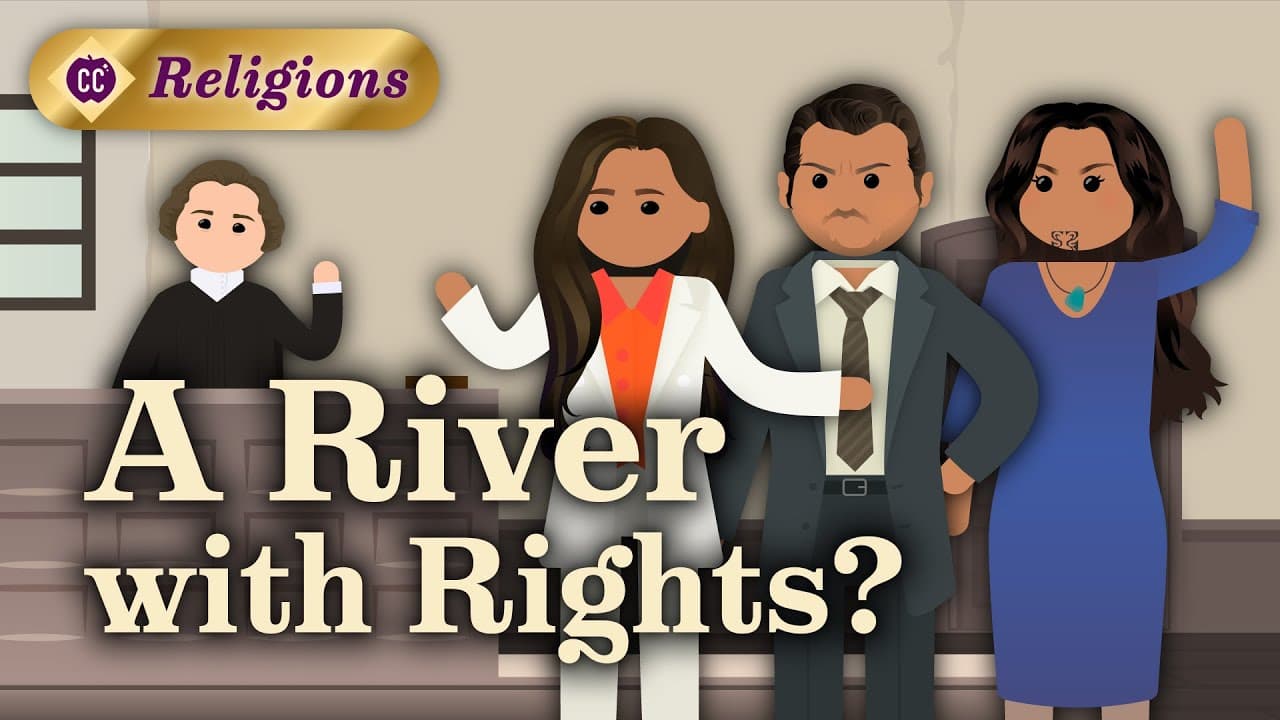
The Whanganui River in New Zealand was granted legal personhood in 2017, recognizing it as a living being with rights. This decision reflects the Māori belief in the river as an ancestor and highlights the broader Indigenous perspective of kinship and spiritual connections to nature. The legal battle underscores the challenges Indigenous peoples face in having their beliefs recognized within Western frameworks.
Transcript
Hi! I’m John Green and welcome to Crash Course Religions. So, this is the Whanganui River. To the Māori people of New Zealand, it’s not just water. It’s a living being connected to themselves. An ancestor. European colonizers didn’t see it that way, of course. Over a hundred years, they and their descendants would deplete the river’s fish, poll... Read More
Key Insights
- The Whanganui River is considered an ancestor by the Māori people.
- Legal personhood was granted to the Whanganui River in 2017.
- Indigenous traditions often view nature as having spiritual significance.
- The Māori fought over a century for the river's legal recognition.
- Western views often conflict with Indigenous spiritual beliefs.
- Kinship in Indigenous cultures extends to the environment.
- Indigenous religious traditions are diverse and dynamic.
- The Western concept of 'religion' may not fit Indigenous beliefs.
Install to Summarize YouTube Videos and Get Transcripts
Explore YouTube Video Summarizer or Get YouTube Transcript Extractor
Questions & Answers
Q: How did the Whanganui River gain legal personhood?
The Whanganui River gained legal personhood in 2017 after the Māori people fought for over a century to have their view of the river as an ancestor recognized. They shifted their legal strategy to argue for the river as a single, indivisible being with rights, similar to how corporations can be considered people in legal terms. This recognition reflects Māori spiritual beliefs and their connection to the river.
Q: What is the Māori perspective on the Whanganui River?
The Māori view the Whanganui River as an ancestor and a living being with its own spiritual essence. This perspective is encapsulated in the saying, 'I am the river, and the river is me,' highlighting the deep kinship and interconnection they feel with the river. The Māori believe that disrespecting the river is akin to disrespecting their people, reflecting their broader spiritual beliefs about nature and kinship.
Q: What challenges do Indigenous beliefs face in Western legal systems?
Indigenous beliefs often face challenges in Western legal systems due to differing views on spirituality and religion. Western frameworks tend to prioritize human-centered perspectives, whereas Indigenous traditions may recognize natural elements as spiritual beings. This can lead to legal disputes over land and resource rights, as seen in the case of the Whanganui River. Indigenous peoples must navigate these systems to have their beliefs and practices legally recognized.
Q: Why do some Indigenous peoples reject the term 'religion'?
Some Indigenous peoples reject the term 'religion' because it often reflects a Western, Christian-centric way of thinking that doesn't align with their diverse and dynamic spiritual traditions. Indigenous beliefs may not fit neatly into the concept of 'religion' as defined by Western standards, leading some communities to prefer terms like 'Indigenous religious traditions' to better encompass their spiritual practices and worldviews.
Q: What common themes exist in Indigenous religious traditions?
Common themes in Indigenous religious traditions include a recognition of diverse gods and spirits, a strong sense of kinship with nature, and an emphasis on the interconnectedness of all living things. These traditions often view humans as part of a larger spiritual ecosystem, where natural elements like rivers, mountains, and animals are considered spiritual beings with their own agency and significance.
Q: How do Indigenous beliefs challenge Western worldviews?
Indigenous beliefs challenge Western worldviews by emphasizing spiritual connections to nature and kinship with the environment, contrasting with the often human-centered and materialistic perspectives of Western cultures. These beliefs highlight the importance of viewing natural elements as spiritual beings and recognizing the interconnectedness of all life, which can lead to different approaches to legal, environmental, and social issues.
Q: What role does kinship play in Indigenous traditions?
Kinship plays a central role in Indigenous traditions, extending beyond human relationships to include connections with the environment and spiritual beings. This concept of kinship emphasizes reciprocity, responsibility, and care for one another, including the land and natural elements. It reflects a holistic view of the world, where everything is interconnected and interdependent, shaping social and spiritual practices within Indigenous communities.
Q: How do Indigenous peoples maintain their spiritual traditions despite challenges?
Indigenous peoples maintain their spiritual traditions through resilience, adaptation, and legal advocacy. Despite historical and ongoing challenges like colonization, displacement, and legal restrictions, they continue to practice and preserve their beliefs by finding creative solutions within legal systems, educating others about their traditions, and fostering a strong sense of community and cultural identity. This perseverance ensures the survival and recognition of their spiritual heritage.
Summary & Key Takeaways
-
The Whanganui River's legal personhood status in New Zealand recognizes it as a living entity, reflecting Māori beliefs. This status was achieved after a lengthy legal battle, emphasizing the Māori's spiritual connection to the river and highlighting Indigenous perspectives on nature and kinship. The case illustrates the challenges Indigenous peoples face in aligning their beliefs with Western legal frameworks.
-
Indigenous religious traditions often emphasize connections to nature, kinship, and diverse spiritual beings. These beliefs challenge Western assumptions about religion and spirituality. The Māori view of the Whanganui River as an ancestor exemplifies this perspective, showing how Indigenous peoples maintain spiritual ties to their environment despite historical and legal challenges.
-
The recognition of the Whanganui River as a legal person demonstrates a shift in acknowledging Indigenous beliefs within legal systems. This case underscores the importance of understanding Indigenous perspectives on spirituality and kinship, which often differ from Western religious concepts. The Māori's successful legal recognition of the river highlights their resilience and commitment to preserving their cultural heritage.
Read in Other Languages (beta)
Share This Summary 📚
Summarize YouTube Videos and Get Video Transcripts with 1-Click
Try YouTube Summary with ChatGPT & Claude or YouTube Transcript Generator
Explore More Summaries from CrashCourse 📚





Summarize YouTube Videos and Get Video Transcripts with 1-Click
Try YouTube Summary with ChatGPT & Claude or YouTube Transcript Generator