How to Master Supply and Demand Trading
TL;DR
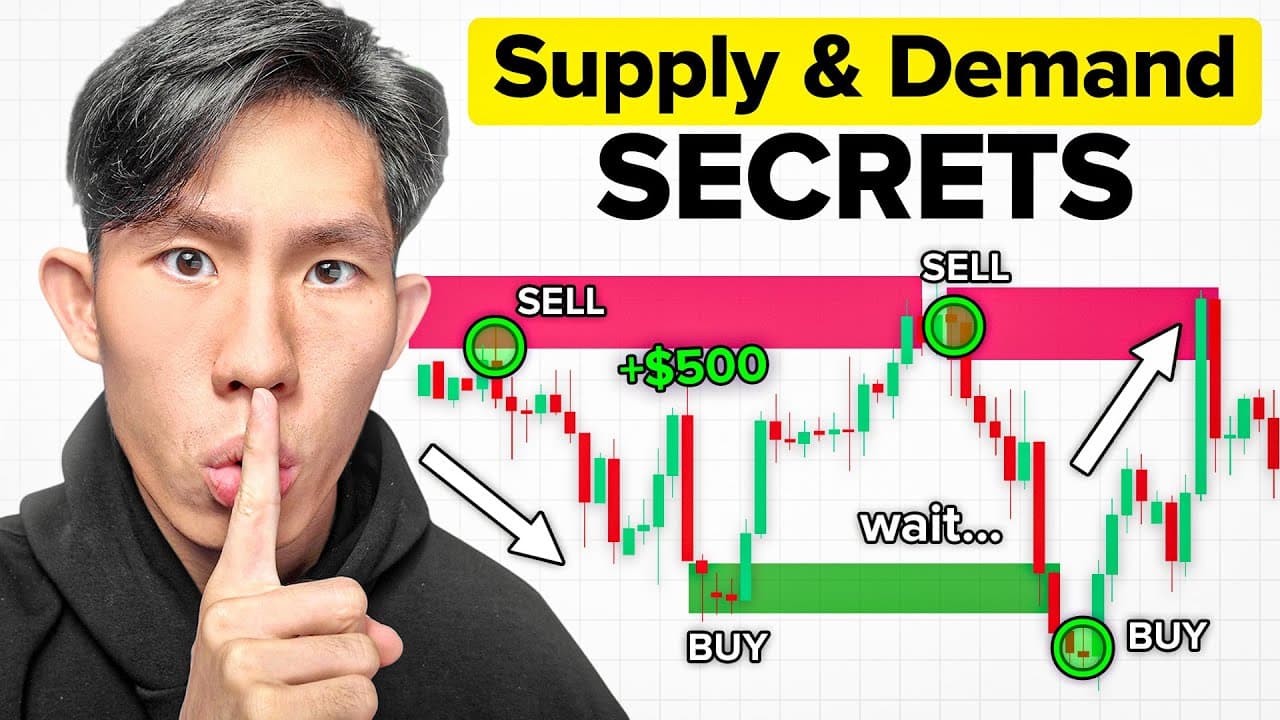
Supply and demand zones are crucial for understanding market movements and making profitable trades. These zones are created when price aggressively moves out of a consolidation phase, indicating smart money's involvement. Traders should identify high-probability zones that lead to a break of structure and cause other zones to fail, using either the range or pivot method to draw these zones.
Transcript
here's everything you need to know about supply and demand zones in order to make consistent profits in the market in this complete course you will learn what are supply and demand zones how are supply and demand zones being created how to draw supply and demand zones how to identify High property zones and my proven supply and demand trading strat... Read More
Key Insights
- Supply and demand zones are formed when price breaks out of a consolidation phase.
- Ranging markets occur when prices move sideways, oscillating between premium and discount zones.
- Smart money, such as banks and institutions, causes significant price movements and breakouts.
- Supply zones are created when price moves aggressively downward out of a consolidation.
- Demand zones are formed when price moves aggressively upward out of a consolidation.
- The range method involves marking the entire consolidation phase to identify zones.
- The pivot method refines zones to a single candle before a breakout for better entries.
- High-probability zones lead to a break of structure and cause other zones to fail.
Install to Summarize YouTube Videos and Get Transcripts
Explore YouTube Video Summarizer or Get YouTube Transcript Extractor
Questions & Answers
Q: How to identify supply and demand zones?
Supply and demand zones are identified by observing price movements out of consolidation phases. Supply zones form when prices move aggressively downward, while demand zones form when prices move upward. Traders can use the range method to mark the entire consolidation or the pivot method to refine zones to a single candle before a breakout.
Q: What causes price to break out of a consolidation phase?
Price breaks out of a consolidation phase due to the involvement of smart money, such as banks and financial institutions. These entities create significant imbalances between supply and demand, leading to aggressive price movements either upward or downward, resulting in the formation of supply and demand zones.
Q: What is the range method in drawing supply and demand zones?
The range method involves marking the entire consolidation phase from the highest to the lowest point to identify supply and demand zones. This method helps traders visualize the area where smart money has entered the market, allowing them to anticipate potential price movements and plan their trades accordingly.
Q: What is the pivot method for refining supply and demand zones?
The pivot method refines supply and demand zones by focusing on a single candle before the breakout of a consolidation phase. This approach allows traders to achieve better entries and manage risk more effectively by narrowing the range of the zone, providing a higher risk-to-reward ratio for trades.
Q: How to ensure a supply or demand zone is high probability?
A high-probability supply or demand zone should lead to a break of structure and cause other zones to fail. These zones are often backed by smart money and institutions. Additional confirmations, such as market structure, multi-time frame analysis, and liquidity concepts, can increase the probability of a zone working effectively.
Q: Why is understanding market structure important in trading?
Understanding market structure is crucial because it helps traders identify the direction of the market and the potential for price movements. It allows traders to recognize high-probability zones and anticipate potential reversals or continuations, improving their ability to make informed trading decisions and manage risk effectively.
Q: What role does liquidity play in supply and demand trading?
Liquidity plays a significant role in supply and demand trading as it indicates the availability of buyers and sellers in the market. High liquidity zones often attract smart money, leading to significant price movements. Traders use liquidity concepts to identify potential entry and exit points, enhancing their trading strategy.
Q: How can traders improve their entries using the pivot method?
Traders can improve their entries using the pivot method by refining supply and demand zones to a single candle before a breakout. This approach allows for more precise entries, reducing risk and increasing the potential reward. By focusing on the pivot candle, traders can better align their trades with smart money movements and improve their overall trading performance.
Summary & Key Takeaways
-
Supply and demand zones are essential for traders to identify potential market movements. These zones are created when prices break out of consolidation phases, often driven by smart money like banks and institutions. Traders can use the range or pivot method to draw these zones, focusing on high-probability zones that lead to a break of structure.
-
Ranging markets occur when prices move sideways, oscillating between premium and discount zones. Smart money causes significant price movements, leading to the creation of supply and demand zones. Supply zones form when prices move downward, while demand zones form when prices move upward.
-
The range method involves marking the entire consolidation phase, while the pivot method refines zones to a single candle before a breakout. High-probability zones not only lead to a break of structure but also cause other zones to fail, offering traders better entry points and risk management.
Read in Other Languages (beta)
Share This Summary 📚
Summarize YouTube Videos and Get Video Transcripts with 1-Click
Try YouTube Summary with ChatGPT & Claude or YouTube Transcript Generator
Explore More Summaries from The Trading Geek 📚



Summarize YouTube Videos and Get Video Transcripts with 1-Click
Try YouTube Summary with ChatGPT & Claude or YouTube Transcript Generator