The Once and Future Heart | Dario Robleto || Radcliffe Institute
TL;DR
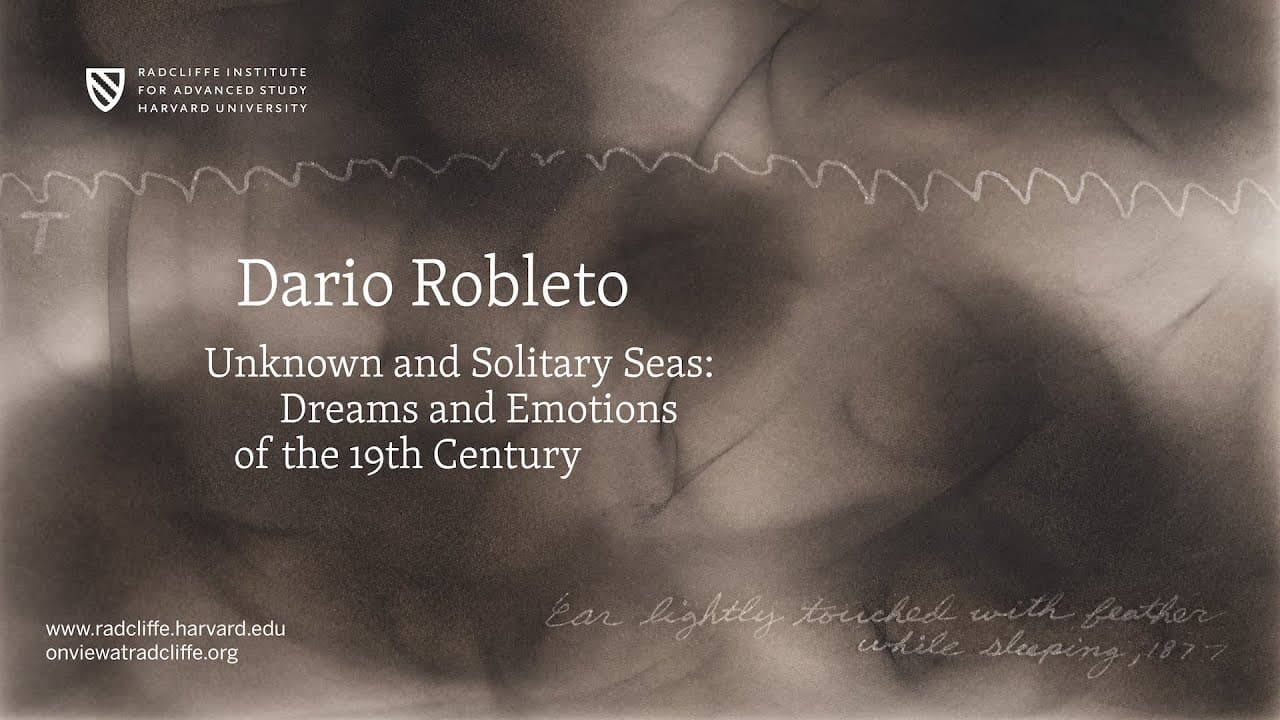
The Once and Future Heart explores how artistic and scientific models can reshape our understanding of the human heart. Dario Robleto’s exhibition transforms 19th-century waveforms of emotions and experiences into 21st-century art, while Dr. Doris Taylor’s Ghost Heart project removes a heart’s cells and repopulates its remaining scaffold with stem cells. Read on to see how these projects connect form, function, identity, art, and science.
Transcript
- Hi everybody. Good evening. My name is Jennifer Roberts. And I am a faculty member in the History of Art and Architecture at Harvard and also the Faculty Director for the Arts here at Radcliffe. Welcome to the opening celebration of our exhibition of Dario Robleto's work, Unknown and Solitary Seas-- Dreams and Emotions of the 19th Century. I'm th... Read More
Key Insights
- 🥰 The Ghost Heart project challenges the traditional understanding of the heart as a mechanical pump and highlights its complex relationship between form and function.
- 💗 The project has the potential to revolutionize organ transplantation by providing a way to grow fully transplantable artificial hearts.
- 💗 The pulse waveforms in the exhibition raise questions about identity, form, and the relationship between the arts and sciences.
Install to Summarize YouTube Videos and Get Transcripts
Explore YouTube Video Summarizer or Get YouTube Transcript Extractor
Questions & Answers
Q: What is The Once and Future Heart about?
The program examines the past and future relationship between artistic and scientific models of the human heart. It brings Dario Robleto into conversation with Dr. Doris Taylor of the Texas Heart Institute and connects Robleto’s artwork with Taylor’s Ghost Heart research.
Q: What is Dario Robleto’s exhibition Unknown and Solitary Seas about?
Unknown and Solitary Seas, Dreams and Emotions of the 19th Century presents emotions and experiences recorded as waveforms in the 19th century and transformed by Robleto into 21st-century art. One example introduced during the program is a waveform titled Excitement from 1886.
Q: What is the Ghost Heart project?
The Ghost Heart project washes the cells out of a heart while preserving a scaffold with the organ’s intricate vascular structure. Stem cells are then introduced to that scaffold, where they mature and begin behaving like heart cells.
Q: How does the heart scaffold help stem cells develop?
The preserved scaffold retains the heart’s form and vascular structure after its original cells are removed. It guides the introduced stem cells, helping them organize and develop properly.
Q: How does the Ghost Heart challenge the idea that the heart is merely a complicated pump?
The project shows that heart function depends on more than cells acting as mechanical components. The preserved extracellular structure helps new cells organize, highlighting the close relationship between the heart’s form and its function.
Q: What could the Ghost Heart project mean for organ transplantation?
The existing project summary identifies the possibility of growing fully transplantable artificial hearts as a potential implication. It also suggests that the work could improve understanding of heart development and disease and open possible treatment paths.
Q: How are the Ghost Heart project and Robleto’s pulse waveforms connected?
Both invite questions about the heart’s form, identity, and meaning rather than treating it only as a mechanical pump. Together, they connect scientific research on the heart’s physical structure with artistic interpretations of emotions and experiences captured as waveforms.
Q: Who participated in the Radcliffe Institute discussion?
Jennifer Roberts, a Harvard faculty member and Faculty Director for the Arts at Radcliffe, introduced the program. The featured guests were visiting artist and scholar Dario Robleto and Dr. Doris Taylor of the Texas Heart Institute, who were scheduled to discuss artistic and scientific models of the human heart for about 45 minutes.
Summary & Key Takeaways
-
The Ghost Heart project involves washing the cells out of a heart, leaving behind a scaffold that retains the intricate vascular structure of the organ.
-
Stem cells are then introduced to the scaffold, and they mature and begin to act like heart cells.
-
The scaffold guides the cells, helping them organize and develop properly.
Read in Other Languages (beta)
Share This Summary 📚
Summarize YouTube Videos and Get Video Transcripts with 1-Click
Try YouTube Summary with ChatGPT & Claude or YouTube Transcript Generator
Explore More Summaries from Harvard University 📚


Summarize YouTube Videos and Get Video Transcripts with 1-Click
Try YouTube Summary with ChatGPT & Claude or YouTube Transcript Generator