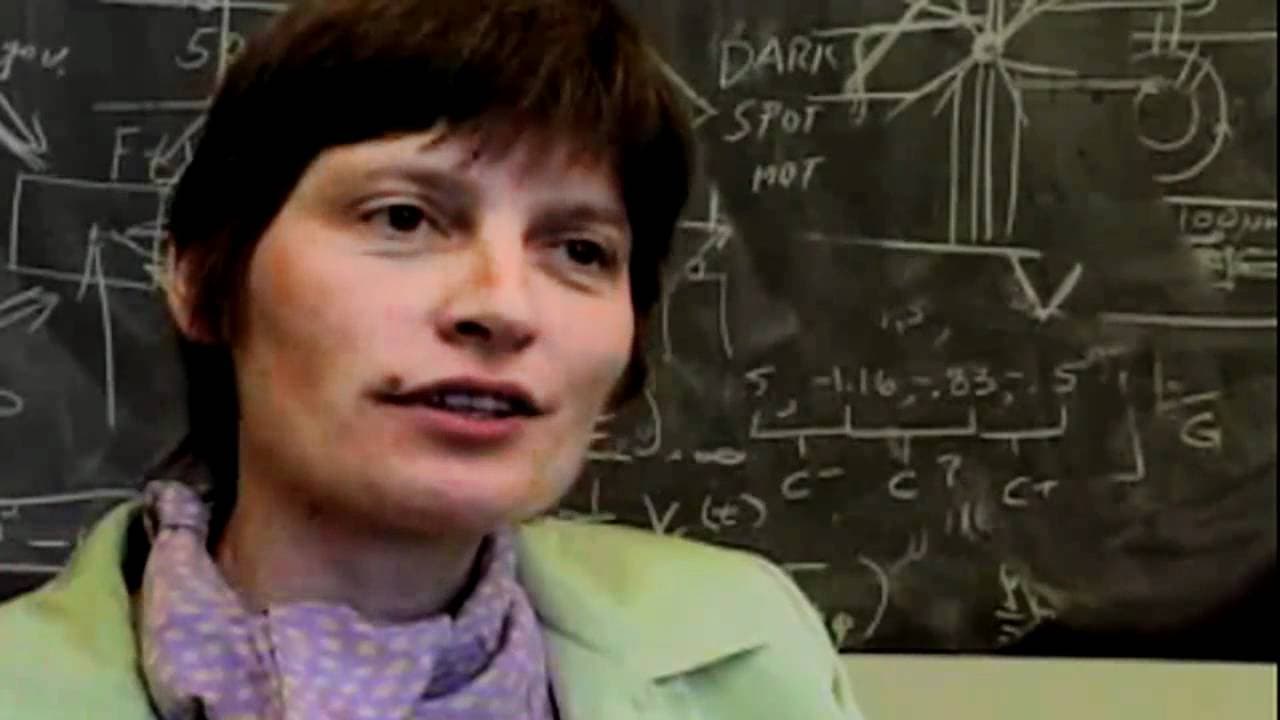
Prof. Lene Hau: Stopping light cold
Transcript
Read and summarize the transcript of this video on Glasp Reader (beta).
Install to Summarize YouTube Videos and Get Transcripts
Explore YouTube Video Summarizer or Get YouTube Transcript Extractor
Summary
In this video, the speaker explains how they were able to slow down light using a special technique with sodium atoms and laser beams. They were able to cool down atoms to a few billionths of a degree above absolute zero, creating the coldest place in the universe. By illuminating a cloud of these cold atoms with a laser beam, they were able to slow down a light pulse to the speed of a bicycle. They could even completely stop the light pulse and then revive it when desired. The speaker also describes the setup they use, including the atom source and the convergence of laser beams on the optics table.
Questions & Answers
Q: How fast is the speed of light?
The speed of light is approximately 186,000 miles per second in American units. However, in their experiments, they were able to slow down the light pulse to as slow as 38 miles per hour and even one mile per hour, which is slower than a crawling pace.
Q: How do they manipulate atoms to cool them down?
The speaker explains that they use sodium atoms, which are the same atoms found in table salt. By cross-manipulating these atoms with laser beams in specific ways, they are able to cool them down to a few billionths of a degree above absolute zero. This extreme coldness makes it the coldest place in the universe.
Q: What is the process of slowing down light?
Once they have created a cloud of very cold atoms, they illuminate that cloud with a laser beam and send a light pulse into the cloud from the other side. Through this process, they are able to slow down the light pulse to the speed of a bicycle. It moves along slowly, or "chuffs along," as the speaker describes it.
Q: Can they completely stop the light pulse?
Yes, they have the capability to completely stop the light pulse inside their atom cloud. They can park it there for a while and then revive it when desired. This ability to control the movement and speed of light is a significant breakthrough in their experiments.
Q: What is shown in the video near the bottom?
The speaker explains that what we see in the video is actually the atom pool. The cold atoms are created, and the process involves the use of laser beams that criss cross on an optics table. Ultimately, these beams converge on the vacuum chamber where all the action of manipulating atoms and light takes place. There is also a special atom source for the sodium atoms located behind the setup.
Q: Did the speaker anticipate this slow light discovery?
Initially, when they started working with cold atoms, the speaker did not anticipate exploring the concept of slow light forces. However, as they delved into the system, they began to experiment and explore its capabilities. It is a prime example of how engaging with an exciting new system can lead to unexpected and exciting discoveries.
Takeaways
The speaker's groundbreaking experiments involved manipulating sodium atoms and using laser beams to cool them down to extremely low temperatures. By creating a cloud of these cold atoms and illuminating it with a laser beam, they were able to slow down and even completely stop a light pulse. This breakthrough showcases the ability to control the speed and movement of light, opening up possibilities for further advancements in the field. It serves as a reminder of the potential for unexpected discoveries when exploring new scientific systems.
Read in Other Languages (beta)
Share This Summary 📚
Summarize YouTube Videos and Get Video Transcripts with 1-Click
Try YouTube Summary with ChatGPT & Claude or YouTube Transcript Generator
Explore More Summaries from Harvard University 📚


Summarize YouTube Videos and Get Video Transcripts with 1-Click
Try YouTube Summary with ChatGPT & Claude or YouTube Transcript Generator