How Does Gender Influence Macbeth's Characters and Themes?
TL;DR
In Shakespeare's Macbeth, gender roles are pivotal as Lady Macbeth subverts femininity to manipulate her husband into committing murder, challenging traditional norms of masculinity. Macbeth transitions from a heroic figure to a tyrant, illustrating the destructive nature of ambition, while the play critiques toxic masculinity through his emotional turmoil and ethical conflicts. Ultimately, it leaves audiences questioning the interplay between fate and personal choice in his tragic downfall.
Transcript
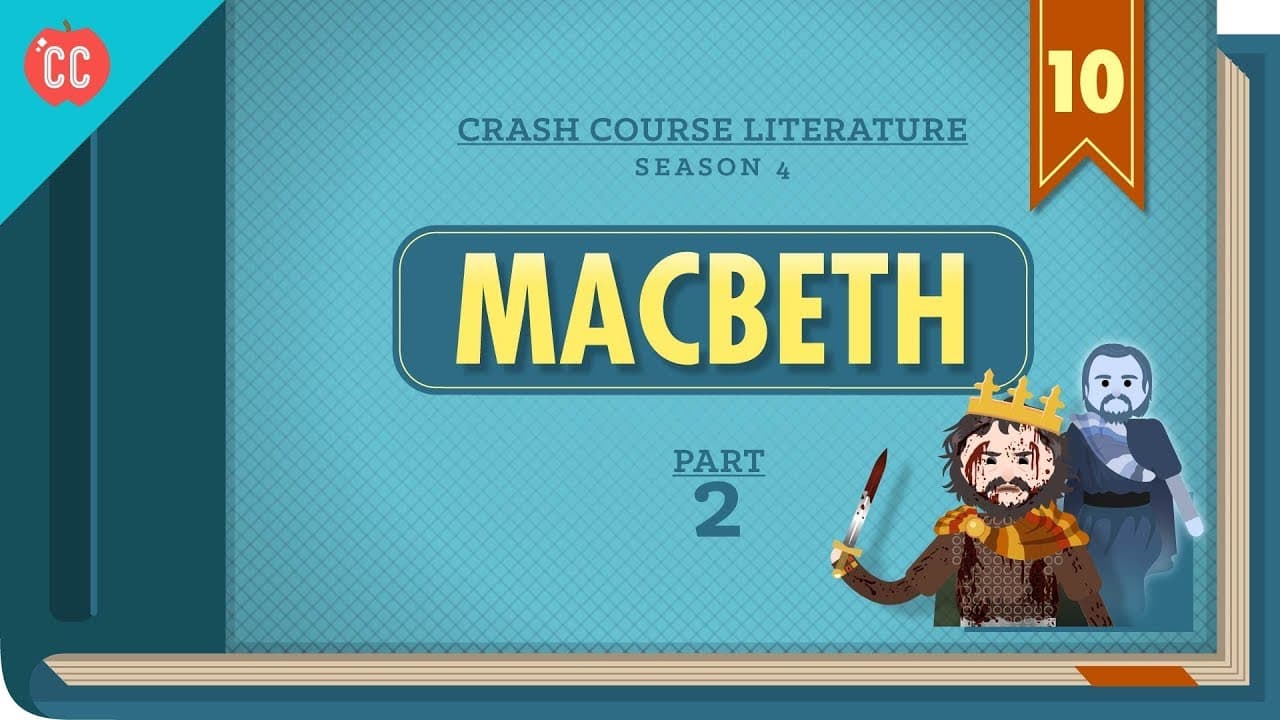
Hi I’m John Green. This is Crash Course Literature and today we’ll be doubling, bubbling, toiling and troubling as we continue our discussion of Macbeth. Today we’ll be looking more closely at the characters of Macbeth and Lady Macbeth as well as discussing the play’s treatment of gender roles and its downer ending. INTRO One of the most remarkable... Read More
Key Insights
- Macbeth is both hero and villain, initially celebrated for bravery but later condemned for his murderous actions.
- Lady Macbeth challenges traditional gender roles, urging Macbeth to commit regicide by questioning his masculinity.
- The witches play a crucial role by igniting Macbeth's ambition, though they never explicitly suggest murder.
- Macbeth's internal conflict is evident as he struggles with guilt and paranoia, leading to more violence.
- Lady Macbeth's initial ruthlessness gives way to guilt and madness, ultimately leading to her suicide.
- The play critiques toxic masculinity through Macbeth's destructive actions and contrasts them with Macduff's emotional depth.
- Macbeth's nihilistic worldview emerges as he becomes disillusioned with life, seeing it as meaningless.
- The play leaves open the question of whether Macbeth's downfall was fated or a result of his choices.
Install to Summarize YouTube Videos and Get Transcripts
Explore YouTube Video Summarizer or Get YouTube Transcript Extractor
Questions & Answers
Q: How does Macbeth's character evolve throughout the play?
Macbeth begins as a celebrated war hero, known for his bravery and loyalty to King Duncan. However, after encountering the witches and being manipulated by Lady Macbeth, he becomes consumed by ambition. This leads to a series of murders, transforming him into a tyrannical ruler. His internal struggle with guilt and paranoia further deteriorates his character, culminating in a nihilistic outlook on life.
Q: What role do the witches play in Macbeth's transformation?
The witches serve as catalysts for Macbeth's transformation by igniting his latent ambition through their prophecies. While they do not directly instruct him to commit murder, their predictions set him on a path of moral decay. The witches embody the theme of fate versus free will, leaving audiences to question whether Macbeth's actions are preordained or self-determined.
Q: How does the play address the theme of gender roles?
Macbeth challenges traditional gender roles through characters like Lady Macbeth, who exhibits masculine traits of ambition and ruthlessness. She manipulates Macbeth by questioning his manhood, urging him to commit regicide. The play also features the witches, whose ambiguous gender further destabilizes conventional gender norms. Ultimately, the play critiques toxic masculinity and explores alternative expressions of manhood through characters like Macduff.
Q: What is the significance of Lady Macbeth's character arc?
Lady Macbeth's arc is significant as it highlights the psychological consequences of unchecked ambition and guilt. Initially, she is the driving force behind Macbeth's actions, exhibiting traits of ruthlessness and manipulation. However, her guilt over the murders leads to madness and eventual suicide, illustrating the destructive power of ambition and the weight of transgressing societal norms.
Q: How does the play portray the concept of masculinity?
Macbeth presents a complex portrayal of masculinity, critiquing traditional notions of manhood. Macbeth's adherence to a toxic vision of masculinity, characterized by violence and ambition, leads to his downfall. In contrast, Macduff embodies a more nuanced masculinity, balancing strength with emotional depth. The play suggests that true manhood involves both courage and vulnerability.
Q: What is the significance of Macbeth's nihilistic outlook at the end of the play?
Macbeth's nihilistic outlook reflects his disillusionment with life and the futility of ambition without moral grounding. As he faces the consequences of his actions, he perceives life as meaningless, a 'tale told by an idiot.' This perspective underscores the destructive nature of unchecked ambition and the emptiness of power achieved through immoral means.
Q: How does the play explore the theme of fate versus free will?
Macbeth explores the tension between fate and free will through the influence of the witches and Macbeth's subsequent actions. While the witches' prophecies suggest a predetermined fate, Macbeth's choices ultimately lead to his downfall. The play raises questions about the extent of personal agency and whether Macbeth's tragic end is a result of destiny or his own decisions.
Q: What is the impact of the play's ending on its overall themes?
The ending of Macbeth reinforces the play's themes of ambition, guilt, and the consequences of moral transgression. Macbeth's defeat and Lady Macbeth's suicide highlight the destructive power of unchecked ambition. The play's unresolved questions about fate and free will leave audiences contemplating the nature of human choice and the moral complexities of ambition and power.
Summary & Key Takeaways
-
Macbeth transitions from a celebrated war hero to a tyrannical ruler, driven by ambition and spurred on by his wife's manipulation. His journey reflects the complex interplay of heroism and villainy, as well as the destructive nature of unchecked ambition.
-
Lady Macbeth's character subverts traditional gender roles, as she exhibits traits typically associated with masculinity to manipulate Macbeth. Her eventual descent into madness highlights the psychological toll of guilt and the consequences of transgressing societal norms.
-
The play critiques toxic masculinity by contrasting Macbeth's ruthless ambition with Macduff's emotional resilience. Macbeth's nihilistic outlook on life underscores the futility of ambition without moral grounding, leaving audiences to ponder the role of fate versus personal choice in his downfall.
Read in Other Languages (beta)
Share This Summary 📚
Summarize YouTube Videos and Get Video Transcripts with 1-Click
Try YouTube Summary with ChatGPT & Claude or YouTube Transcript Generator
Explore More Summaries from CrashCourse 📚




Summarize YouTube Videos and Get Video Transcripts with 1-Click
Try YouTube Summary with ChatGPT & Claude or YouTube Transcript Generator