Why Trump Faces No Punishment for Felonies
TL;DR
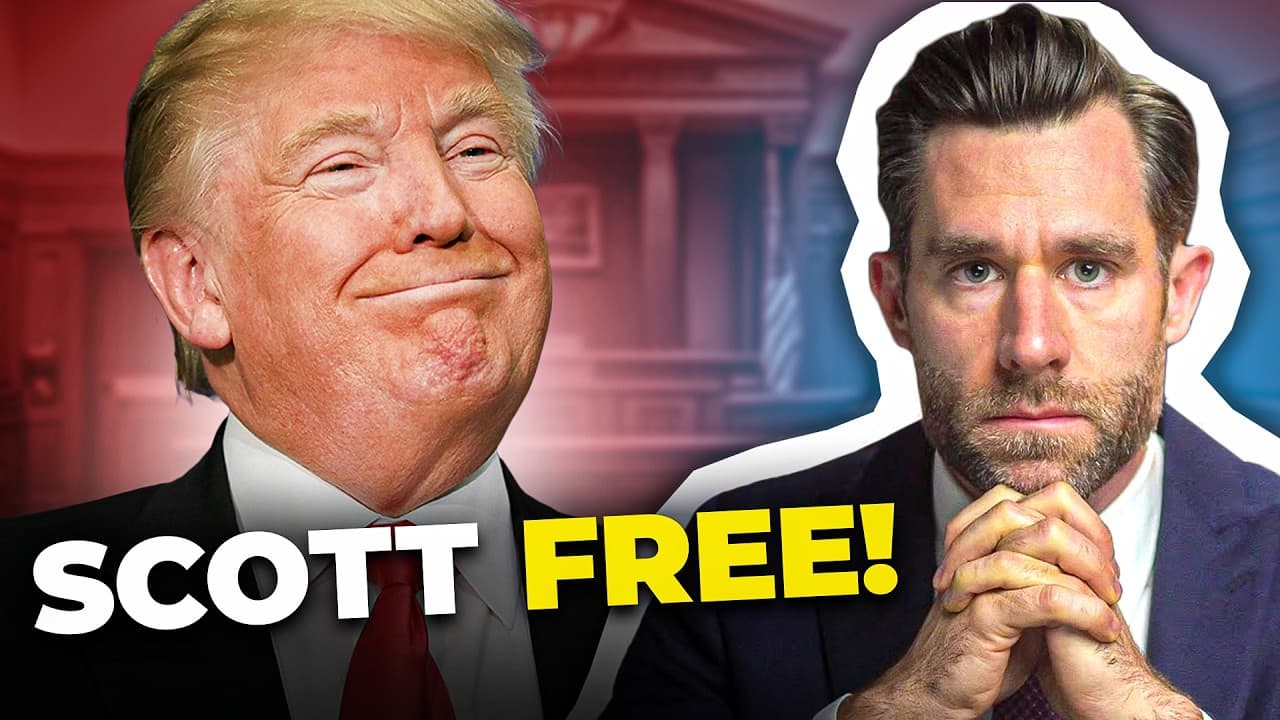
Donald Trump faced no punishment because Judge Juan Merchan concluded that an unconditional discharge was the only lawful sentence that would enter the conviction without encroaching on the presidency. A New York jury convicted Trump of 34 felony counts of falsifying business records, and sentencing was ultimately set for January 10, 2025. Read on for the timeline, the defense’s rejected arguments, and what the sentence means for his conviction.
Transcript
- [Justice Merchan] After careful analysis in obedience to governing mandates and pursuant to the rule of law, this court has determined that the only lawful sentence that permits entry of a judgment of conviction without encroaching upon the highest office in the land is an unconditional discharge, which the New York State legislature has determin... Read More
Key Insights
- Trump was convicted of 34 felony counts related to falsifying business records.
- The court sentenced Trump to an unconditional discharge, meaning no punishment.
- The decision was influenced by a Supreme Court ruling on presidential immunity.
- Trump's sentencing was delayed multiple times to avoid affecting his election chances.
- Judge Merchan emphasized the importance of respecting jury verdicts.
- Trump's legal team argued for presidential immunity, but the court found no basis for it.
- The Supreme Court's decision allowed the sentencing to proceed without further delay.
- Trump remains a convicted felon unless the convictions are overturned on appeal.
Install to Summarize YouTube Videos and Get Transcripts
Explore YouTube Video Summarizer or Get YouTube Transcript Extractor
Questions & Answers
Q: Why does Trump face no punishment for his felony convictions?
Judge Juan Merchan determined that an unconditional discharge was the only lawful sentence that would allow entry of the conviction without encroaching upon the presidency. The sentence imposes no jail, probation, or other punishment, but it preserves the judgment of conviction.
Q: What was Donald Trump convicted of?
A New York jury convicted Donald Trump of 34 felony counts of falsifying business records. The records concealed the true nature of payments to his fixer, who had secretly paid Trump's mistress to prevent the story of their affair from becoming public during the 2016 presidential campaign.
Q: What is an unconditional discharge in Trump's case?
An unconditional discharge is a lawful and permissible sentence under New York law for falsifying business records in the first degree. In Trump's case, it entered the judgment of conviction without imposing punishment.
Q: How did the presidential immunity decision affect Trump's sentencing?
The Supreme Court's presidential immunity decision in Trump v. United States temporarily halted the cases against Trump. After sentencing had initially been scheduled for July 11, 2024, Judge Merchan rescheduled it for September 2024.
Q: Why was Trump's sentencing postponed until after the election?
Trump argued that sentencing on 34 felonies could hurt his chances of being reelected president. Judge Merchan moved the hearing until after the election to avoid the appearance of impropriety, and later scheduled sentencing for January 10, 2025.
Q: What arguments did Trump's defense make to stop the sentencing?
The defense argued that Trump had presidential immunity, that prosecutor Alvin Bragg committed misconduct, and that the judge had made various legal errors. On January 3, 2025, Judge Merchan denied the motion to dismiss and found those claims unsubstantiated.
Q: Did the sentence erase Trump's felony convictions?
No. The unconditional discharge allowed the court to enter the judgment while imposing no punishment, so Trump remained officially convicted on 34 felony counts.
Q: What did Judge Merchan say about respecting the jury's verdict?
Judge Merchan emphasized the importance of respecting jury verdicts and rejected alternatives such as delaying sentencing again or dismissing the charges entirely. His decision upheld the jury's unanimous conviction.
Summary & Key Takeaways
-
Donald Trump was sentenced for 34 felony counts of falsifying business records, but received an unconditional discharge, facing no punishment. The court's decision was influenced by a Supreme Court ruling on presidential immunity, and the sentencing was delayed to avoid impacting his re-election chances.
-
Judge Merchan emphasized the importance of respecting jury verdicts and rejected Trump's legal team's arguments for presidential immunity. The Supreme Court allowed the sentencing to proceed, resulting in Trump remaining a convicted felon unless overturned on appeal.
-
The video discusses the legal implications of Trump's sentencing, highlighting the influence of the Supreme Court's ruling and the court's efforts to avoid appearing politically biased. Trump's legal status as a convicted felon remains unless successfully appealed.
Read in Other Languages (beta)
Share This Summary 📚
Summarize YouTube Videos and Get Video Transcripts with 1-Click
Try YouTube Summary with ChatGPT & Claude or YouTube Transcript Generator
Explore More Summaries from LegalEagle 📚





Summarize YouTube Videos and Get Video Transcripts with 1-Click
Try YouTube Summary with ChatGPT & Claude or YouTube Transcript Generator