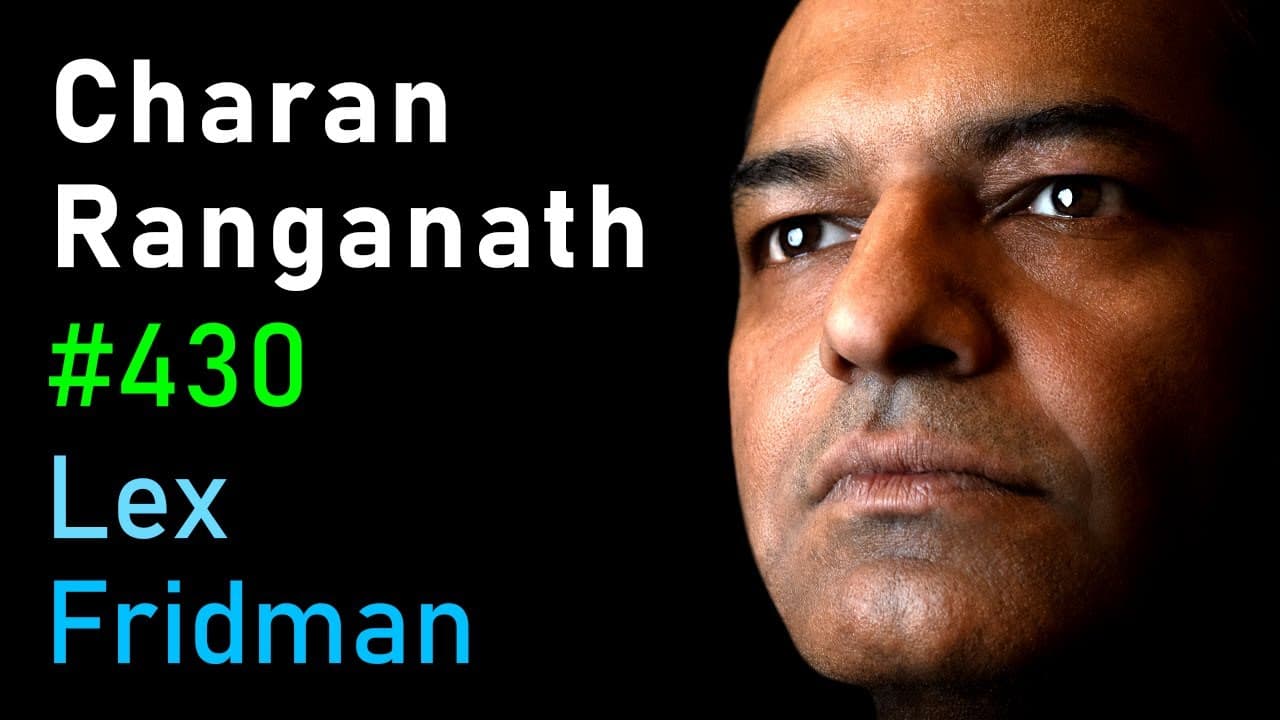
Charan Ranganath: Human Memory, Imagination, Deja Vu, and False Memories | Lex Fridman Podcast #430
TL;DR
Human memory is a reconstruction, not an exact replay, and remembering an event can alter it by blending original details with later information or misinformation. Charan Ranganath explains on Lex Fridman Podcast #430 that recall emphasizes beginnings, endings, peaks, and meaningful moments while helping the brain understand the present and predict the future. Read on to explore false memories, imagination, learning, and the experiencing and remembering selves.
Transcript
the act of remembering can change the memory if you remember some event and then I tell you something about the event later on when you remember the event you might remember some original information from the event as well as some information about what I told you and sometimes if you're not able to tell the difference that information that I told ... Read More
Key Insights
- 🍝 Memories are reconstructed and biased representations of past events, influenced by contextual cues, emotions, and personal experiences.
- 🧠 The brain's memory system is optimized for learning and retaining information that is most relevant to understanding the present and predicting the future.
- 👾 Memory training techniques such as spaced repetition and memory palaces can enhance retention and recall.
- 👶 Memories can become detached from reality when new information or misinformation is mixed into the original narrative.
- 👻 The default mode network and hippocampus play a crucial role in memory recall and imagination, allowing the brain to reconstruct past events and simulate future scenarios.
- 💯 Memories are not perfect records of past events but serve as an invaluable tool for learning, decision-making, and shaping one's narrative of personal experiences.
Install to Summarize YouTube Videos and Get Transcripts
Explore YouTube Video Summarizer or Get YouTube Transcript Extractor
Questions & Answers
Q: How does remembering an event change the memory?
Remembering can make a memory vulnerable to change. Information received afterward may become mixed with original details, especially when a person cannot distinguish between the event and what they were later told.
Q: Why is memory not an exact replay of experience?
A remembered account leaves out much of the original experience and emphasizes selected elements. It tends to be shaped by the beginning, the end, peaks, and the best or worst parts.
Q: What is the difference between the experiencing self and the remembering self?
The experiencing self lives through an event, while the remembering self retains a selective account of it. Decisions and feelings about outcomes are often based on that remembered account rather than the full experience.
Q: How do false memories become detached from reality?
Later information or misinformation can be incorporated into the original story during recall. With repeated exposure to additional material, the memory can eventually become totally detached from what happened.
Q: What is memory mainly for, according to Charan Ranganath?
Memory is oriented toward the present and future rather than preserving the past perfectly. The brain retains past information that helps it understand current circumstances and predict what may happen next.
Q: How does memory create an illusion of stability?
Past experience allows the brain to form expectations about familiar situations before they occur. Because those expectations are often right, they can create a sense that the future is known even though the prediction is imagined.
Q: Why are prediction errors important for learning?
Memory supports predictions, and a prediction error reveals what the person did not already know. Ranganath describes these errors as where learning happens because they provide new information.
Q: What memory-improvement techniques are discussed on the page?
The page identifies spaced repetition, testing oneself, and the method of loci, also called the Memory Palace technique. These approaches organize and strengthen memory networks to improve retention and recall.
Summary & Key Takeaways
-
Memories are not exact replays of events but rather reconstructed and biased versions shaped by the beginning, end, peaks, and meaningful parts of an experience.
-
Memories serve as a biased record of what we have experienced, helping us make decisions based on past knowledge and predictions about the future.
-
The brain is optimized to learn and retain information that is most useful for understanding the present and predicting the future, with memories being reconstructed and biased in a way that provides an illusion of stability.
Read in Other Languages (beta)
Share This Summary 📚
Summarize YouTube Videos and Get Video Transcripts with 1-Click
Try YouTube Summary with ChatGPT & Claude or YouTube Transcript Generator
Explore More Summaries from Lex Fridman Podcast 📚



Summarize YouTube Videos and Get Video Transcripts with 1-Click
Try YouTube Summary with ChatGPT & Claude or YouTube Transcript Generator