What Is the Brain's Role in Consciousness?
TL;DR
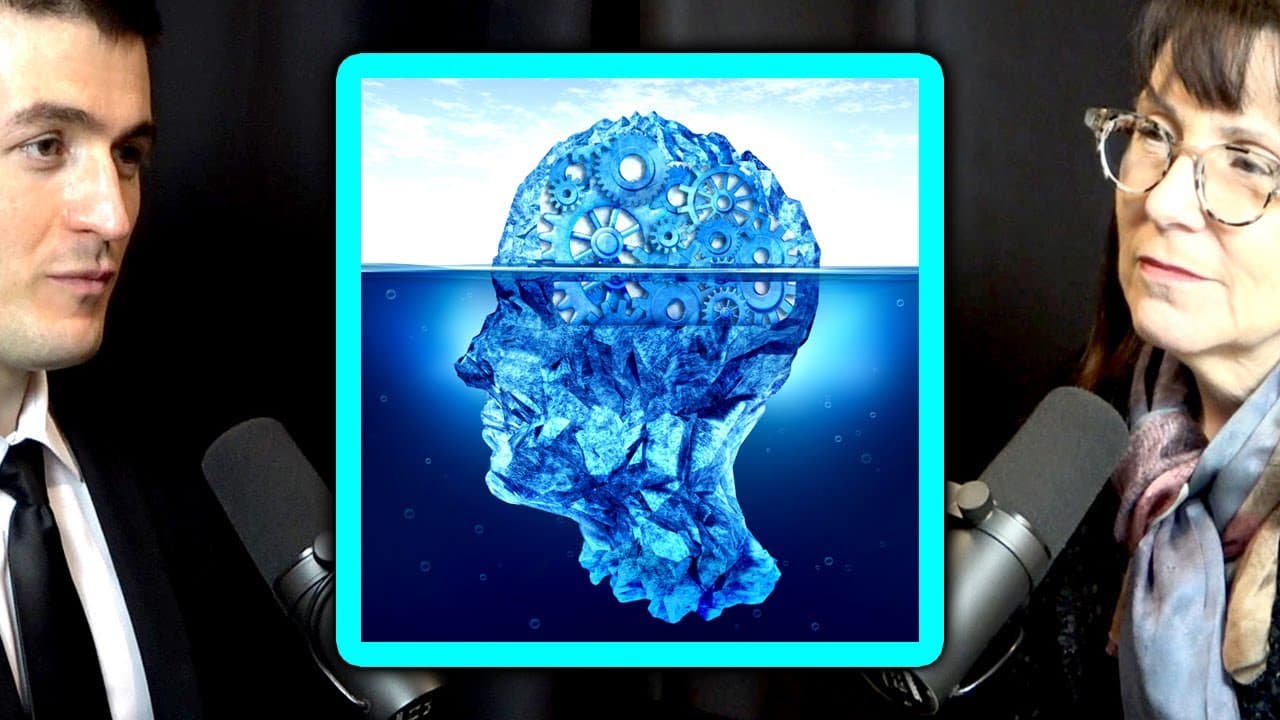
Consciousness arises from the brain's complex modeling of body sensations, translating high-dimensional sensory input into simple feelings of mood and affect. This ongoing process informs experiences of comfort, discomfort, energy, and fatigue while integrating various influences over time, highlighting the intricate nature of our conscious experience.
Transcript
so let's go to the biggest unanswerable questions of consciousness what is you just rolled your eyes i did that yeah so what is consciousness from a neuroscience perspective i know you i mean uh i made notes you know because you gave me some questions in advance and i made notes for every single oh except that one yeah well that one i had what the ... Read More
Key Insights
- 🧠 Consciousness involves the brain's ability to model the sensory conditions of the body and update this model based on sensory data.
- 😘 The brain simplifies the high-dimensional sensory data into low-dimensional feelings of mood and affect.
- 🧑🏭 Factors like physical state, past actions, and temporal scales of influence contribute to our conscious experience.
- ⁉️ Understanding consciousness may require a different approach and questioning existing assumptions.
- 🎙️ More videos with Lisa Feldman Barrett:
Install to Summarize YouTube Videos and Get Transcripts
Explore YouTube Video Summarizer or Get YouTube Transcript Extractor
Questions & Answers
Q: What is consciousness from a neuroscience perspective?
Consciousness refers to how the brain models the sensory conditions of our body, continuously updates this model based on sensory data, and gives us a low-dimensional experience of mood and affect.
Q: How does the brain simplify high-dimensional sensory data into simple mental features?
Despite receiving a high-dimensional array of sense data, the brain simplifies it into feelings of comfort, discomfort, pleasantness, unpleasantness, etc., providing us with a general sense of mood and affect.
Q: What factors influence our conscious experience?
Multiple factors, including physical state, temporal scales of influence, past actions and experiences, and even gut health, contribute to our conscious experience of mood and affect.
Q: Will scientists ever fully understand consciousness?
While consciousness is a challenging question, scientists can potentially achieve a level of understanding similar to other complex topics like the birth of the universe. It may require asking different questions and approaching the science differently.
Summary & Key Takeaways
-
Consciousness is the challenge of understanding how our brain models the sensory conditions of our body and translates it into low-dimensional feelings of mood and affect.
-
The brain continuously updates its model based on sensory data from the body, giving us a sense of comfort, discomfort, energy, tiredness, etc.
-
The complexity lies in how the brain simplifies the high-dimensional sensory data into simple mental features and how it integrates multiple factors and temporal scales to create our conscious experience.
Read in Other Languages (beta)
Share This Summary 📚
Summarize YouTube Videos and Get Video Transcripts with 1-Click
Try YouTube Summary with ChatGPT & Claude or YouTube Transcript Generator
Explore More Summaries from Lex Clips 📚






Summarize YouTube Videos and Get Video Transcripts with 1-Click
Try YouTube Summary with ChatGPT & Claude or YouTube Transcript Generator