What Is the True Evolutionary Purpose of the Brain?
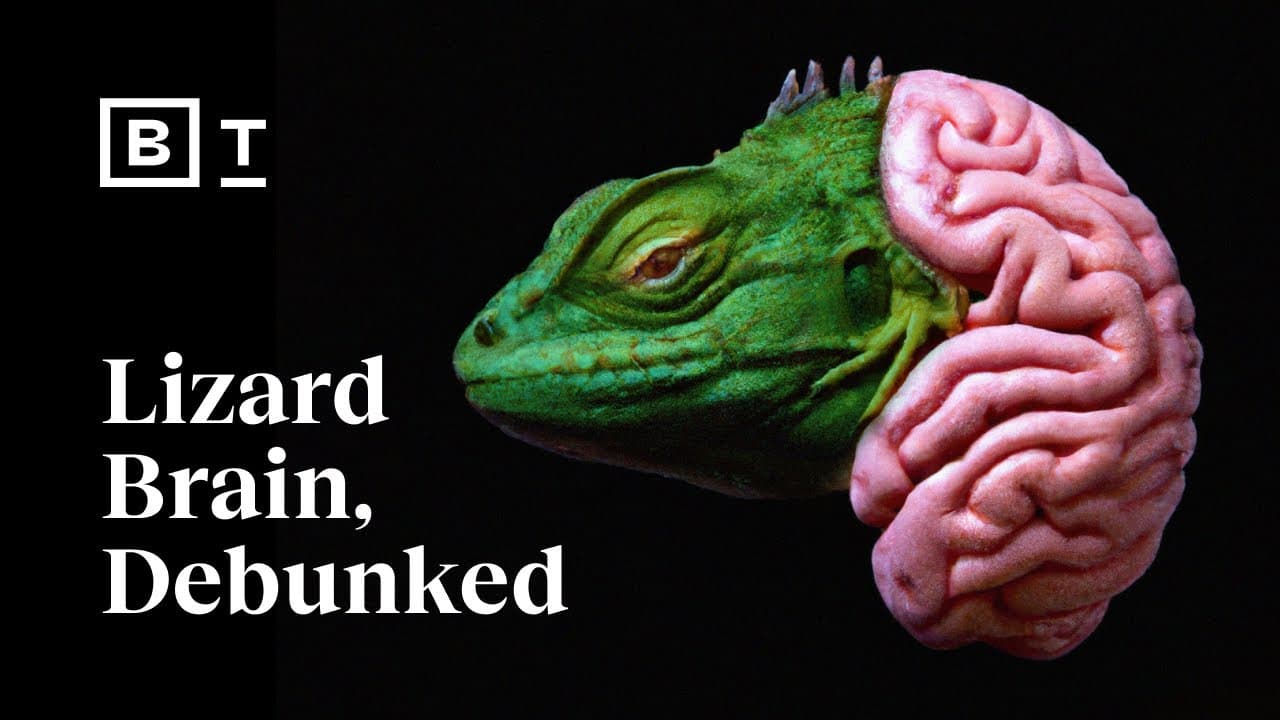
TL;DR
The brain evolved as a control center for coordinating complex bodily functions, not in distinct layers as previously thought. Instead, all mammals share a common brain plan, shaped by the need for greater sensory perception and efficient metabolism. The development of brains is linked to the transition from simple to complex life forms, driven by the demands of predator-prey dynamics.
Transcript
brains are the most expensive organ we have in our whole body brains cost about 20 percent of our metabolic budget and they're only three pounds in size so they're really really expensive so I sort of wondered well why why did brains evolve in the first place like what is a brain good for the try and brain is this idea that your brain evolved in th... Read More
Key Insights
- 🧠 Brains are metabolically expensive due to their complex functions.
- 🫵 The traditional view of brain evolution, with layered development, has been challenged by recent research.
- 🧠 The evolution of brains is closely tied to the development of sensory systems and the need for efficient coordination.
- 🧠 The idea that brains evolved in layers originated from ancient Greek philosophy.
- 🧠 The concept of a triune brain, popularized by Carl Sagan, has been debunked by molecular genetic studies.
- 🧠 There is a common brain plan for all mammals and vertebrates, with variations in developmental stages.
- 🖤 Creatures like amphioxes, which lack brains and complex sensory organs, dominated the Earth for millions of years.
- 🎙️ More videos with Lisa Feldman Barrett:
Install to Summarize YouTube Videos and Get Transcripts
Explore YouTube Video Summarizer or Get YouTube Transcript Extractor
Questions & Answers
Q: Why are brains the most expensive organ in our body?
Brains are metabolically expensive because they require a large amount of energy to perform their various functions such as sensory processing, motor coordination, and cognitive tasks. This metabolic cost is necessary for the proper functioning of the brain.
Q: What is the traditional view of brain evolution?
The traditional view suggests that brains evolved in layers, with an inner lizard brain controlling instincts, a limbic system for emotions, and a big cerebral cortex for rationality. This view was popularized by Carl Sagan's book, "The Dragons of Eden."
Q: How has recent research challenged the traditional view of brain evolution?
Recent research using molecular genetic techniques has shown that the brain did not evolve in structured layers. Instead, there is a common brain plan for all mammals and vertebrates, with variations in the duration of each developmental stage.
Q: Why did brains evolve?
Scientists hypothesize that brains evolved as a result of an arms race between predators and prey. The emergence of hunting behavior led to the development of sensory systems and the need for coordination of motor functions, ultimately requiring a brain.
Summary & Key Takeaways
-
Brains are energetically expensive, comprising 20% of our metabolic budget, despite being only three pounds in size.
-
The traditional view of brain evolution suggests that brains developed in layers, with an inner lizard brain, a limbic system, and a cerebral cortex for rationality.
-
However, recent research indicates that brain development is not structured in layers; rather, there is a common brain plan for all mammals and vertebrates, with differences in the length of each developmental stage.
Read in Other Languages (beta)
Share This Summary 📚
Summarize YouTube Videos and Get Video Transcripts with 1-Click
Try YouTube Summary with ChatGPT & Claude or YouTube Transcript Generator
Explore More Summaries from Big Think 📚


Summarize YouTube Videos and Get Video Transcripts with 1-Click
Try YouTube Summary with ChatGPT & Claude or YouTube Transcript Generator